Prof. Dr. Christa Liedtke ist Leiterin der Abteilung Nachhaltiges Produzieren und Konsumieren am Wuppertal Institut. Seit 2022 ist sie apl. Professorin für Nachhaltigkeit im Design in der Abteilung Industrial Design der Bergischen Universität Wuppertal. Ihre Arbeitsschwerpunkte sind Forschungsstrategien im Themenfeld Nachhaltiges Produzieren und Konsumieren, Bewertung von Ressourceneffizienz und Nachhaltigkeit von und in Wertschöpfungsketten, Nutzer*innen integrierte Entwicklung von Produkt-Dienstleistungssystemen, nachhaltiges und zirkuläres Design.
About transform.NRW
Art, culture, and design do not merely play a supporting role in social change – they actively shape it too. The Wuppertal Institute and the School of Art and Design of the University of Wuppertal have created a hybrid platform for transdisciplinary exchanges between creative disciplines and protagonists from the sciences, business, politics, and local governments.
The project pursues two closely interlocking objectives: to explore the transformative potential of art, culture, and design and to offer a platform where the knowledge embedded in these fields along with the resulting practices attain more visibility and accessibility in order to foster new modes of collaboration.
Why art, culture, and design?
Sustainable transformation is not solely a technical or economic matter, above all, it is a cultural one. Art, culture, and design enable us to grasp complex interrelationships with our senses and connect to them on an emotional level. They open up new scopes of action, highlight alternatives, and formulate prospects for the future – through visionary scenarios, by challenging existing routines, or by charting out concrete solutions tailored to everyday life. The interplay between artistic and design practices and scientific analysis is key to the success of the sustainability transformation: the project investigates how these two approaches can inspire one another, not only for a deeper understanding of sustainability but to also render it as something that can be collectively experienced and implemented.
partners
Partners from art, culture, design, business, the sciences, and local governments work together to develop content for the platform, design formats, and organize events. On this dynamic platform, they pool their expertise, find new collaborators, and forge new alliances.
This transdisciplinary collaboration yields productive challenges: different specialist jargons, methods, and perspectives converge. Diversity is conceived as a learning space for shared sustainable design literacy – a set of competencies that empowers all protagonists involved in consumption and design processes in order to classify interrelationships and, building on those insights, make action-oriented decisions.
Knowledge Transfer and Continuity
The knowledge gained through the cooperation platform shall serve as the foundation for future partnerships, projects, and policy decisions. The plan is to expand well beyond North Rhine-Westphalia – through additional pilot regions, new stakeholders, and follow-up projects in national and international contexts.
The Team
transform.NRW is led by Prof. Dr. Christa Liedtke and Dr. Carolin Baedeker (Wuppertal Institute) as well as Prof. Dr. Martina Fineder and Prof. Erica von Moeller (Faculty of Design and Art, University of Wuppertal) – and is supported by an interdisciplinary team that brings together science and design.
transform.NRW is funded by the Ministry of Culture and Science of the State of North Rhine-Westphalia in the framework of the “Kooperationsplattformen 2022” program. The project will run until April 30, 2027.
Under the direction of
Prof. Dr. Martina Fineder ist Design- und Kulturwissenschaftlerin mit Fokus auf sozial-ökologisch motivierte Design- und Konsum-Praxen und Transformationsforschung. Sie interessiert sich für Gemeinwohl-Logiken (Commons), zwischenmenschliches Design und kreiert gerne experimentelle Laborausstellungen für inter- und transdisziplinäre Forschungsprojekte. Aktuell ist sie Teil des Leitungsteams von transform.NRW.
Dr. Carolin Baedeker studierte Geographie an der Universität zu Köln. Von 1998 bis 2000 war sie freie Mitarbeiterin am Wuppertal Institut für Klima, Umwelt, Energie GmbH und ist seit 2000 dort wissenschaftliche Mitarbeiterin. 2006 übernahm Dr. Baedeker die stellvertretende Leitung der Abteilung Nachhaltiges Produzieren und Konsumieren am Wuppertal Institut. Seit 2019 ist sie Co-Leiterin des Forschungsbereichs Innovationslabore. Zu ihren Arbeitsschwerpunkten gehören: Reallaborforschung, nutzerintegrierte Nachhaltigkeitsinnovationen (Living Labs), sozial-ökologische Transformation, Produkt-Dienstleistungsentwicklung, Sharing Economy, Kooperationen und Netzwerke, Bildung für Nachhaltigkeit, transformatives Lernen, Klimawandel und Gesundheit sowie Kunst- und Kulturnachhaltigkeit.
Die Regisseurin, Autorin und Professorin Erica von Moeller studierte sowohl freie bildende Kunst als auch Film. Seit 2001 realisiert sie Filme in unterschiedlichen Genres wie den Spielfilm „Leben mit Hannah“ (2006), den Spielfilm „Fräulein Stinnes fährt um die Welt“ (2009), den historischen Fernsehfilm „Sternstunde ihres Lebens“ (2014) oder die transmediale Erzählung „2052 – Geschichten von Morgen“ (2020–25). Als Medienkünstlerin entwickelt sie Ausstellungsprojekte an der Schnittstelle zwischen Bewegtbild, Raum und Klang. Seit Sommer 2011 lehrt sie an der Bergischen Universität Wuppertal als Professorin für audiovisuelle Medien.
Team WI
Eva Eiling ist Researcherin am Wuppertal Institut für Klima, Umwelt, Energie in der Abteilung Nachhaltiges Produzieren und Konsumieren im Forschungsbereich Innovationslabore. Ihre Forschungsschwerpunkte sind die Schnittstelle Kunst, Kultur, Design und Nachhaltigkeit, die Reallaborforschung sowie das Transformationsdesign. Im Projekt transform.NRW ist sie bereichsübergreifend inhaltlich tätig.
Anica Luggen-Hölscher ist Researcherin am Wuppertal Institut für Klima, Umwelt, Energie in der Abteilung Nachhaltiges Produzieren und Konsumieren im Forschungsbereich Innovationslabore. Ihr Fokus liegt auf den Themen sozial-ökologische Transformation, Gesundheit und Klimawandel sowie auf der Reallaborforschung. Im Projekt transform.NRW ist sie bereichsübergreifend inhaltlich tätig.
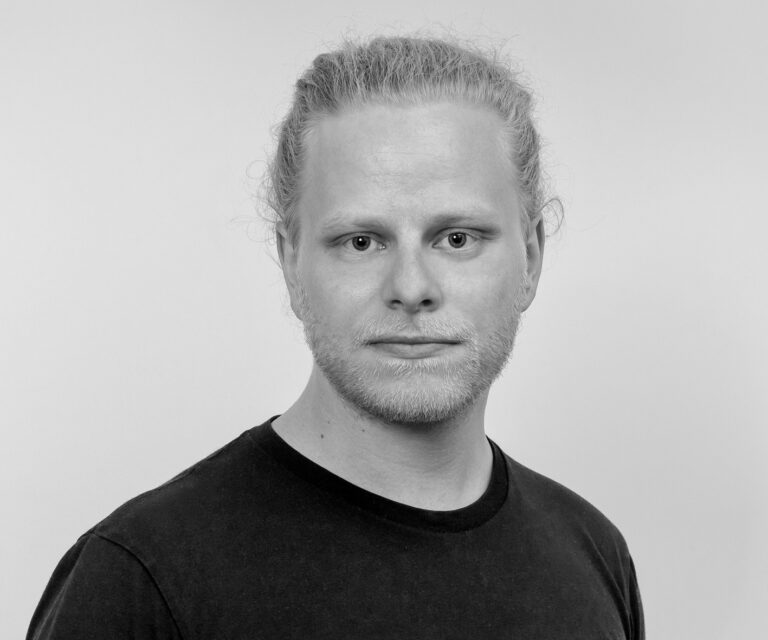
Severin Hackspiel

Kim Huber
Team BUW
Katja Kremser arbeitet als wissenschaftliche Mitarbeiterin am Lehrstuhl für Designtheorie und Designforschung der Bergischen Universität Wuppertal. Im Projekt transform.NRW ist sie als Projektmanagerin bereichsübergreifend sowohl koordinierend als auch inhaltlich tätig und beschäftigt sich aus der Perspektive als strategische Designerin mit Fragen der Wirkung von Design im Kontext einer Nachhaltigkeitstransformation.
Felix Fastenrath studierte Design und Soziologie und promoviert am Lehrstuhl für Designtheorie und Designforschung der Bergischen Universität zu den Themen sozial-ökologisches Design, Just Transitions und nachhaltigen Alltags- und Konsumpraktiken. Im Projekt transform.NRW ist er bereichsübergreifend inhaltlich tätig.
Katharina Maderthaner lebt und arbeitet in Düsseldorf. Ihre Skulpturen, Installationen und Zeichnungen greifen Phänomene des Alltags auf – von Baumärkten über Kleingartensiedlungen bis hin zu sogenannter Hobbykunst – und übersetzen diese in verdichtete, eigenständige Arbeiten. Vertrautes erscheint dabei fremd oder verfremdet, das „Reale“ wird spielerisch und mit einem Augenzwinkern hinterfragt. Zugleich stehen ihre Werke ernsthaft und autonom da, mit einer irritierenden Selbstverständlichkeit.
Ihre Arbeiten wurden in zahlreichen Einzel- und Gruppenausstellungen im In- und Ausland gezeigt.
Seit 2022 ist sie Professorin für Künstlerische Grundlagen an der Bergischen Universität Wuppertal.
Prof. Dr.-Ing. Fabian Hemmert vertritt die These, dass man Design, Kunst und Kultur wie das Gegenteil der Anästhesie verstehen kann: Während Anästhesie betäubt, öffnet Gestaltung die Sinne. Sie hilft uns, Dinge zu spüren, die wir vorher nicht spüren konnten – sei es die Dramatik von Klimaveränderungen, die Fragilität von Ökosystemen oder die Chancen solidarischen Handelns. Kunst kann irritieren, berühren und neue Perspektiven öffnen. Kultur schafft den Resonanzraum, in dem diese Erfahrungen geteilt und gedeutet werden.
Student and Research Assistants
Julia Beringer
Cosima Design
Anna Fortmann
Anne Marina Gobiet
Judith Haberle
Jule Henschel
Mona Keßler
Nora-Marleen Moriz
Finn Sommerhoff
Ronja Sturm
Jan-Philip Wistuba