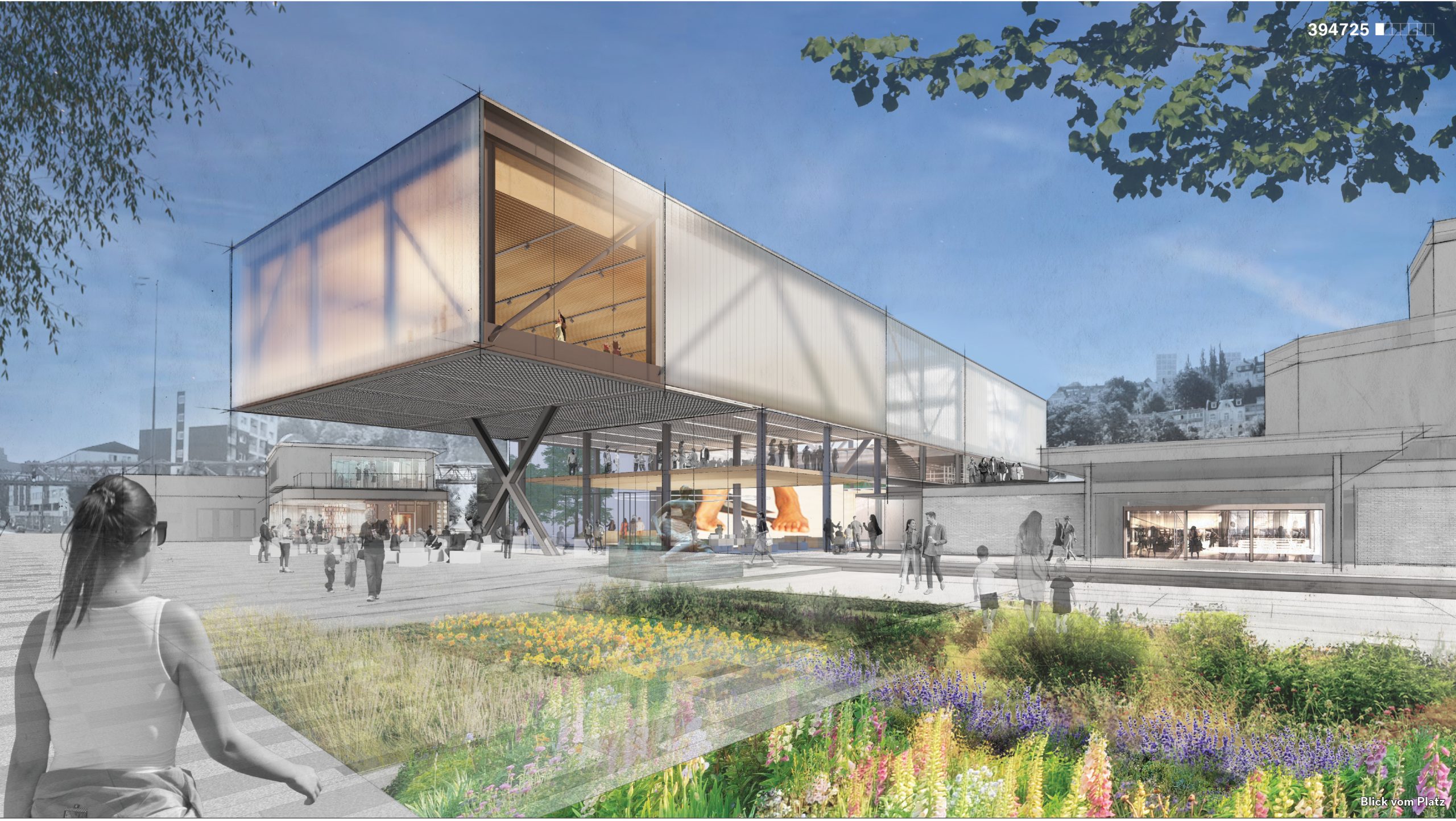

The Pina Bausch Center is being created as an international hub for dance and performance, art and cultural exchange, tradition and experimental projects—a model of best practices in sustainability and a place for everyone. By connecting the historic Wuppertal Schauspielhaus, a designated historic landmark, with a flexible new building, an interdisciplinary arts and cultural institution for the 21st century is taking shape.
bettina.milz@pinabauschzentrum.de
Arts and cultural institutions play an important role as role models in securing our future. Wherever people come together and take action, a sense of the future and optimism emerge. As a partner of transform.NRW, the Pina Bausch Center wants to inspire! We are part of nature and the diversity of this world. We are not above it. The challenges we increasingly face can only be overcome together—through movement, connection, and co-creation.
Work on developing a sustainability strategy began as early as 2022 as part of the preparatory phase for the Pina Bausch Center. Key partners include the Wuppertal Institute and the Szenografie-Bund. With support from the Federal Cultural Foundation’s Fonds Zero, the ÖkoKult NRW Fund of the Ministry of Culture and Science of North Rhine-Westphalia, Sparkasse Wuppertal, Knipex, WSW Wuppertaler Stadtwerke, and the Goethe-Institut, a sustainability strategy can be developed.
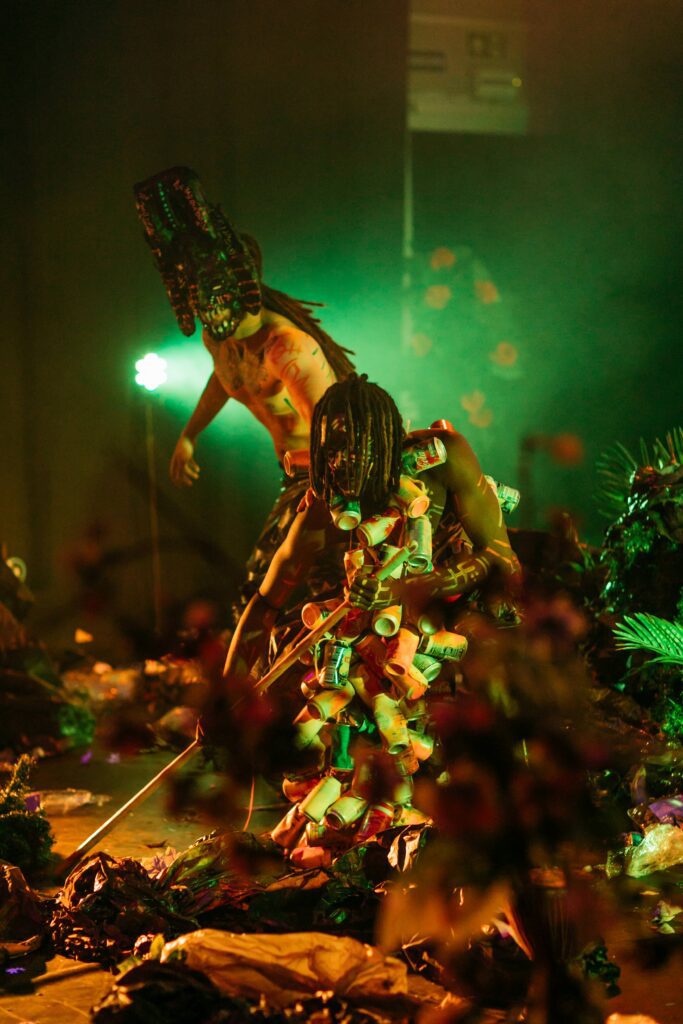
Through joint artistic, technical, and scientific pioneering research, a sustainable approach to work will be firmly embedded in the DNA of the new cultural institution—not merely based on theoretical goals, but researched, tested, and solidified through concrete work processes. This offers a great opportunity to design the structures of the Pina Bausch Center with sustainability in mind from the very beginning and to encourage the many participating artists, partners, as well as amateur participants and the audience to adopt a new mindset and way of acting that is sustainable. Experience shows: Embracing the logic of “reuse, reduce, recycle” changes day-to-day decisions—from reusing a stage set to measuring the ecological footprint to promoting the “handprint,” as seen in the FRAGILE festival and the scenography workshops.