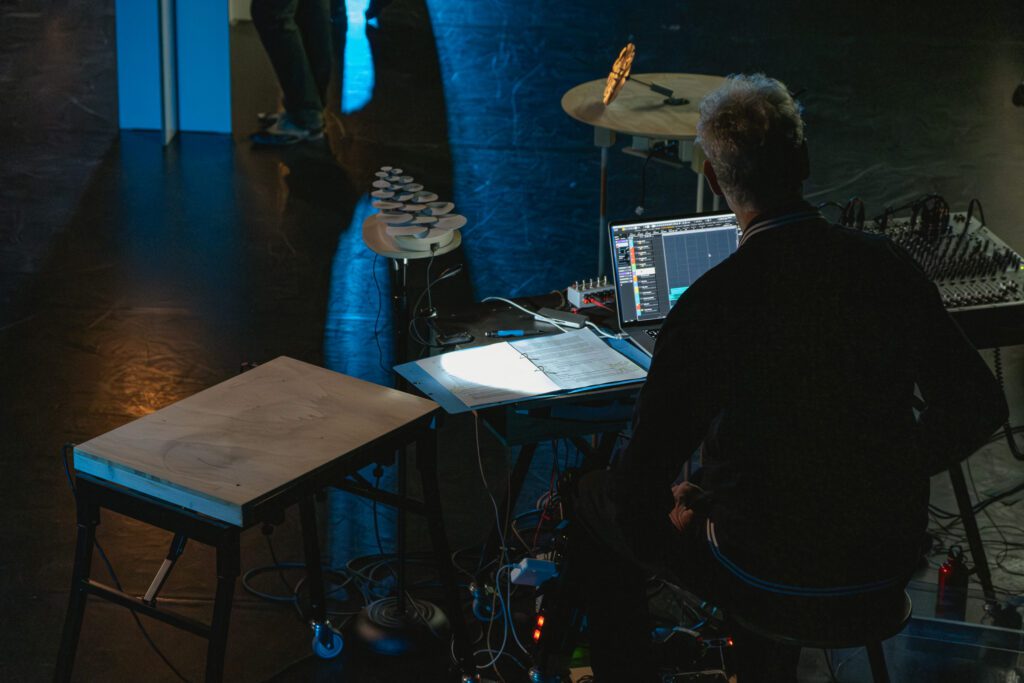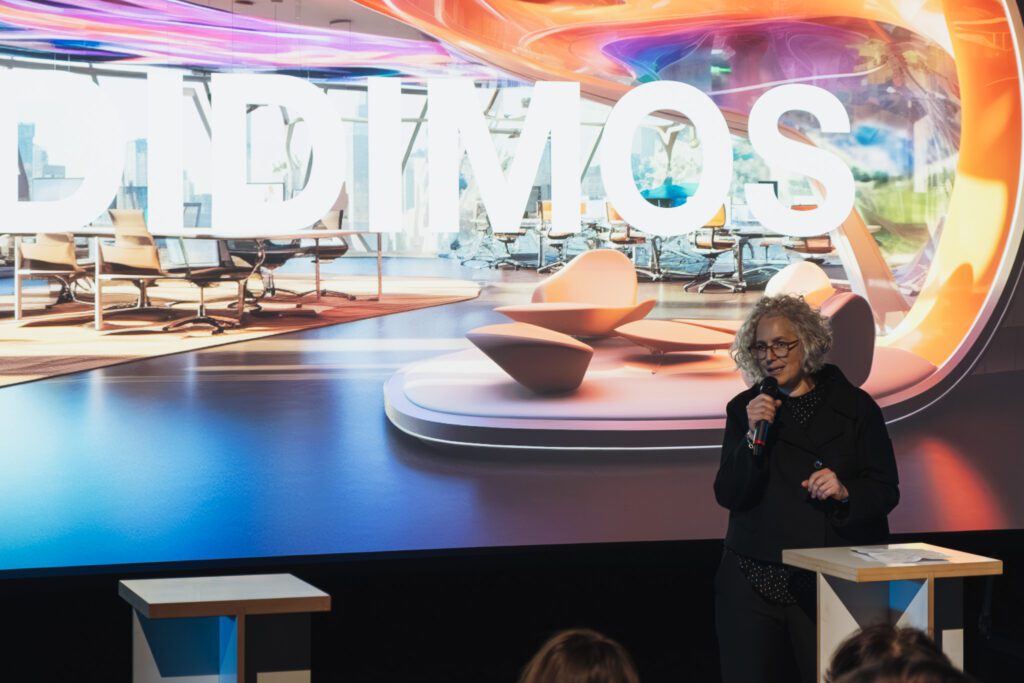
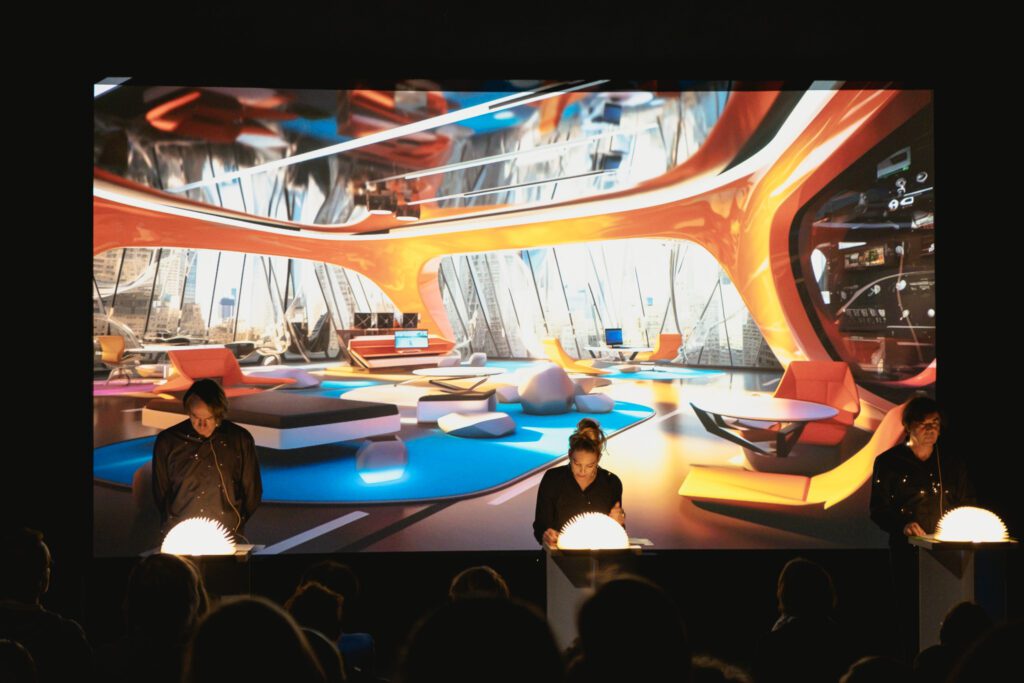
2052 – Nachrichten aus der Zukunft is a performative film reading accompanied by music, in which the audience becomes part of a thought experiment: They receive messages from people living in the future who are trying to preserve their humanity under extreme climatic conditions.
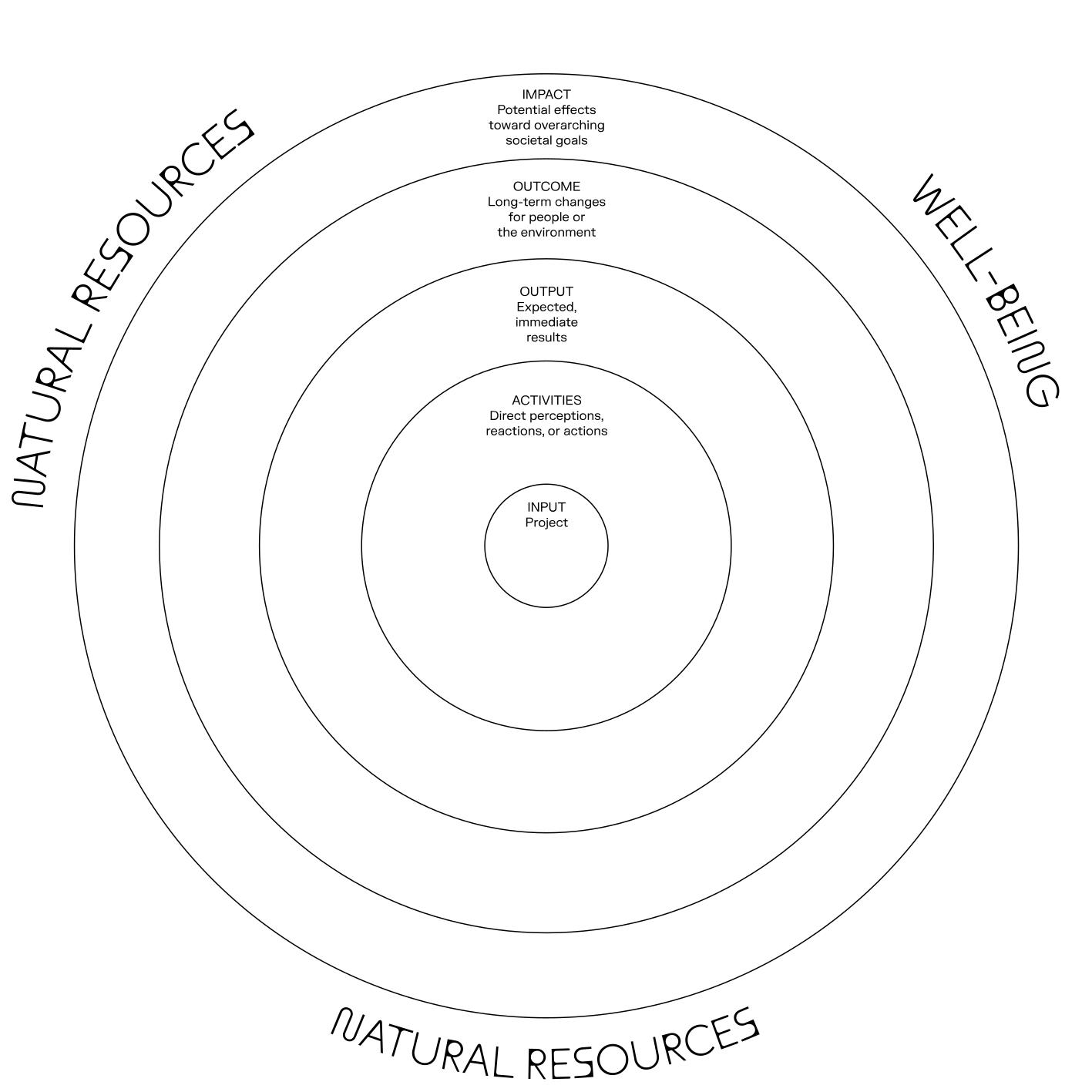
On April 22, 2024, an interdisciplinary group analyzed the potential impacts of *2052 – Nachrichten aus der Zukunft* using the Map/ing Sustainability method. In addition to the participating director, Erica von Moeller, the discussion included participants with expertise in the visual arts, design, crafts, and cultural work. Two participants had attended the future performance and viewed the accompanying film on November 17, 2024, at the Pina Bausch Center in Wuppertal.


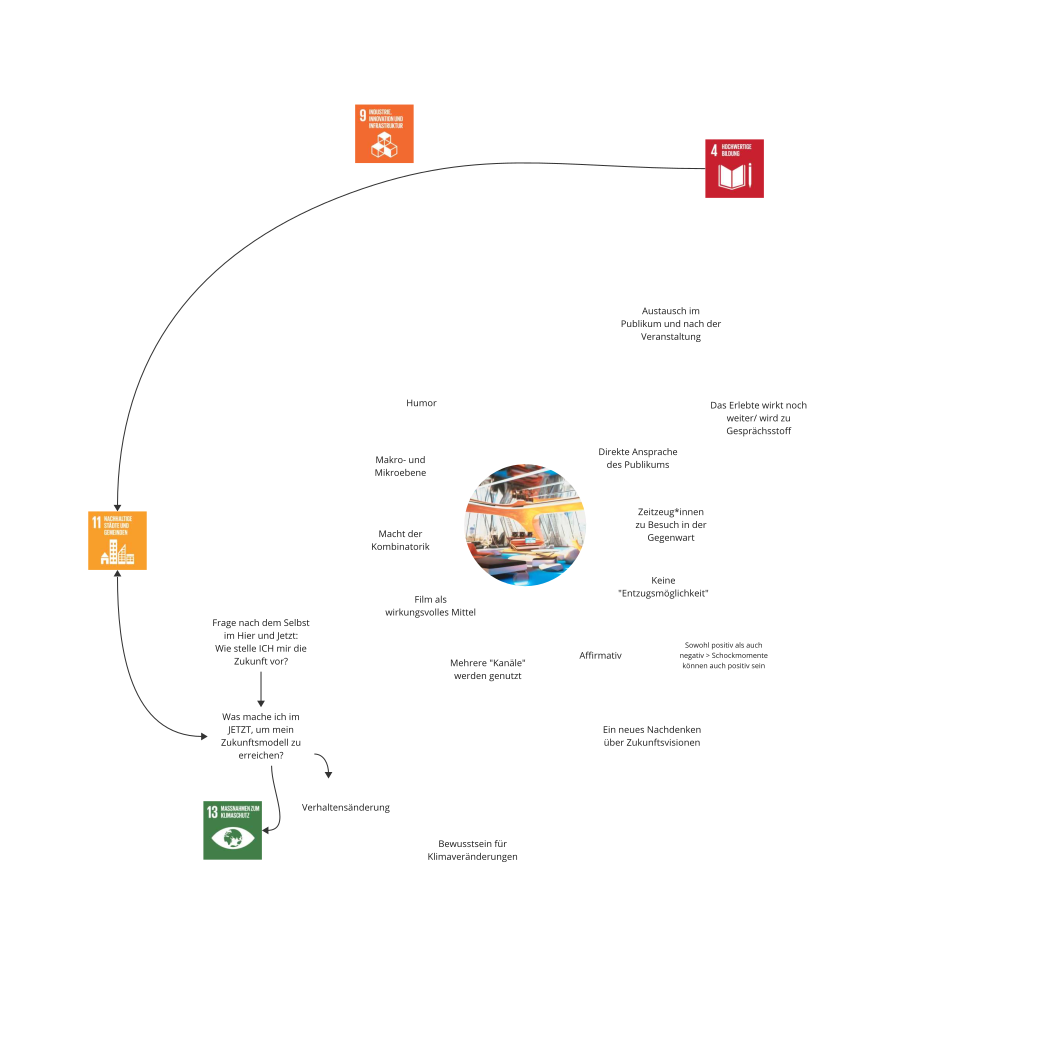
During the group discussion, it became clear that by combining film, readings, and music, the project opens up an emotional entry point for complex questions about the future. Participants in the impact analysis affirmed the organizers’ own description of the project—that art serves here as a medium for addressing social issues—and further expanded on the educational aspect by describing the event as an inspiring example of informal learning. The artistic format makes it possible to convey social contexts in an understandable way—even for younger audiences.
As emphasized in the film’s description, this is not a film in the traditional sense, but rather a staged reading that incorporates cinematic elements and interweaves different time periods. The film opens with a narrative in which a woman receives messages from the future; as the “show”/performance (?) progresses, characters who live thirty years later appear and describe their daily lives, political struggles, and visions. This structure—somewhere between cinematic foreshadowing and a literary leap in time—was described by the group as particularly effective because it intertwines individual and societal perspectives on the future.
It was also discussed that social inequalities play a central role in addressing future scenarios, since disadvantaged groups are often more severely affected by the impacts of climate change but have fewer opportunities to help shape the future. The future, therefore, cannot be conceived under the same conditions for all people. This observation by the group supported the project’s assumption that art can open up spaces in which issues of justice and participation can be experienced.
The participants agreed that the combination of film, reading, and music creates a direct and emotional form of engagement that is “not so easy to resist.” The film, in particular, was perceived as a powerful medium that stimulates reflection through shock, disorientation, or provocation—“The more shocking it is, the longer it stays in your memory.” At the same time, participants took up the idea expressed by the director, who was present at the discussion, that the work aims to evoke not only fear but also humor and a desire to think about the future. According to participants who attended the staged reading, the audience found this tension between seriousness and lightheartedness, between shock and hope, to be particularly stimulating.
Overall, it became clear that the discussion group largely shares the project’s objectives: It endorsed the artistic concept of using aesthetic means to create emotional entry points, reflected on its educational potential in both formal and informal contexts, and broadened the perspective to include issues of social justice and participation—in line with SDG 4 and SDG 10.
The multimedia-based future scenarios not only highlight risks but also present visions of alternative social models. The participants in the impact analysis confirmed the initiators’ assumption that collective adaptability and practices based on solidarity can provide impetus for resilient, community-based Provisioning Systems.
Urban challenges such as storm surges or the dismantling of infrastructure are used in the performance as starting points for reflecting on the future of cities. The group shared the view that the project encourages critical reflection on progress, growth, and technology, and endorsed the artistic decision to facilitate shifts in perspective through performative narrative forms and to envision futures oriented toward the common good.
Climate change is at the heart of the project. The discussion group participants confirmed the project’s self-description: that future scenarios such as heat waves, storm surges, or invasive species make ecological crises emotionally tangible and translate abstract developments into concrete realities of life. They took up this premise and expanded on it by emphasizing that it is precisely this emotional appeal that strengthens awareness of responsibility in the here and now. The artistic approach was recognized as an effective way to engage with ecological issues, combining rational analysis with emotional involvement. In doing so, the participants supported the assumption that the project stimulates reflection on individual attitudes, brings questions such as “What am I doing right now for the future?” into focus, and provides impetus for both personal and societal action to protect the climate, biodiversity, and ecosystems.