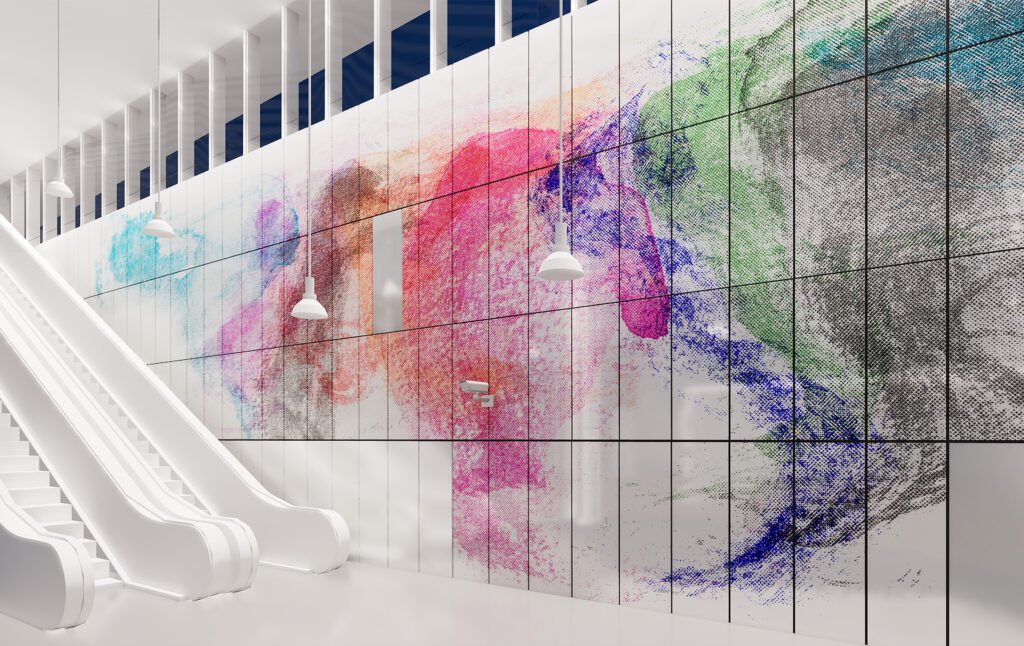
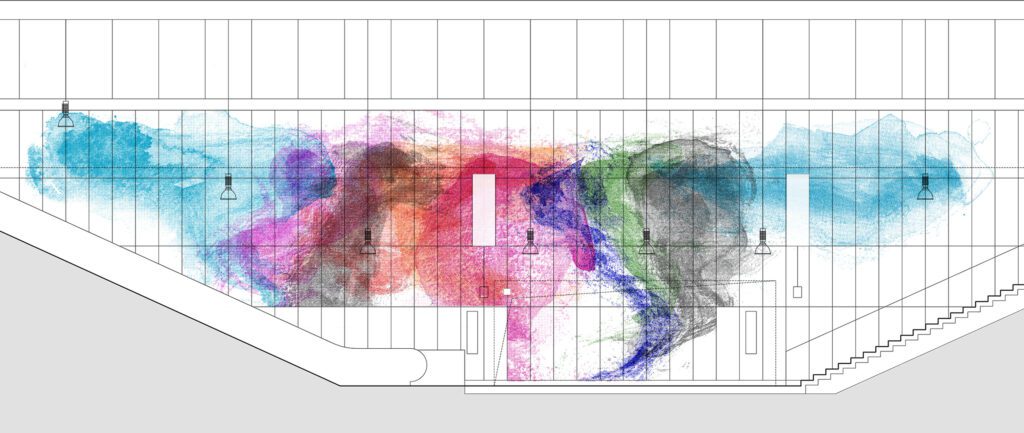
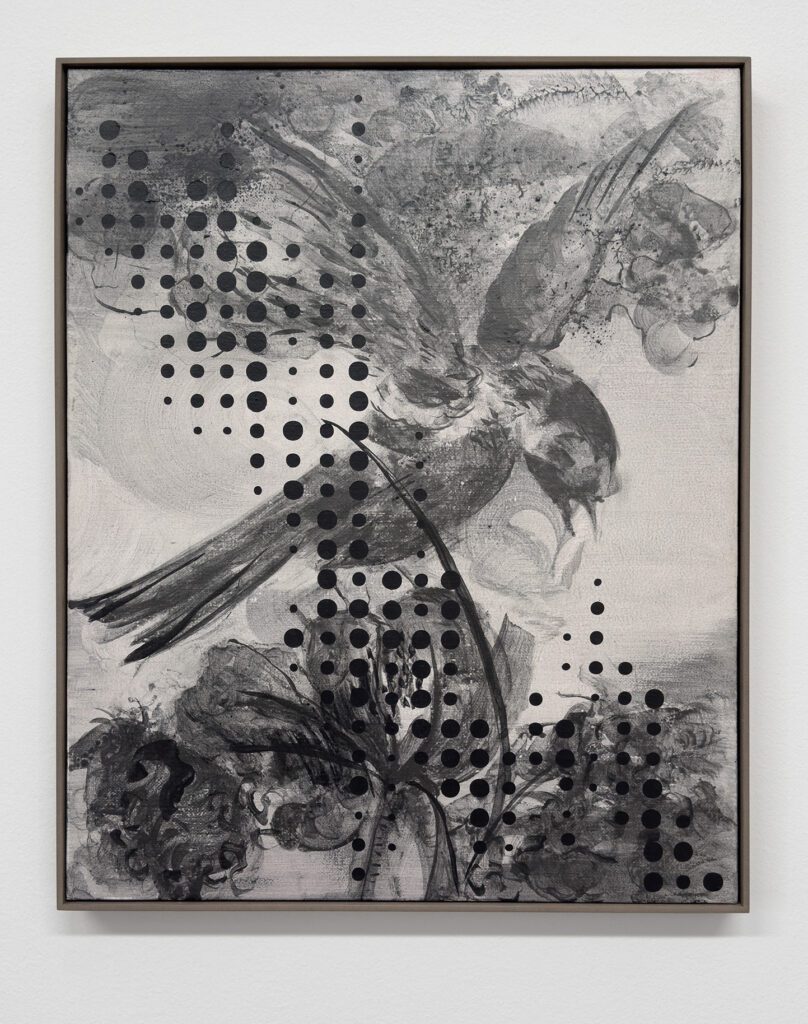
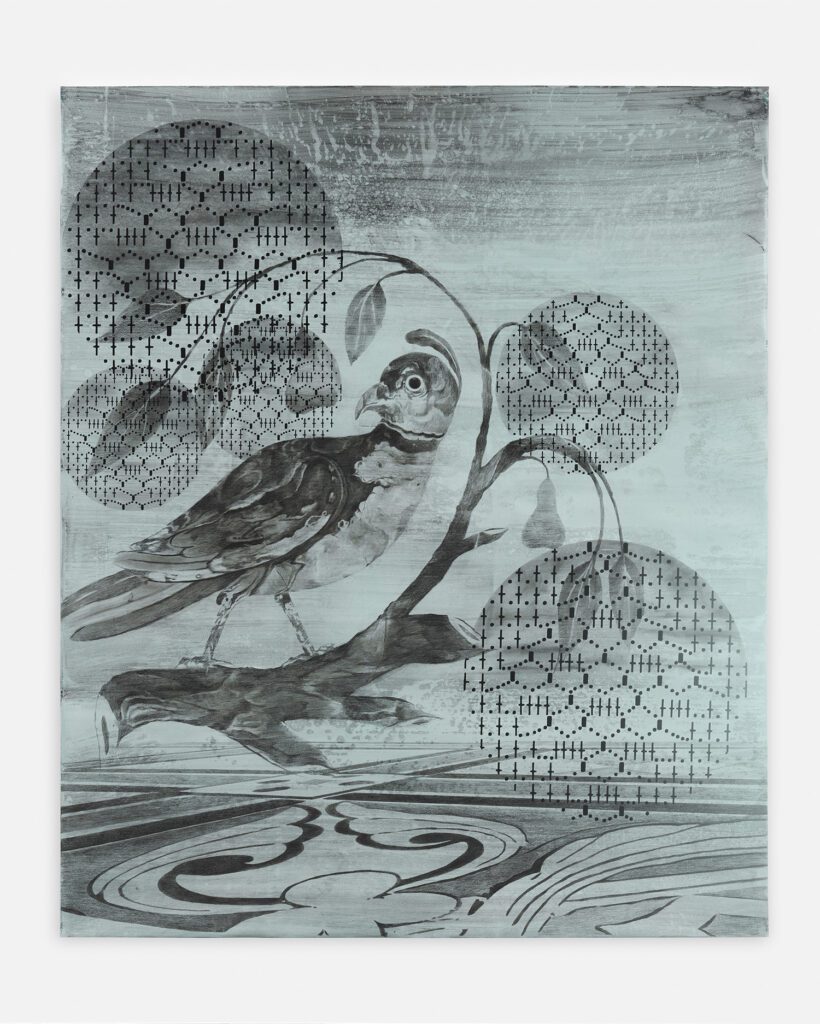
“Swift Messengers ” by Katja Davar is a two-part art-in-architecture project for the new Pilgramgasse subway station in Vienna, which is scheduled for completion by 2028 as part of Vienna’s Climate Roadmap. The first part, *Elastic Navigation*, translates the nine most important global bird migration routes into large-scale pixel structures made of enameled wall panels. It simultaneously references the birds’ changing migration patterns due to climate change and the efficiency of Vienna’s subway lines, as the flight paths are characterized by energy efficiency. The second part, “Picnic Songs,” combines the organizational structure of a historic New York City railway line with an abstract, plant-like structure. Colored dots evoke berries, a fundamental food source for birds, which in turn contribute to the preservation of biodiversity by dispersing seeds. In this way, the work links themes such as mobility, nature, and technical infrastructure, highlighting the complex interrelationships between humans, the environment, and urban life. This background information on the artworks will be conveyed to passersby via informational panels.
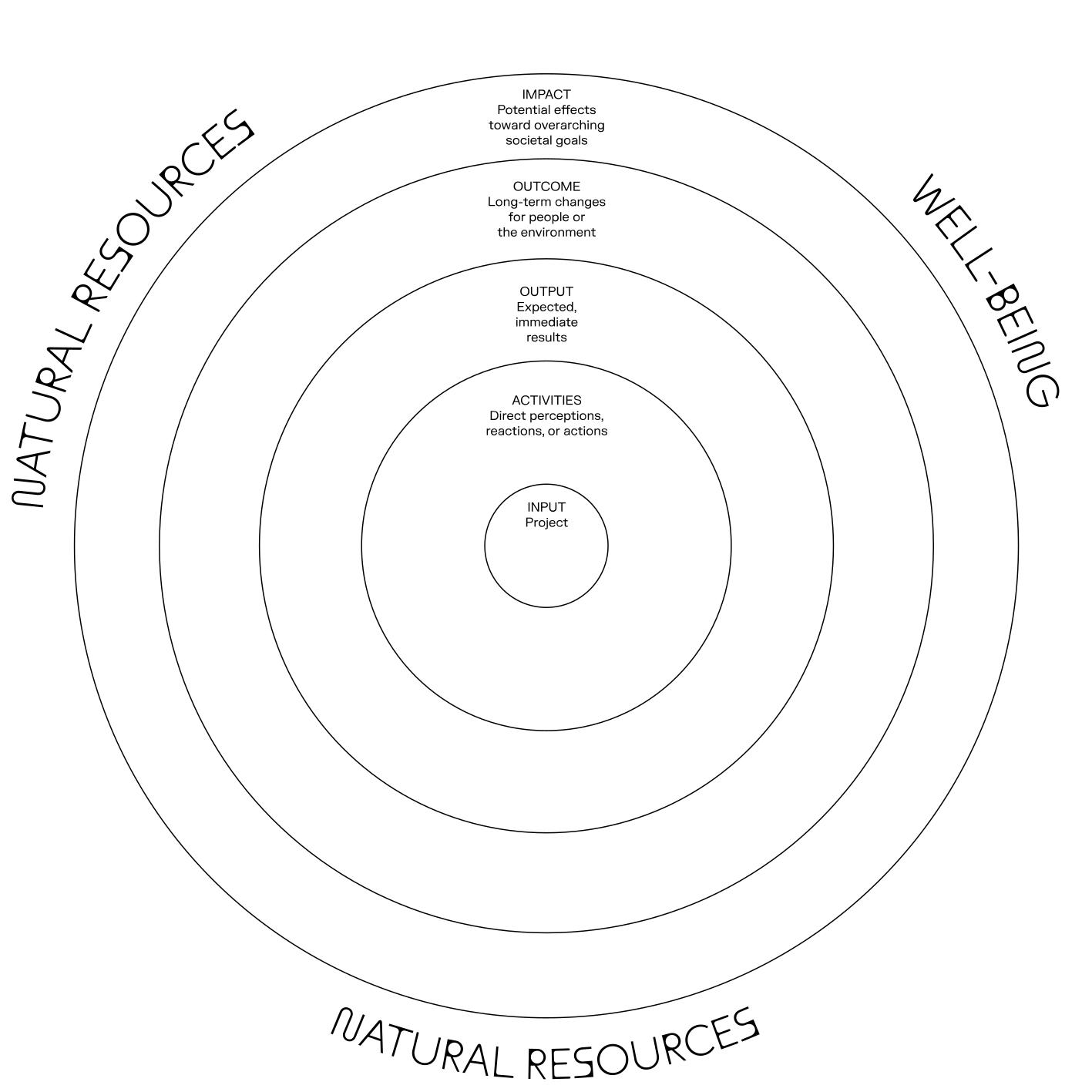
On March 12, 2026, an interdisciplinary group of individuals from the fields of film, design, communication, and sustainable building and living analyzed the potential impact of Swift Messengers using the Map/ing Sustainability method. Artist Katja Davar presented her project in person and participated in the discussion.


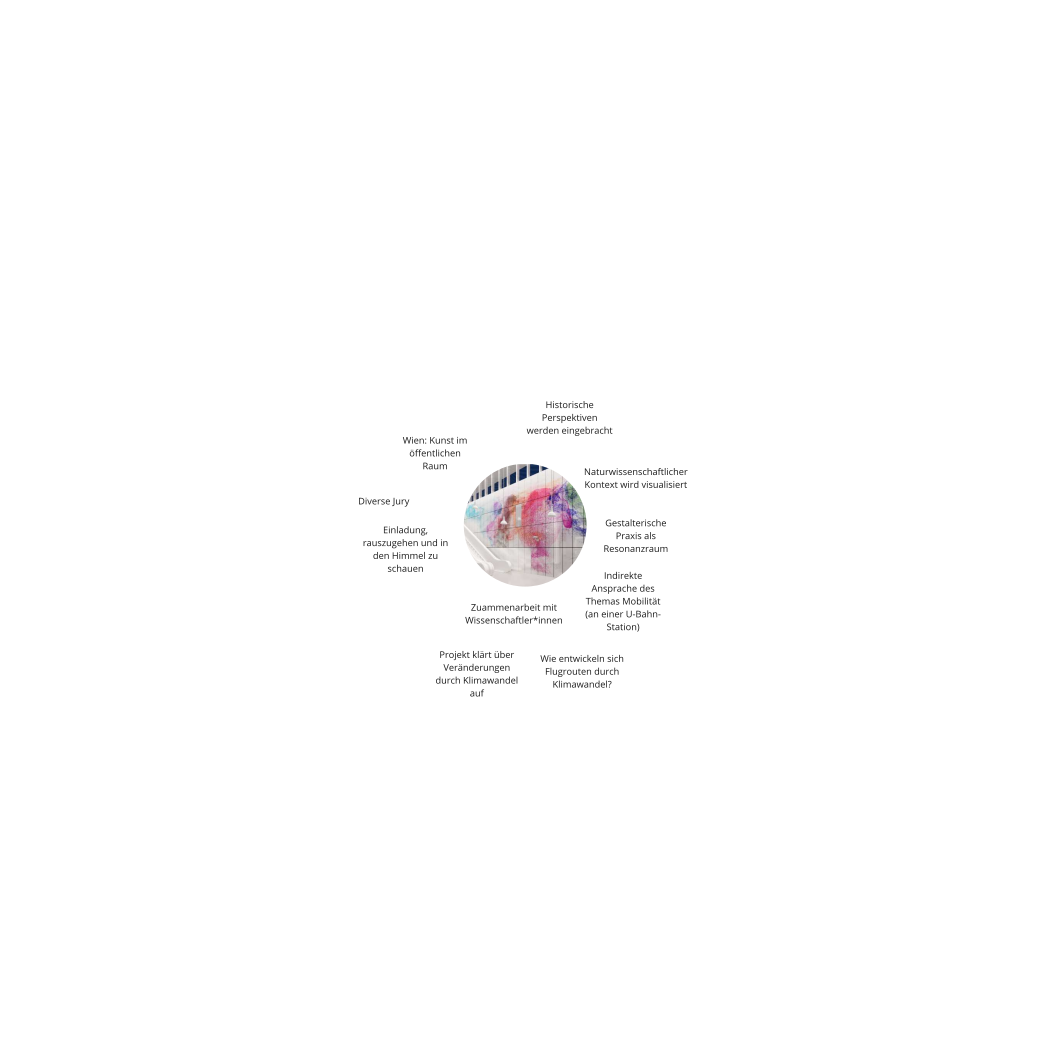
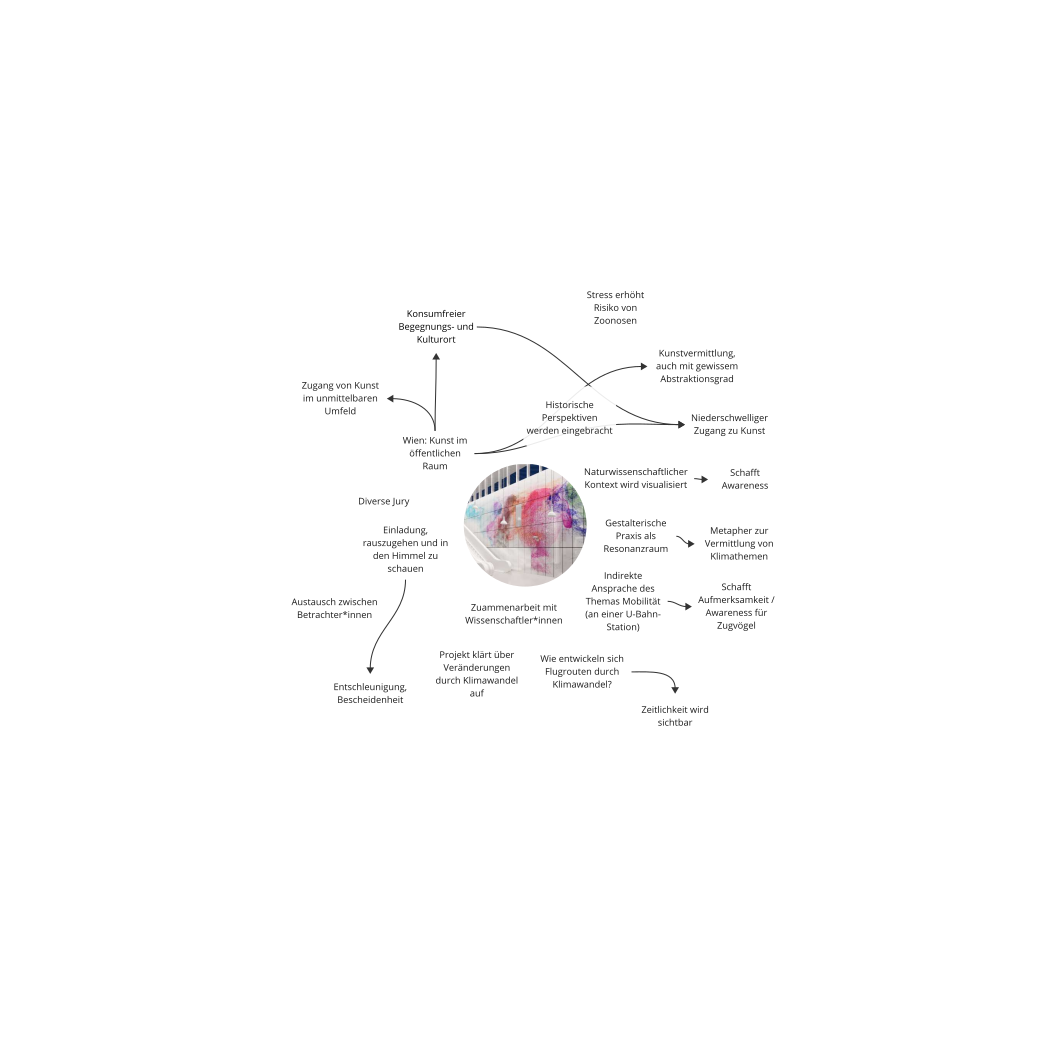
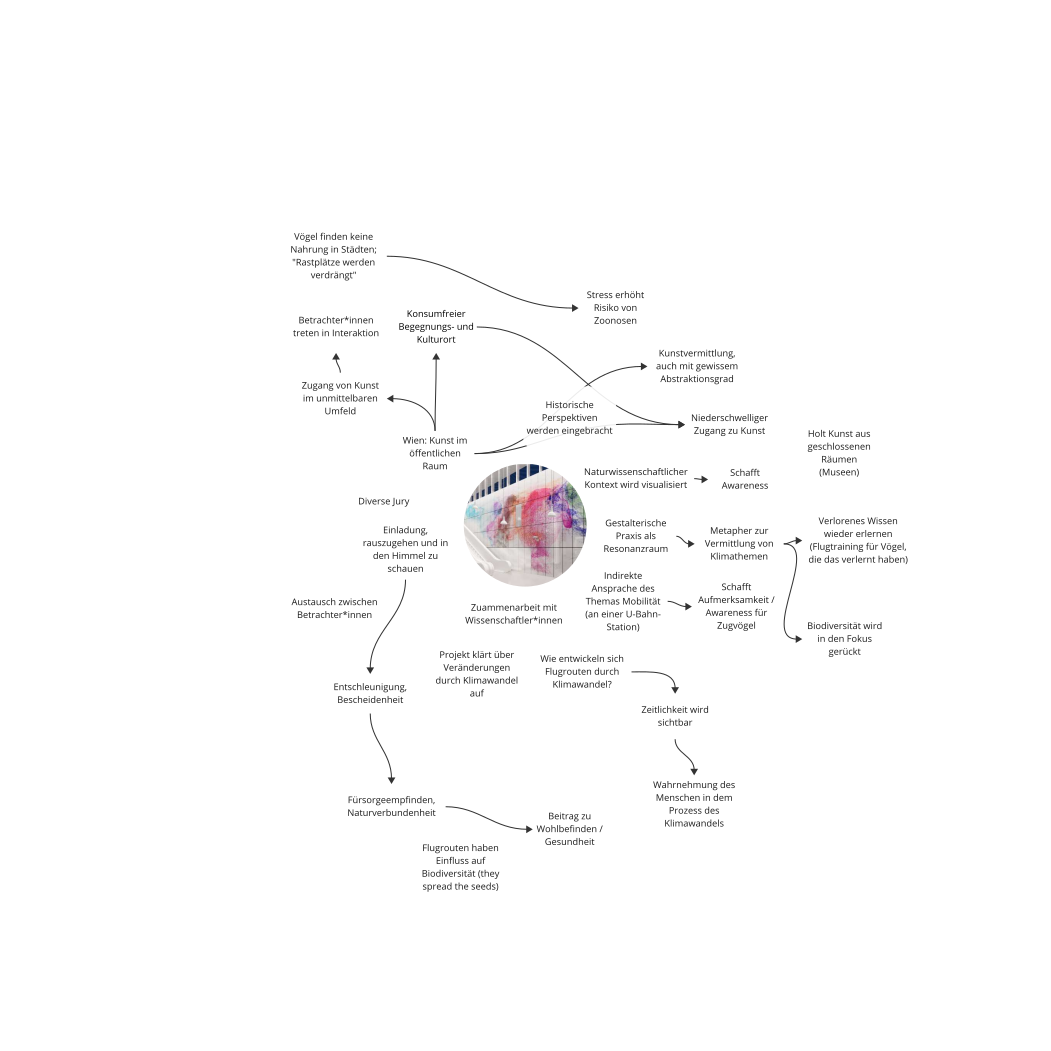
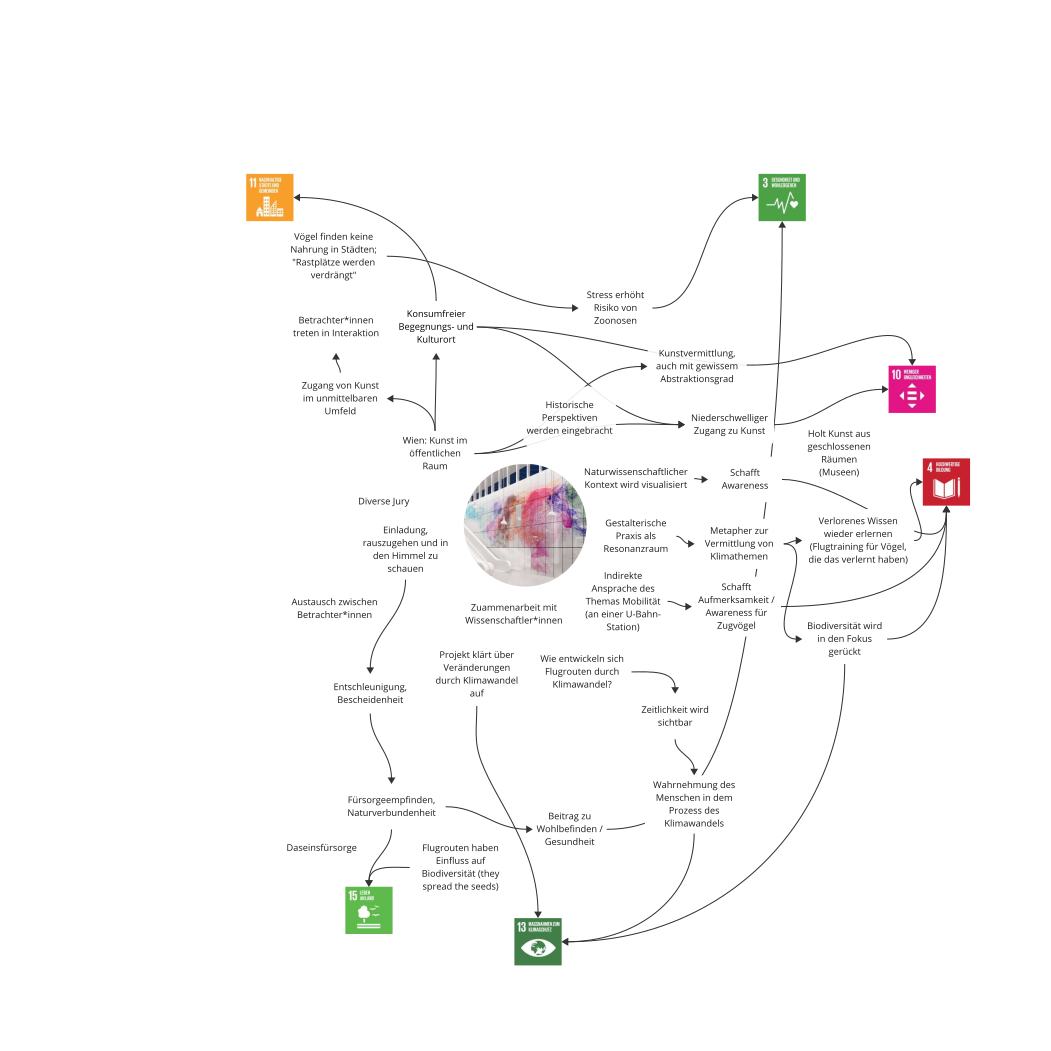
The participants in the discussion described Swift Messengers as an art project with strong educational and outreach potential. They highlighted the connection between artistic representation, scientific findings, and historical perspectives. By visualizing the flight paths of migratory birds and comparing them with urban mobility systems, complex ecological and social dynamics are conveyed in a clear and understandable way. It was emphasized that the depiction of dynamics—particularly in relation to migration, environmental changes, and climate processes—can foster a new understanding of ecological interconnections. At the same time, the artwork’s placement in public space provides low-threshold entry points to educational content and scientific topics (SDG 4).
In addition, the participants described the emotional and health-related effects of the project. The aesthetic depiction of bird migration and natural movements was associated with feelings of slowing down, humility, and a connection to nature. The artwork could encourage people to become more aware of natural processes and create a counterpoint to the everyday world, which is often perceived as hectic. At the same time, participants reflected on the connections between climate change, stress on animal populations, and the occurrence of zoonoses, thereby highlighting the links between environmental changes and human health (SDG 3).
Furthermore, the project’s accessibility in public spaces was interpreted as a way to help reduce inequalities. Participants emphasized that art in urban spaces can reach people regardless of their social, cultural, or economic circumstances. This enables cultural participation even outside traditional institutions and fosters interest in art and the themes it conveys (SDG 10).
At the level of Provisioning Systems, Swift Messengers was described in particular as a contribution to sustainable and livable cities. The participants emphasized that art in public spaces can create consumption-free places for encounter and dialogue. The artwork functions as a “resonance space” in which different groups of users—from passersby to policymakers—can engage with one another.
At the same time, the project draws attention to the impacts of urban lifestyles on animal migration—such as the loss of nesting and resting sites—as well as the connections between climate change, human infrastructure, and animal health. Art is thus perceived as part of public communication and urban infrastructure, facilitating reflection and dialogue on ecology in everyday life (SDG 11).
In terms of natural resources, the participants described the project as a way to raise awareness of biodiversity and ecological interdependencies. Particular emphasis was placed on the role of migratory birds as “sympathy-generating figures” that make complex environmental issues emotionally accessible. Depicting bird migration can strengthen a connection to nature and thus inspire caring behavior. At the same time, it draws attention to the ecological importance of birds for biodiversity and the dispersal of plants (SDG 15).Furthermore, Swift Messengers was described as a tool for communicating the impacts of climate change. By visualizing changes in migration patterns and highlighting the disappearance of nesting and resting sites, the project makes the effects of climate change visible and tangible. Participants described the project as an opportunity to reflect more deeply on human impact on the environment and climate and to raise awareness of necessary Climate Action measures (SDG 13).