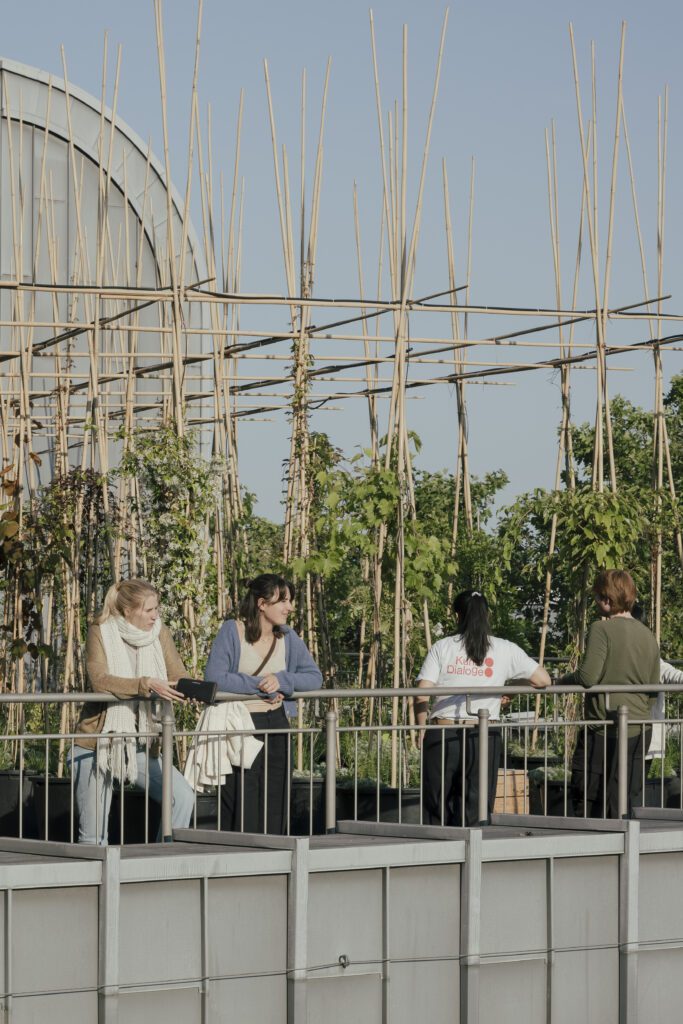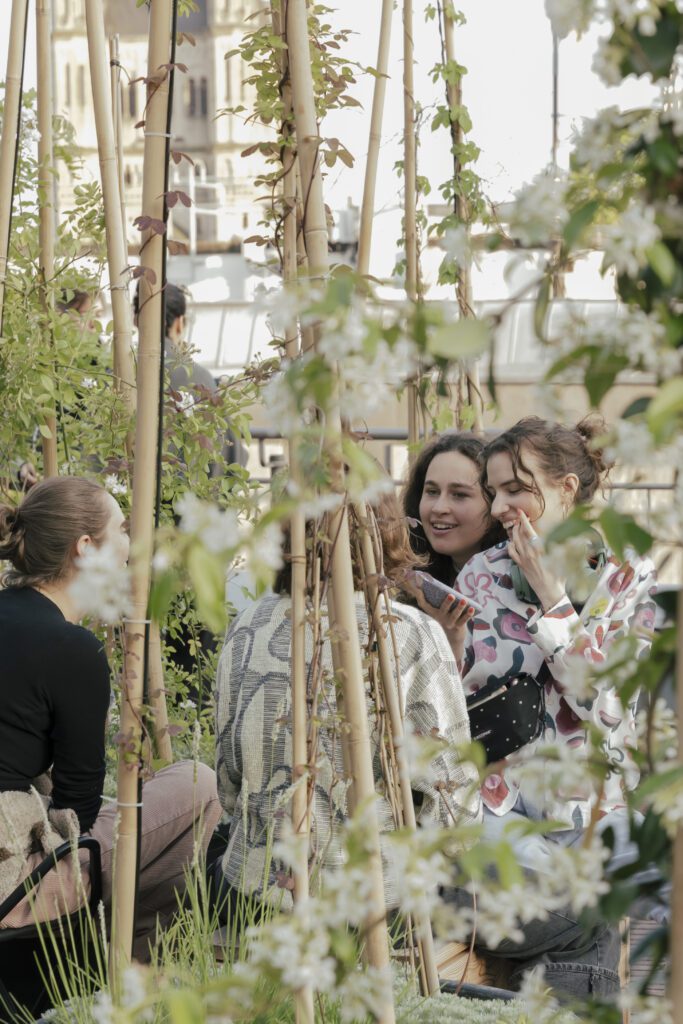
The Museum Ludwig’s rooftop garden—designed by Atelier le balto—combines a tribute to the historic Bischofsgarten with active renaturation: biodiversity, natural cooling, and a place for gathering and reflecting on climate resilience in the city center.
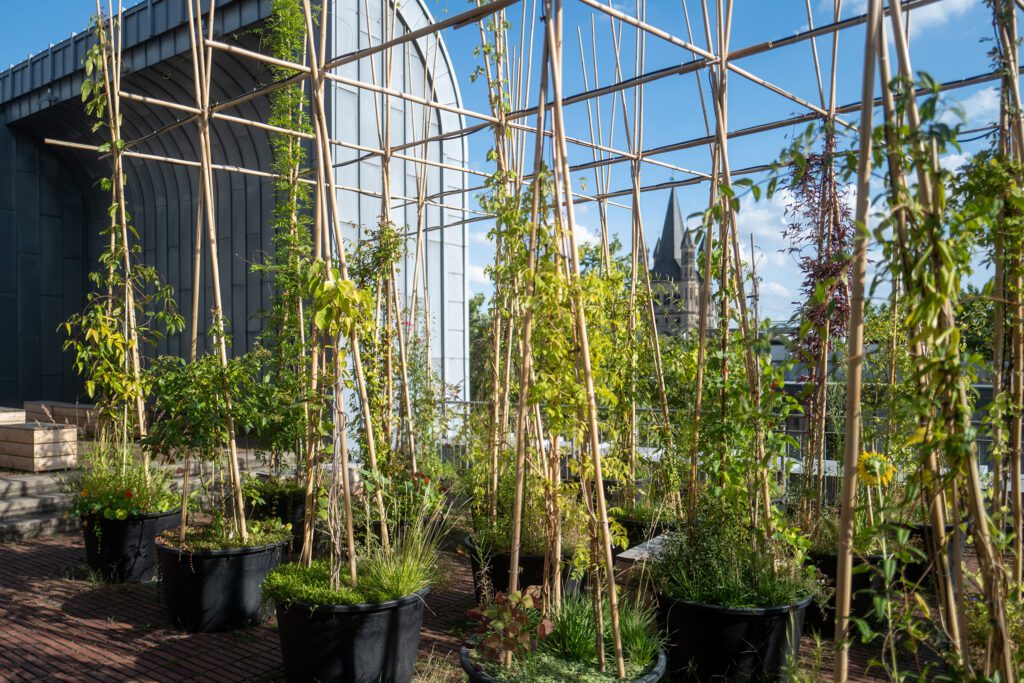
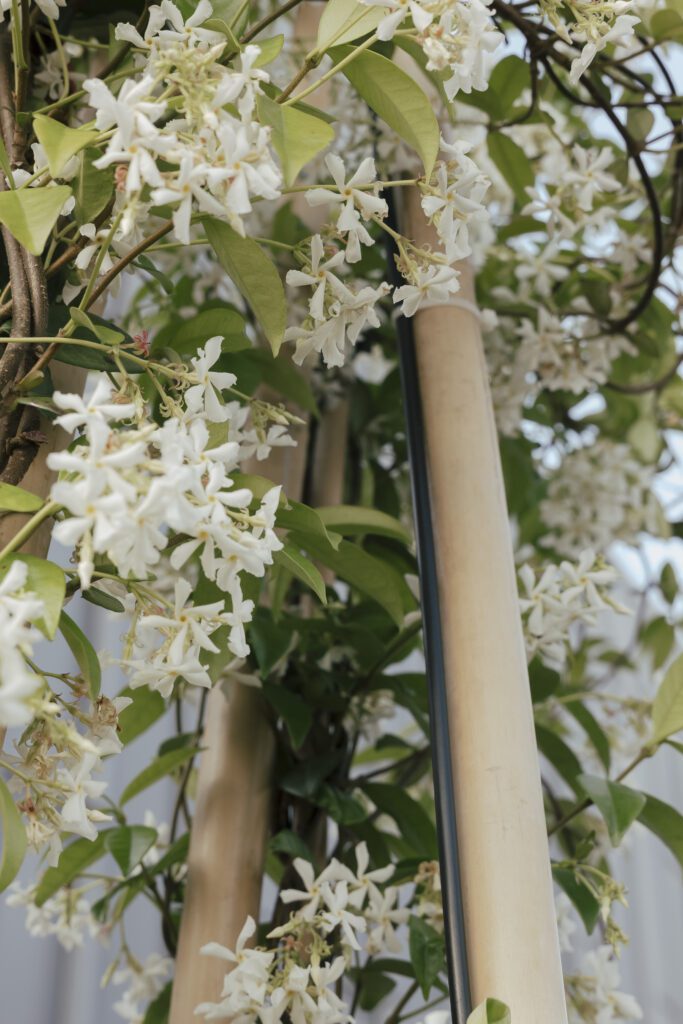
The rooftop garden was created as part of the exhibition “Here and Now. And Yesterday and Tomorrow” (March 9, 2023–October 13, 2024) and was intended to outlast the project. The Museum Ludwig stands on the site of the former Bischofsgarten. While excavating the foundation pit for the museum building, workers came across a layer of humus originating from this garden, of which nothing remained except the name Bischofsgartenstraße. The rooftop garden designed by Atelier le balto was intended both to commemorate this garden in a central urban location and to contribute to the renaturation of the city center. With its towering bamboo structure and the diverse climbing plants that grow over it, the garden is visible even from the street and has become a small oasis for both the Museum Ludwig team and visitors. Here, one can find shade where there was none before; here, one can rest on benches or hold meetings—and, with a little luck, even snack on something from the garden. The rooftop garden is irrigated from the building’s own well, that is, with groundwater and seepage water from the nearby Rhine. The goal is to help increase biodiversity in the city center, create a cooling space, improve rainwater retention, provide shade for the building—and thereby naturally protect it from overheating—and encourage the greening of additional areas. At the same time, a space has been created here that serves as a forum for discussing the Museum Ludwig’s climate resilience and the responsibility a public museum can assume in the face of heat, heavy rain, and other challenges. Ultimately, the rooftop garden certainly has only a minor impact on the museum’s ecological footprint, but it has left a “handprint” that encourages us to think more about the long-term, meaningful use of rooftop spaces and also about how exhibition projects can bring about sustainable change at the museum.