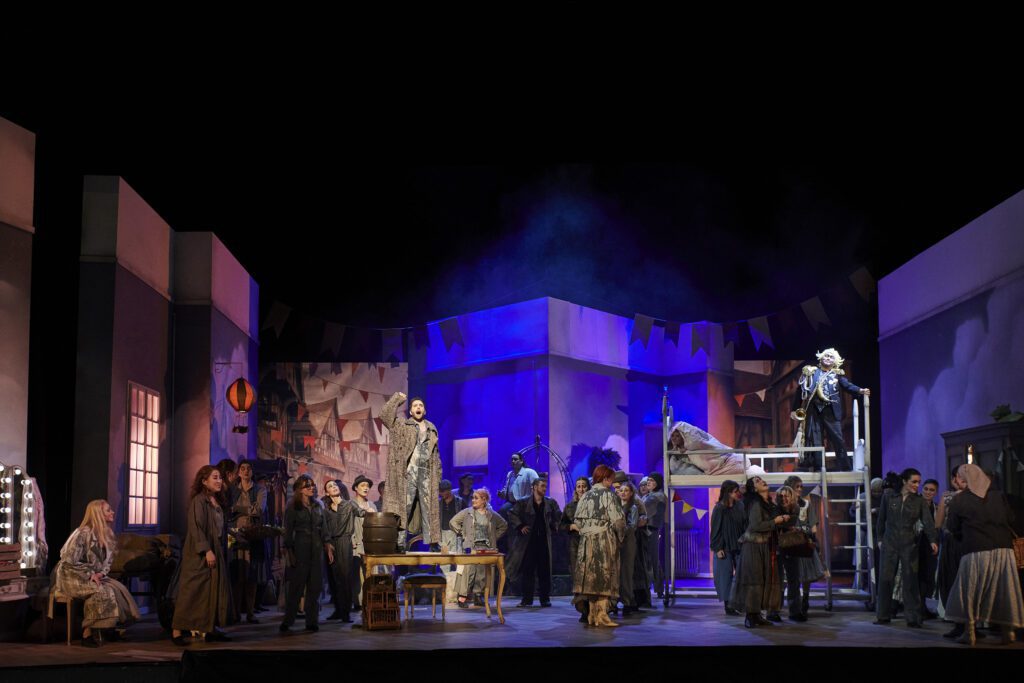
Modular Stage Zero is a project by the Wuppertaler Bühnen and Symphony Orchestra, carried out in collaboration with the Wuppertal Institute. At the heart of the project is a modular system for designing stage sets that makes it possible to reuse large parts of the set structures, thereby saving materials and resources. Modular Stage Zero is a building block of sustainable stage practices at the Wuppertaler Bühnen.
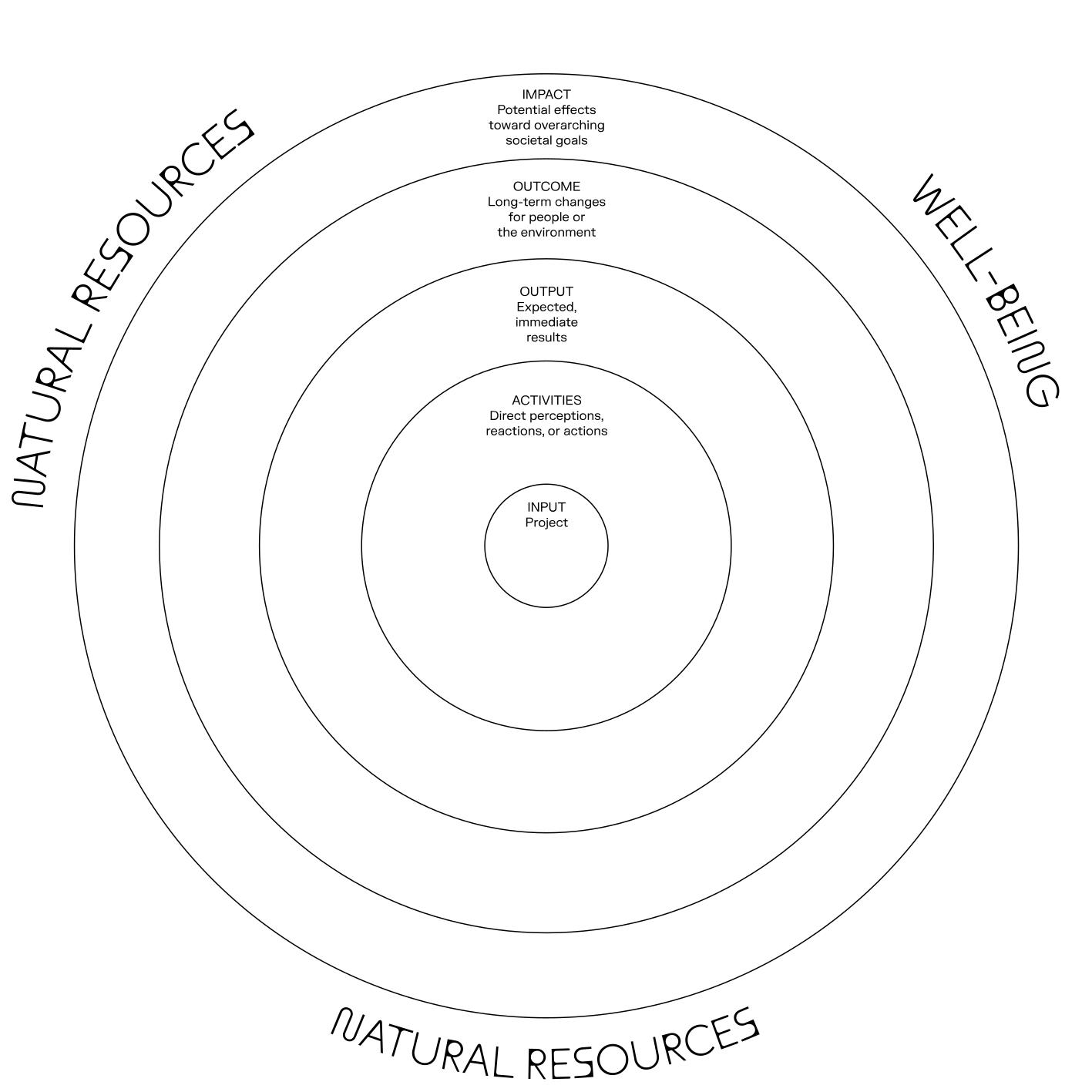
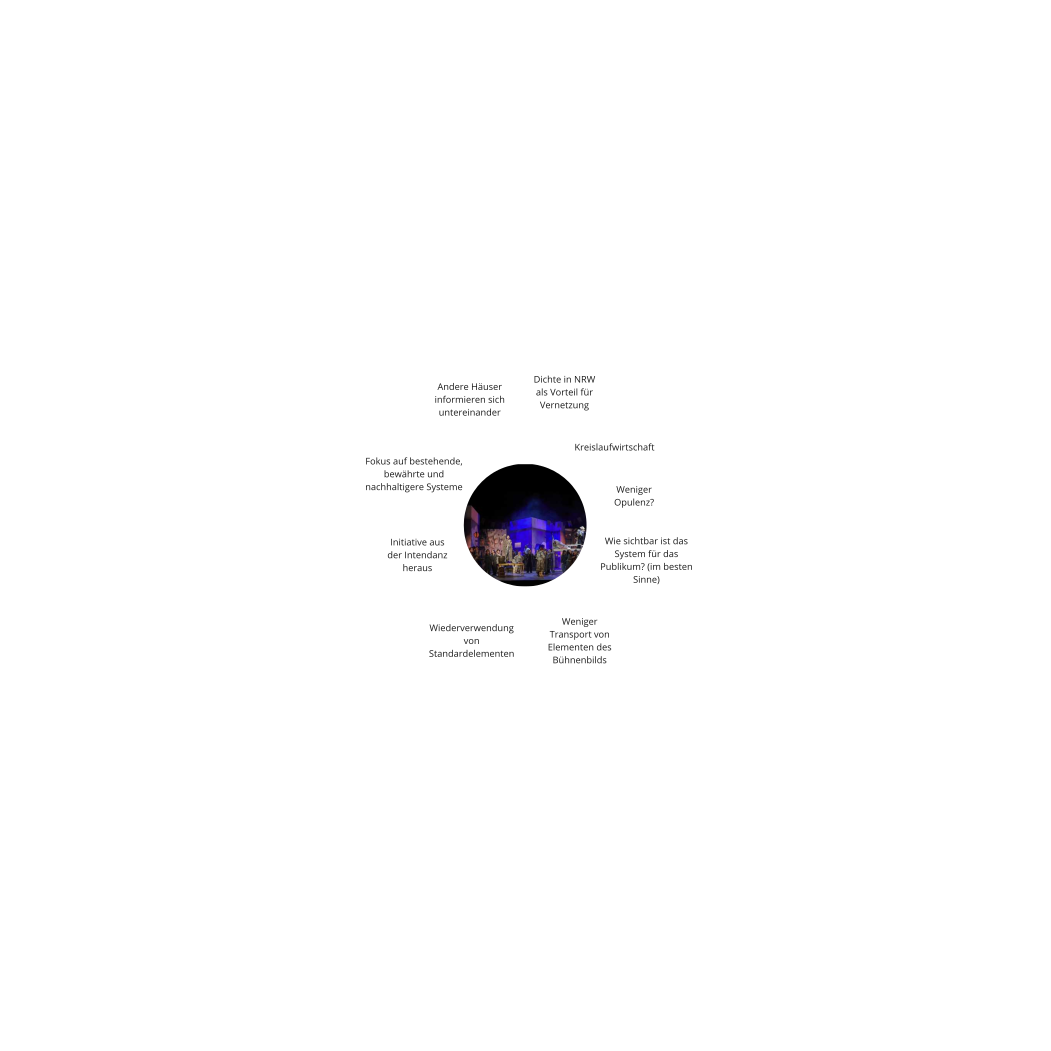
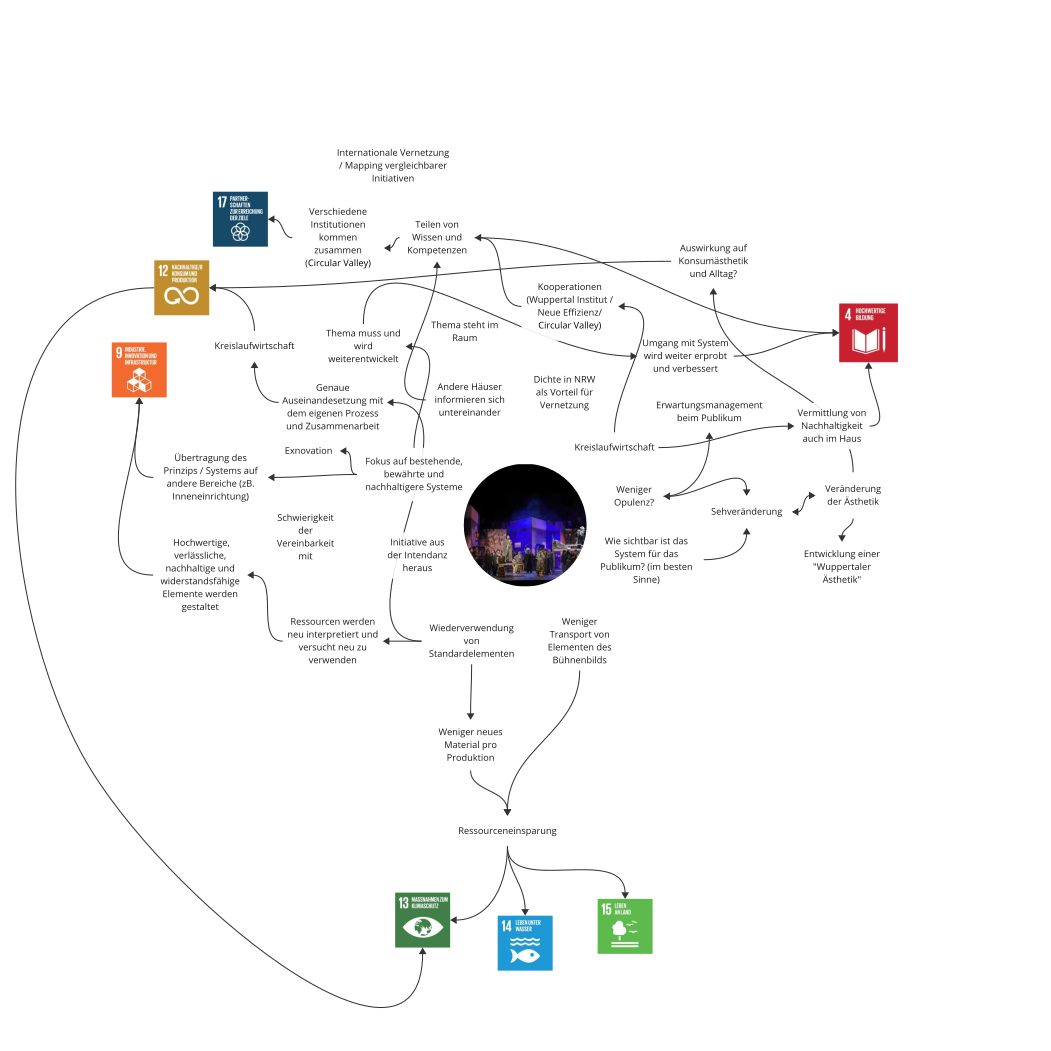
On April 15, 2026, the potential impacts of Modular Stage Zero were analyzed using the Map/ing Sustainability method by an interdisciplinary group consisting of geographers, designers, sociologists, communication and economics scholars, as well as representatives from commerce and industry. Lukas Vaupel, who oversees the project on behalf of Wuppertaler Bühnen, presented the Modular Stage Zero project and participated in the discussion.


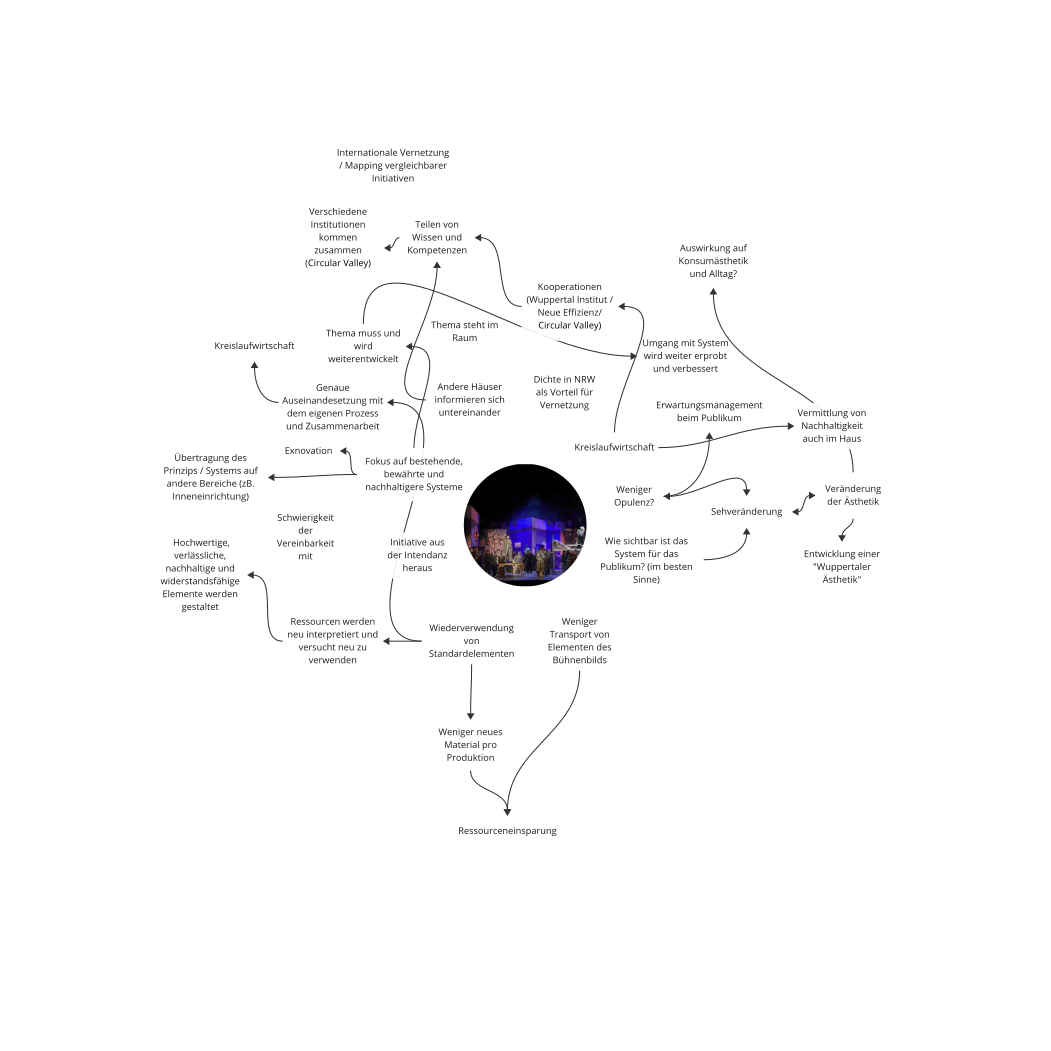
The system on which Modular Stage Zero is based is not fundamentally new. Rather, the aim is to further develop existing approaches—through an in-depth examination of the processes involved in modular systems and the materials used. The insights and experiences gained in this process are to be systematically shared. Against this backdrop, the discussion group identified the project’s central contribution primarily in the area of knowledge and education (SDG 4). Effective networks for knowledge transfer—within the organization, between institutions, and internationally—are crucial in this regard. These networks must be utilized more effectively, expanded, or newly established.
In a broader sense, the modular construction of stage sets could also change the audience’s viewing habits and expectations. Through interaction with set designers, audience members not only learn to appreciate the craftsmanship involved but also become more aware of the sustainable aspects of modular constructions. This can give rise to a form of informal education—as a lively exchange between craftspeople and the audience. At the same time, the limited possibilities of modular systems set a natural limit on the “higher, faster, further” trend, as well as on ever-larger and more opulent stage sets, which have become particularly established in opera over the past few decades. This limitation could give rise to a distinctive style: set designs based on the same system share certain design characteristics. In the long term, this could even lead to the emergence of a distinct “Wuppertal aesthetic.”
During the discussion, Modular Stage Zero was described as an “exnovation” because it is based on a system that has “actually been the standard in Germany for 40 years” (SDG 9). Instead of developing new parts for every production run, the focus is on “making standard parts the foundation again” and continuously improving their practical application.
This requires a thorough examination of our own production methods and processes—from the conception of an opera or play all the way to the premiere—including close collaboration with set designers. This gives rise to long-term production models that are adapted to the specific conditions and infrastructure of the Wuppertaler Bühnen as a local “niche.” Such an approach, which consistently adapts local production and consumption systems to existing circumstances, can also be applied to other areas (SDG 12). A prerequisite for this is increased networking at various levels—in particular through the knowledge transfer already highlighted (SDG 17).
The discussion also addressed the extent to which a less opulent aesthetic in stage design—originating in high culture—could influence consumer culture and lead to more frugal practices among audiences (SDG 12).
The reuse of standard elements reduces both material and transportation costs, thereby leading to savings in resources and emissions (SDGs 13, 15). Materiality and how it is handled are relevant factors that can be directly influenced. Developing the relevant skills is considered essential for sustainability and resilience. The artistic exploration of materiality makes this space for solutions tangible.
Even though the quantitative savings remain modest compared to the audience’s mobility, the associated practices lay the groundwork for attitudes and ethics regarding the use and appreciation of Natural Resources.