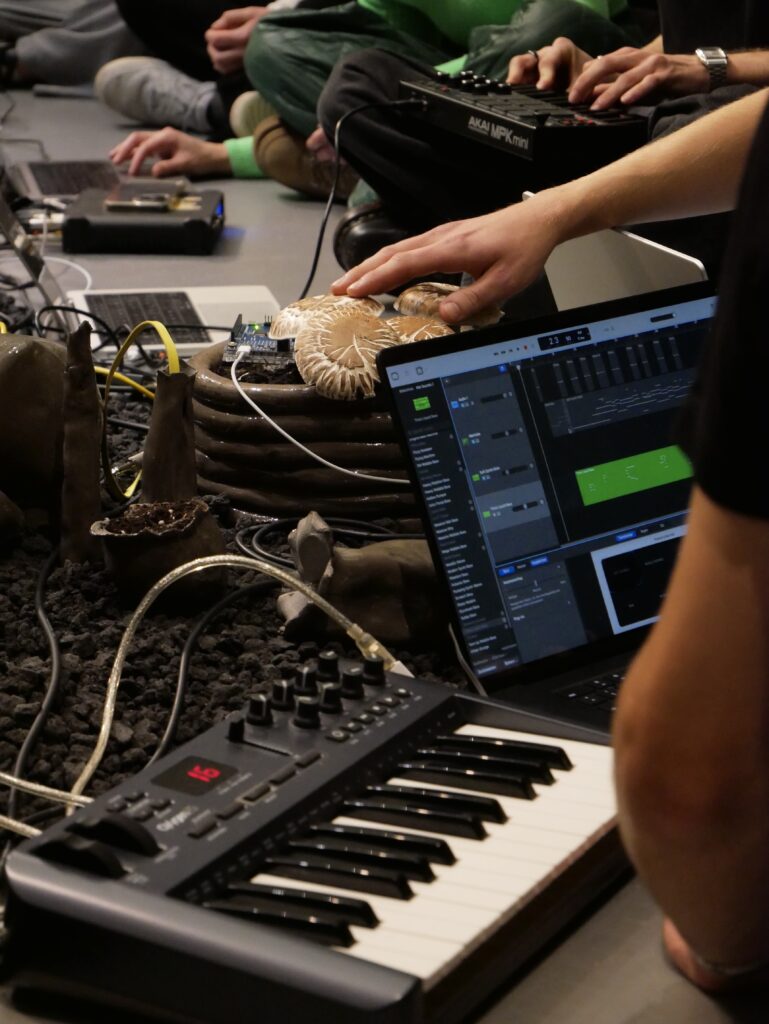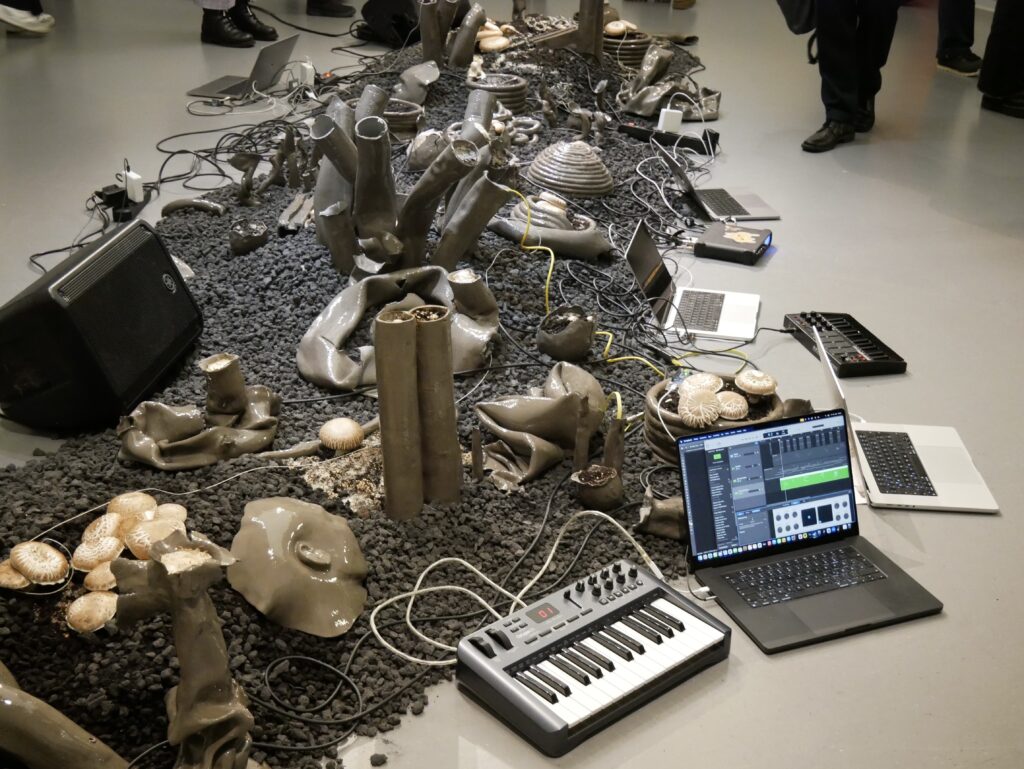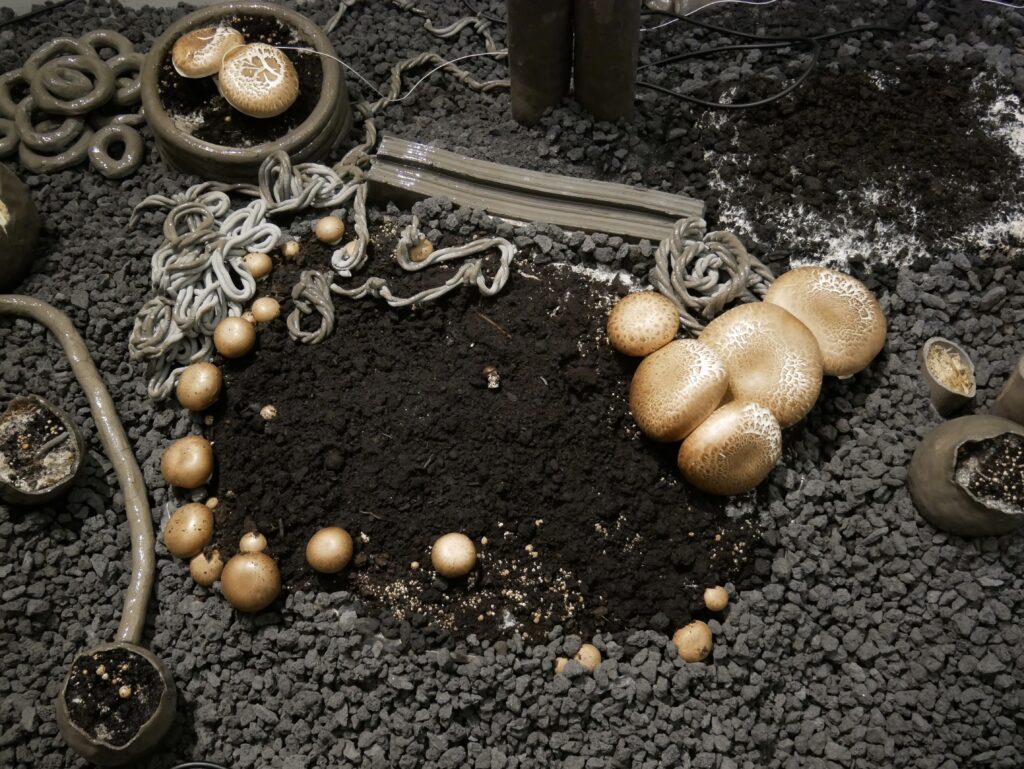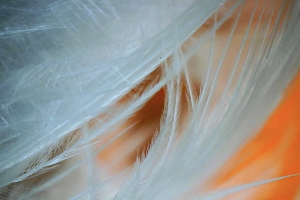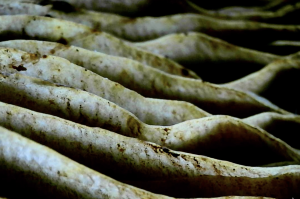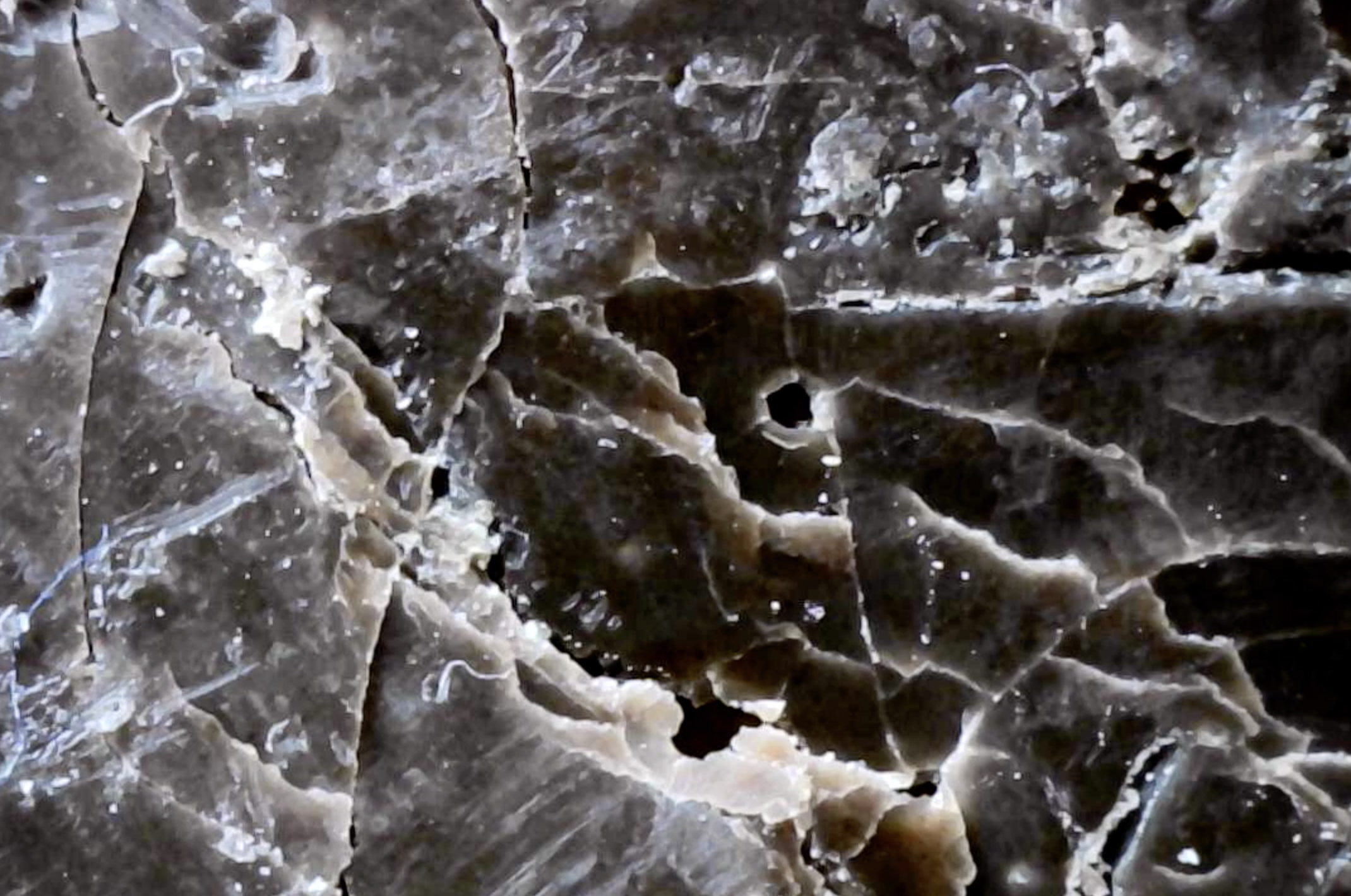
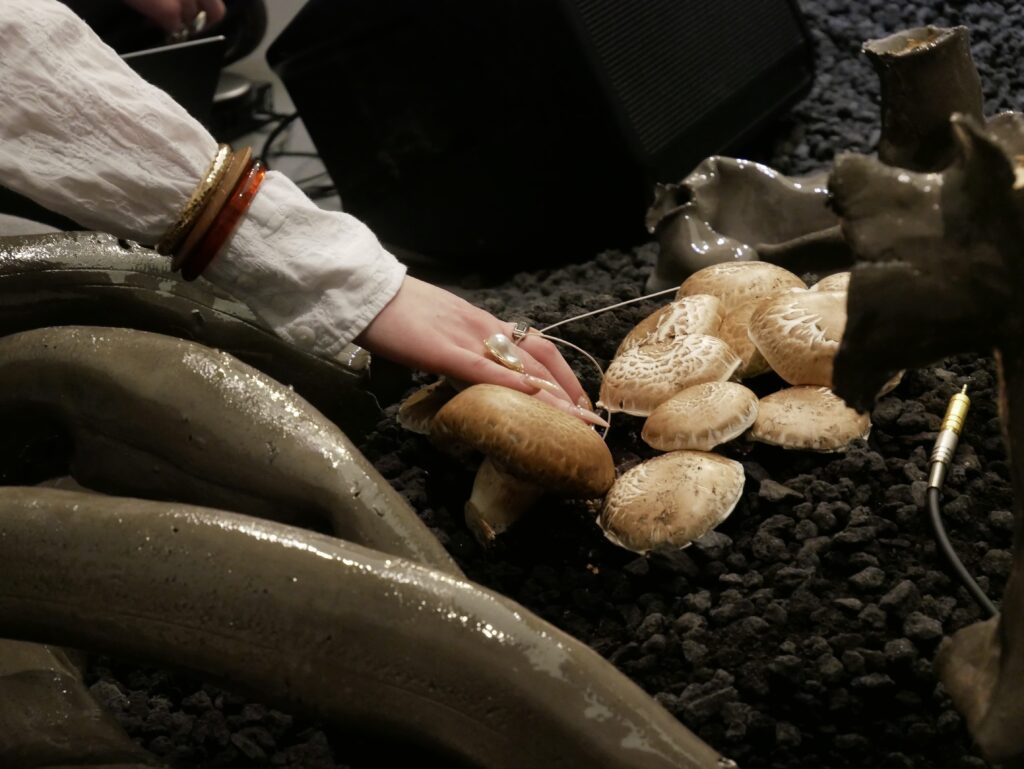
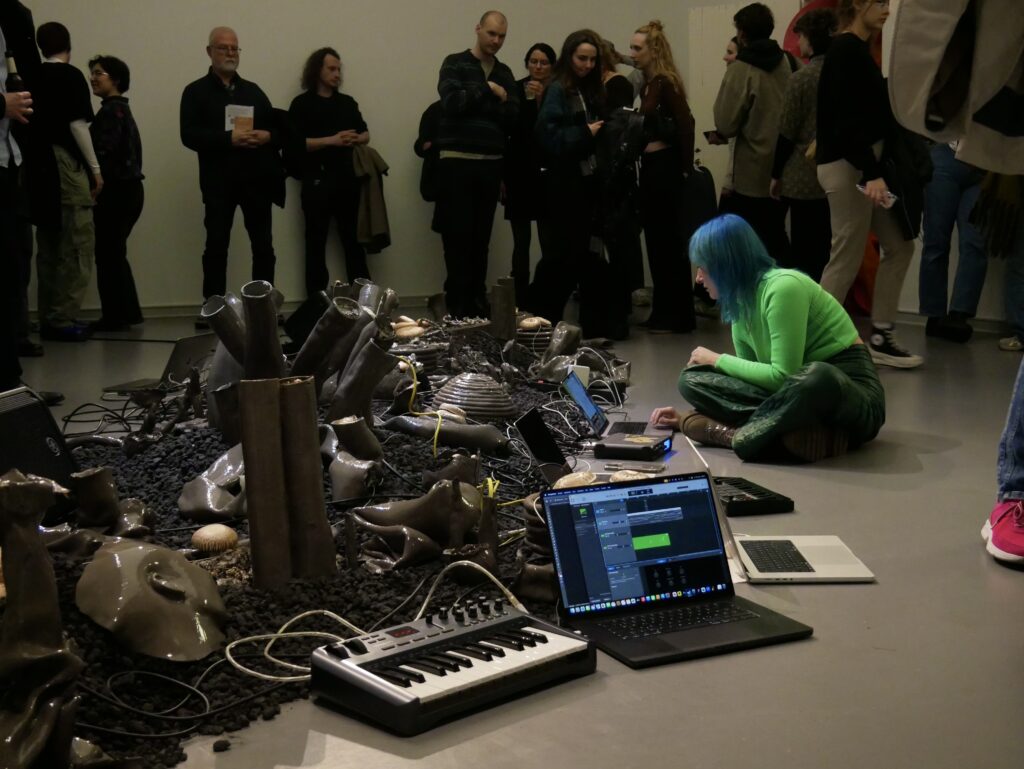
The Fungi Orchestra is a collaborative sound installation and performance involving people and mushrooms. Fungi that grew on-site on ceramic structures were incorporated into the performance as co-performers by translating their bioelectric impulses—which are inaudible to the human ear—into sounds via electrodes and technical control elements. The work was created under the direction of artist Maria Wildeis as part of the exhibition Fertile Structures – A Laboratory Exhibition for Networked Thinking and Action at the Kunsthalle Barmen, in collaboration with Katharina Maderthaner and students from the University of Wuppertal.
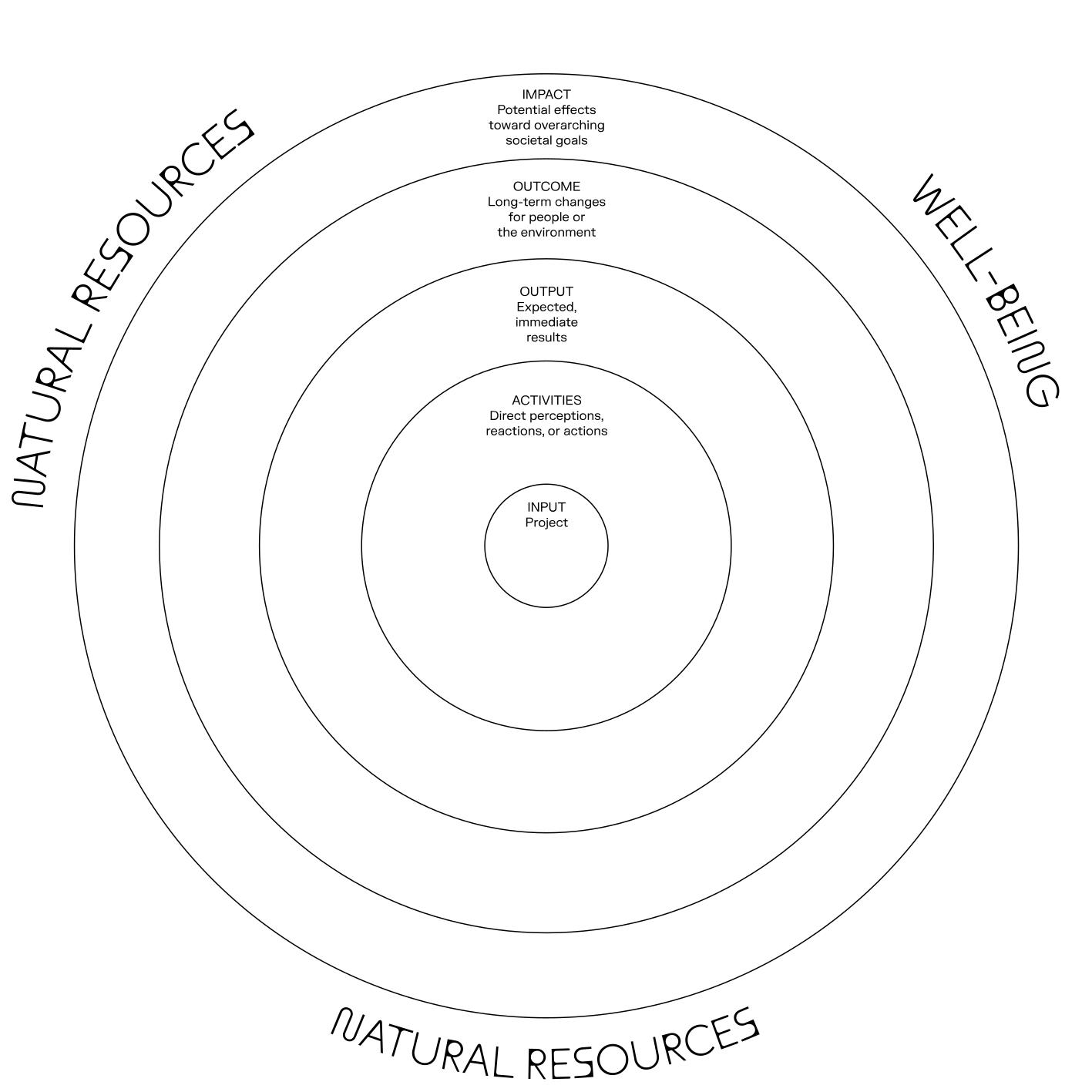
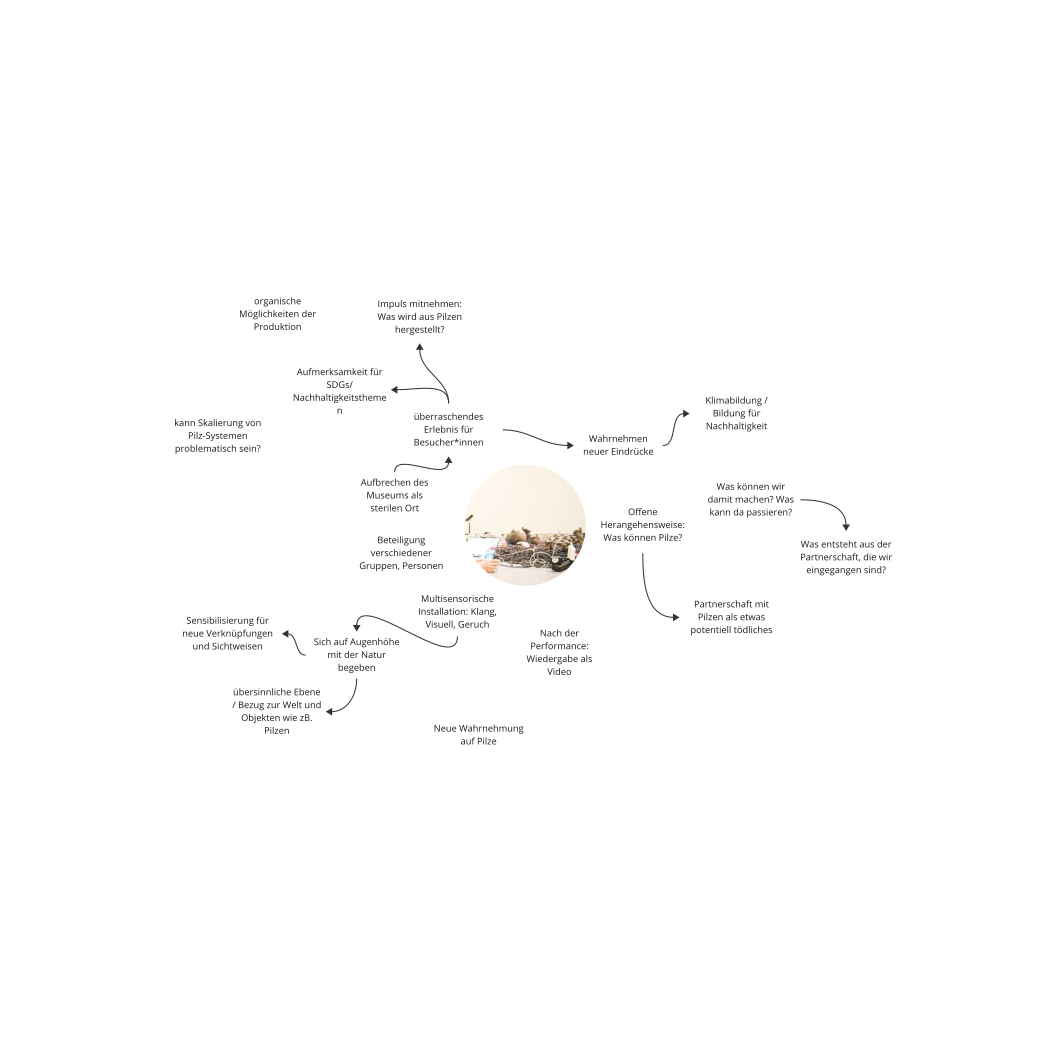
On March 9, 2026, the potential impact of the Fungi Orchestra was analyzed using the Map/ing Sustainability method by an interdisciplinary group of designers, artists, curators, and experts in art education and the arts and crafts. Maria Wildeis presented the project and participated in the discussion. Also present was Katharina Maderthaner, who had carried out preparatory work for the installation with various groups of students—such as creating the ceramics on which the mushrooms grew.

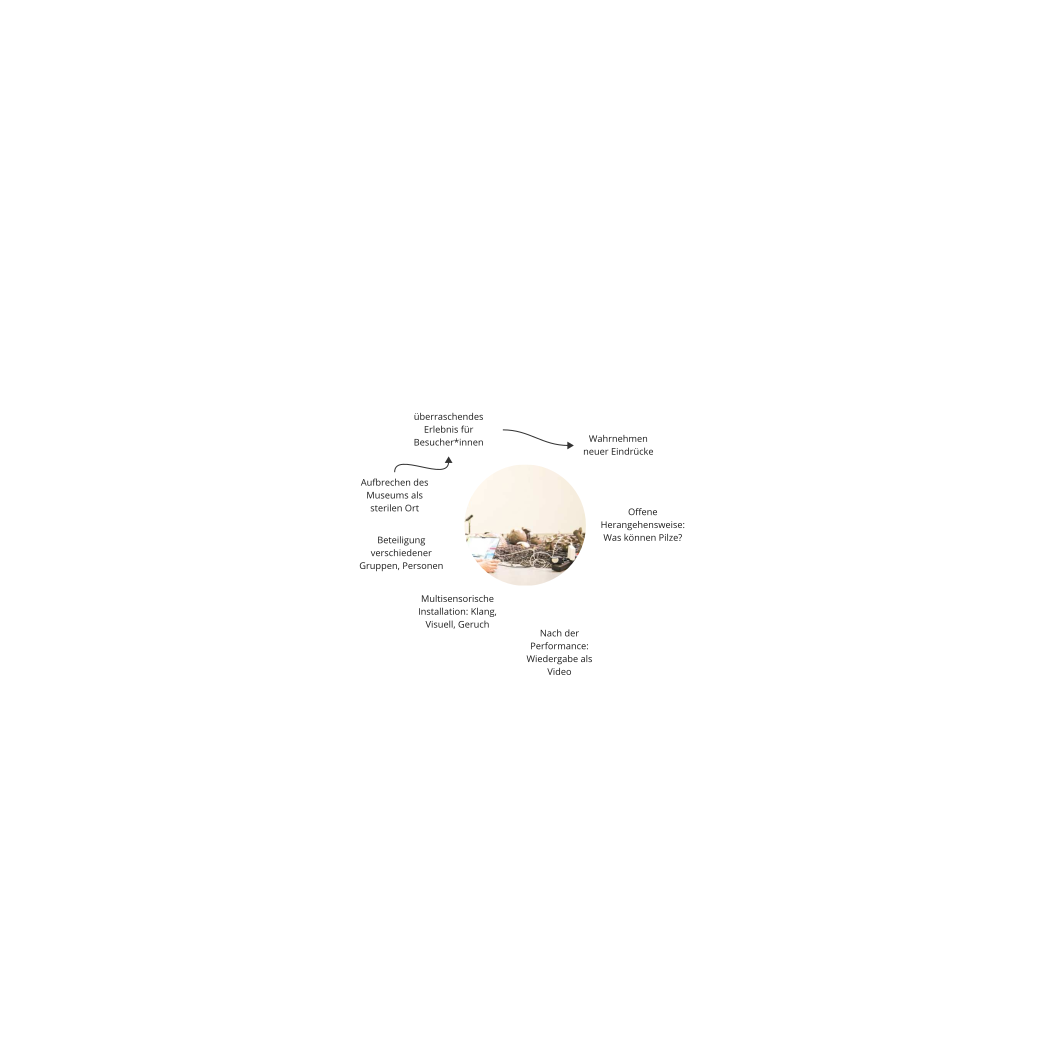
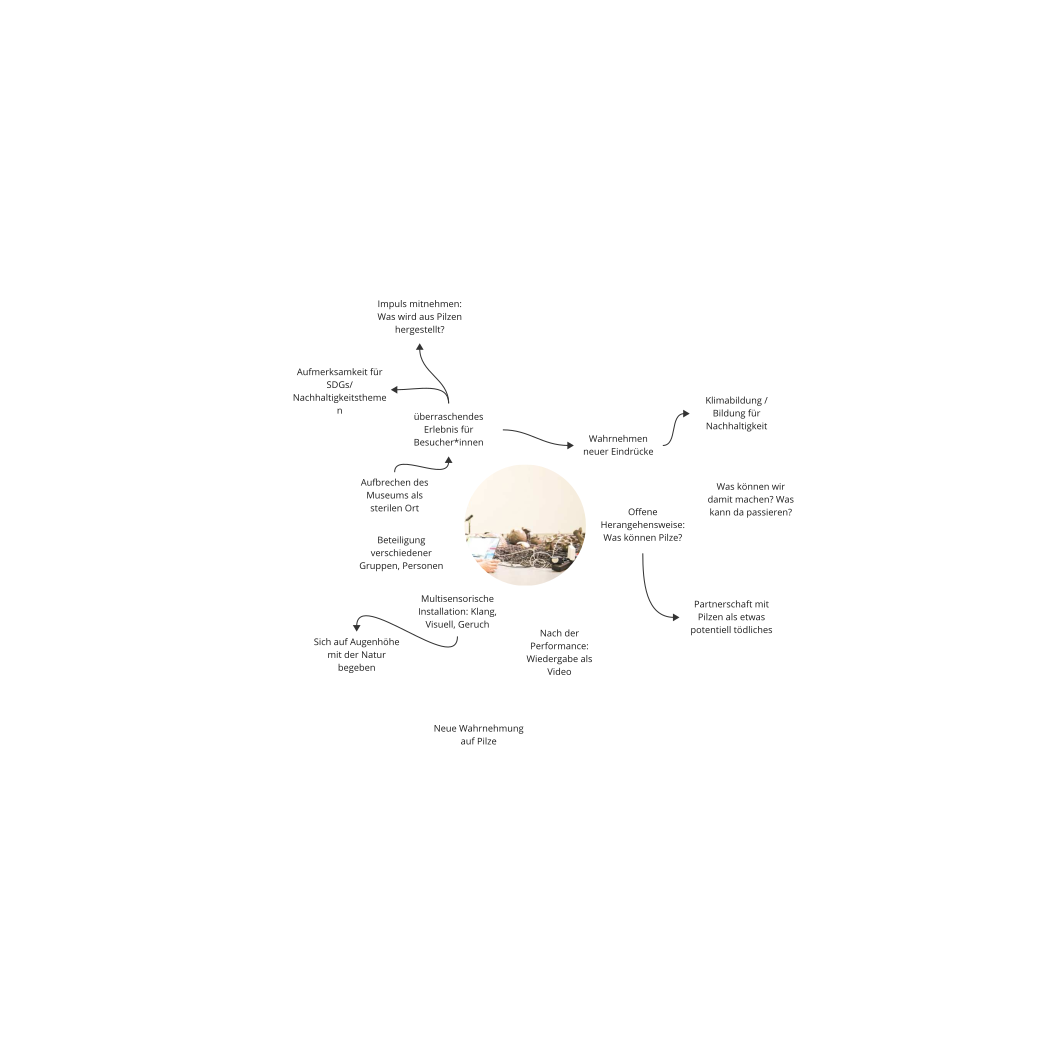
The discussion group identified a fundamental potential impact of the Fungi Orchestra in its high aesthetic value, which stems from its appeal to multiple senses and its novelty—both through the combination of visual art and music and through the presence of living organisms in the seemingly sterile museum space. This creates a sense of disorientation that prompts visitors to adopt new perspectives and embrace new impressions, in line with the question “What can we learn from fungi?” (SDG 4). The performance possesses a “certain poetry and ambiguity” in that it does not ascribe fixed characteristics to the fungi. As sentient, communicating, and self-organizing living beings, they provide impetus toward a heightened awareness of one’s own position within complex systems and are not viewed merely as a valuable source of raw materials.
The group saw the performance as a unique example of an open-minded approach to new partnerships—in this case, a partnership with a “living being” (SDG 17). The work gave the impression that this approach did not involve any specific expectations of the partners beforehand, but rather a curiosity about what might emerge from the connection. On this basis, an “engagement with nature on a new level” could take place. The discussion centered on the extent to which such an unequal partnership could—and should—be structured in even a remotely egalitarian way.
The unique aesthetic of the combination of organic mushrooms, mineral ceramics, and lava gravel, along with technical cables, circuit boards, screens, and speakers challenged traditional notions of nature and technology and raised the question of how “classic industrial infrastructures could collaborate with organic systems” in the future (SDG 9). This also encompasses questions about what can be produced from fungi or with their help, and what advantages such production methods have over existing processes—for example, whether they are better suited as technical processes for closing material cycles or for being embedded in urban contexts (SDG 11, 12).
As a possible effect With regard to natural resources, the discussion group addressed the sensory experience of the performance, which could foster an awareness among viewers of the organic nature of our world and lead to behavioral changes. While Fungi Orchestra does not provide specific calls to action, “a wide variety of people come to the event, and they may take away many different things.” In this way, natural resources naturally become partners in negotiation or even cooperation, whose organisms express themselves through action just as humans do. This interaction gives rise to new options for action based on mutual care, which have an impact on the natural environment and how we treat it (SDGs 13, 15).