
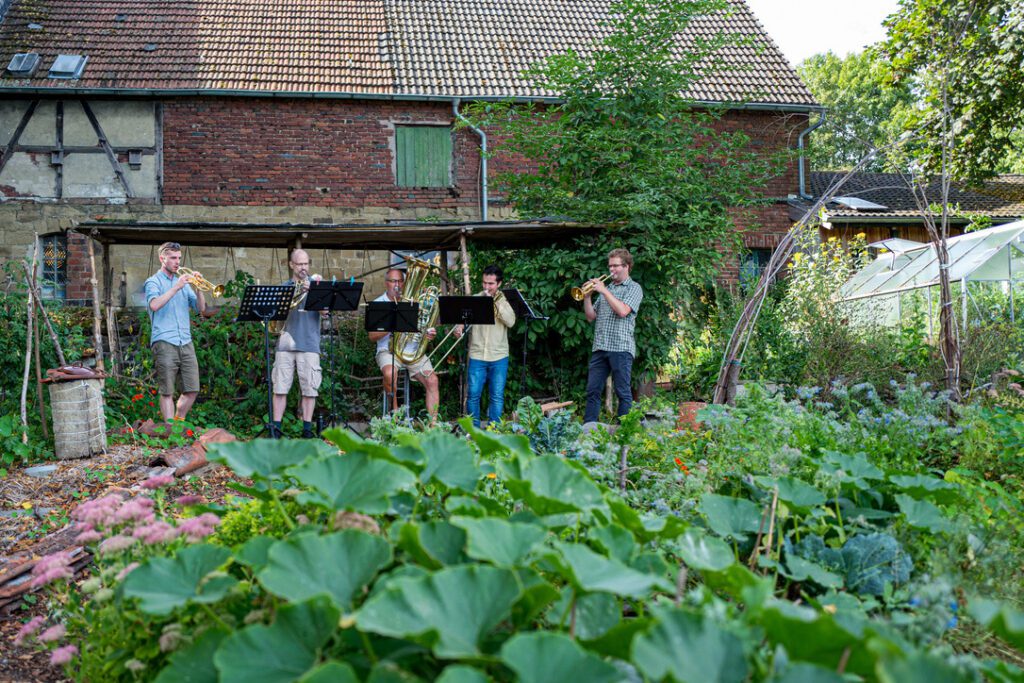
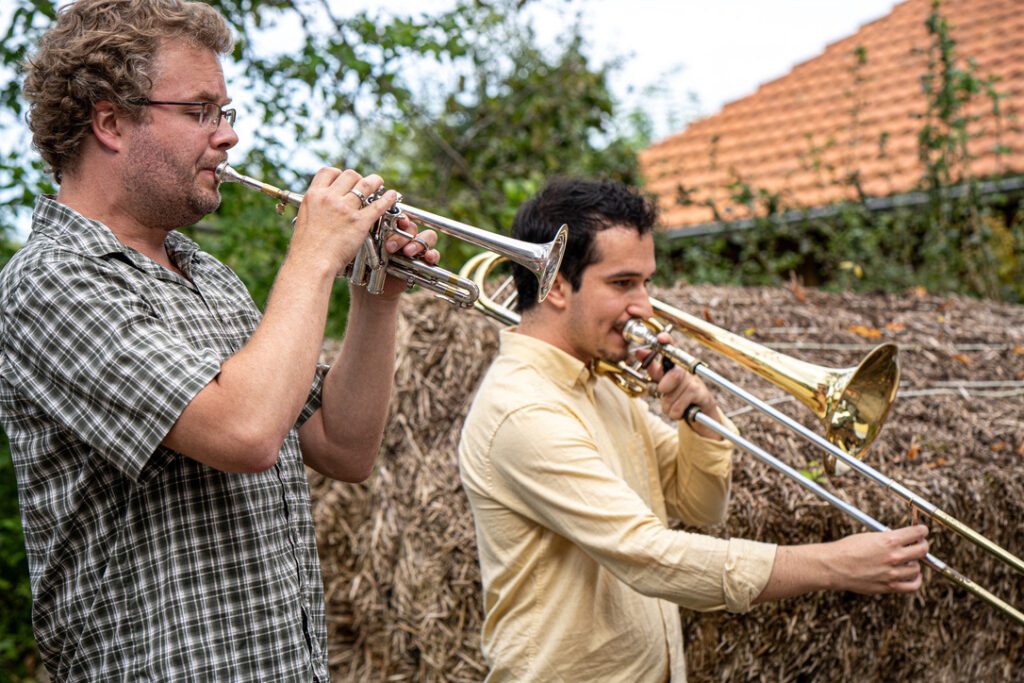
The Orchester des Wandels is an initiative of German professional orchestras whose members are committed to the conservation of resources, the climate, nature, and biodiversity. Through accessible, theme-focused concert formats, they raise awareness of sustainability issues and use the proceeds from donations to support projects aimed at protecting the climate and natural resources. A key element is the selection of specific concert venues, such as an abandoned swimming pool, a plantation, or a sandbar. These locations establish a direct connection to the respective themes and allow the audience to experience them firsthand.
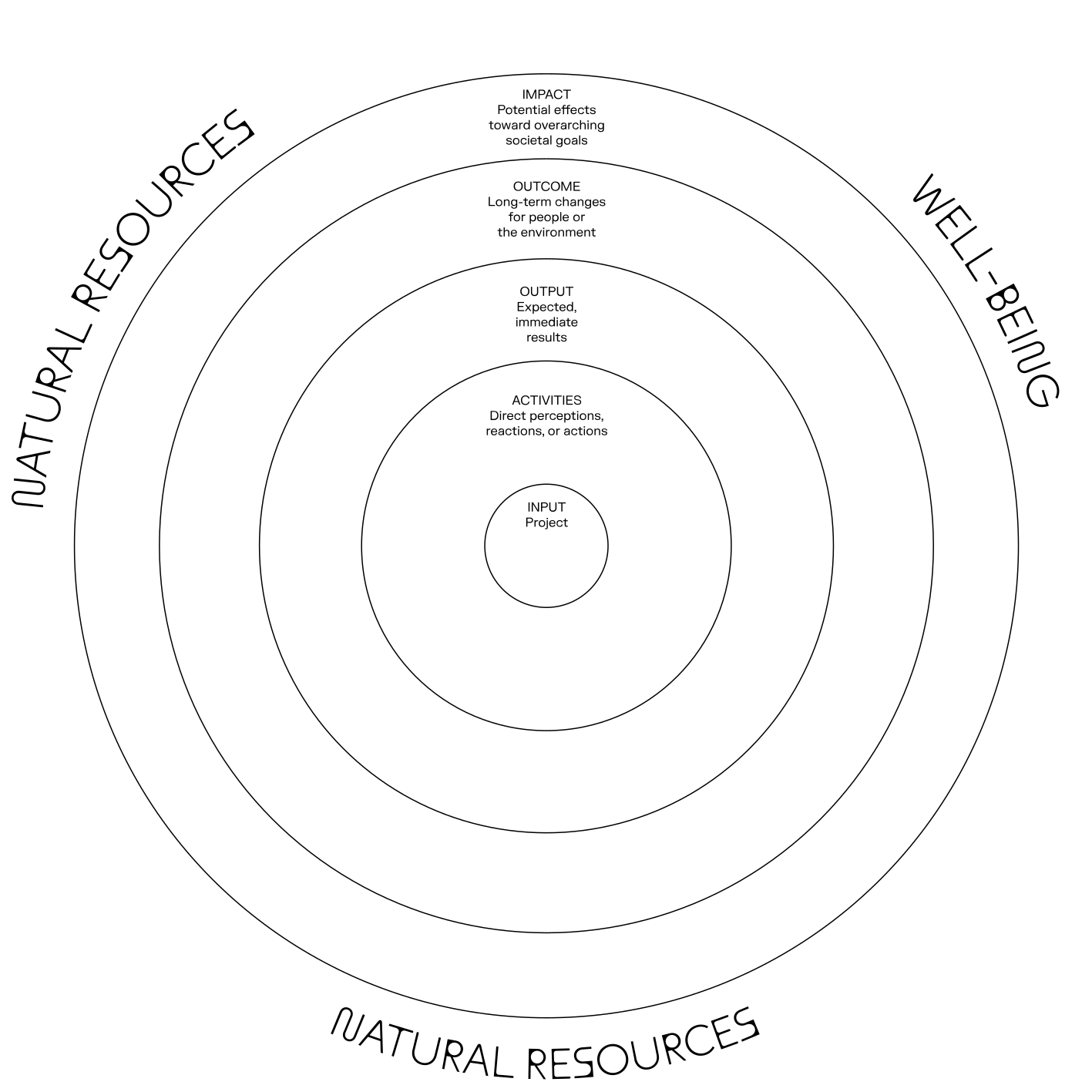
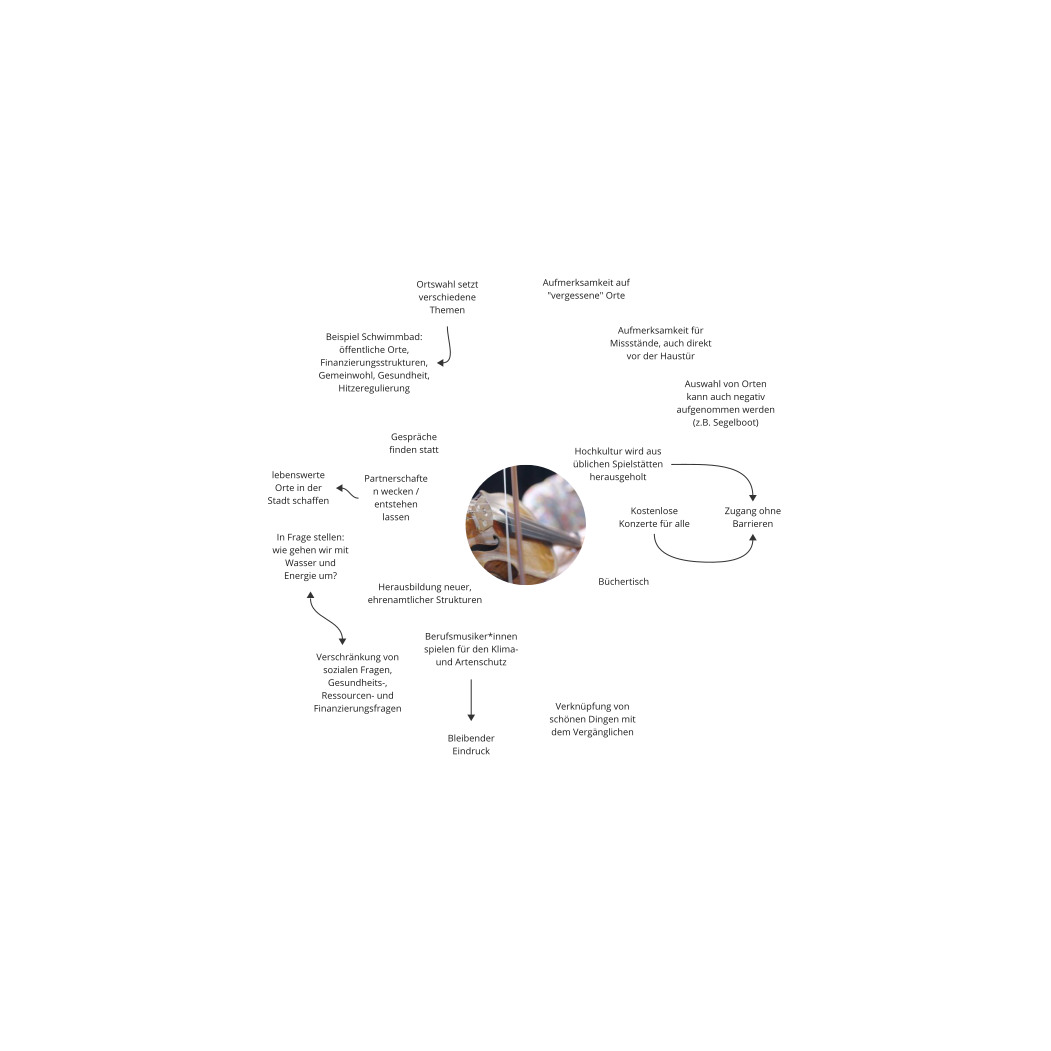
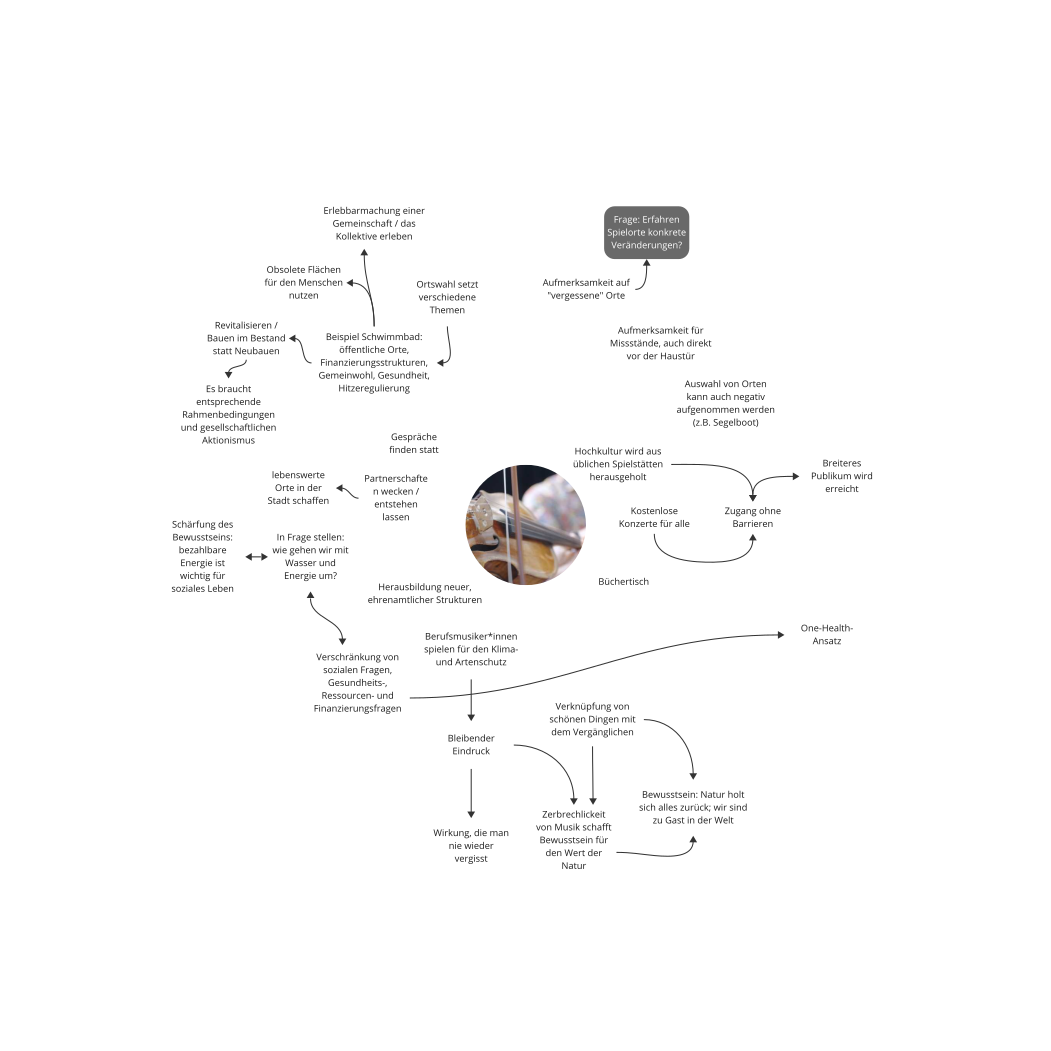
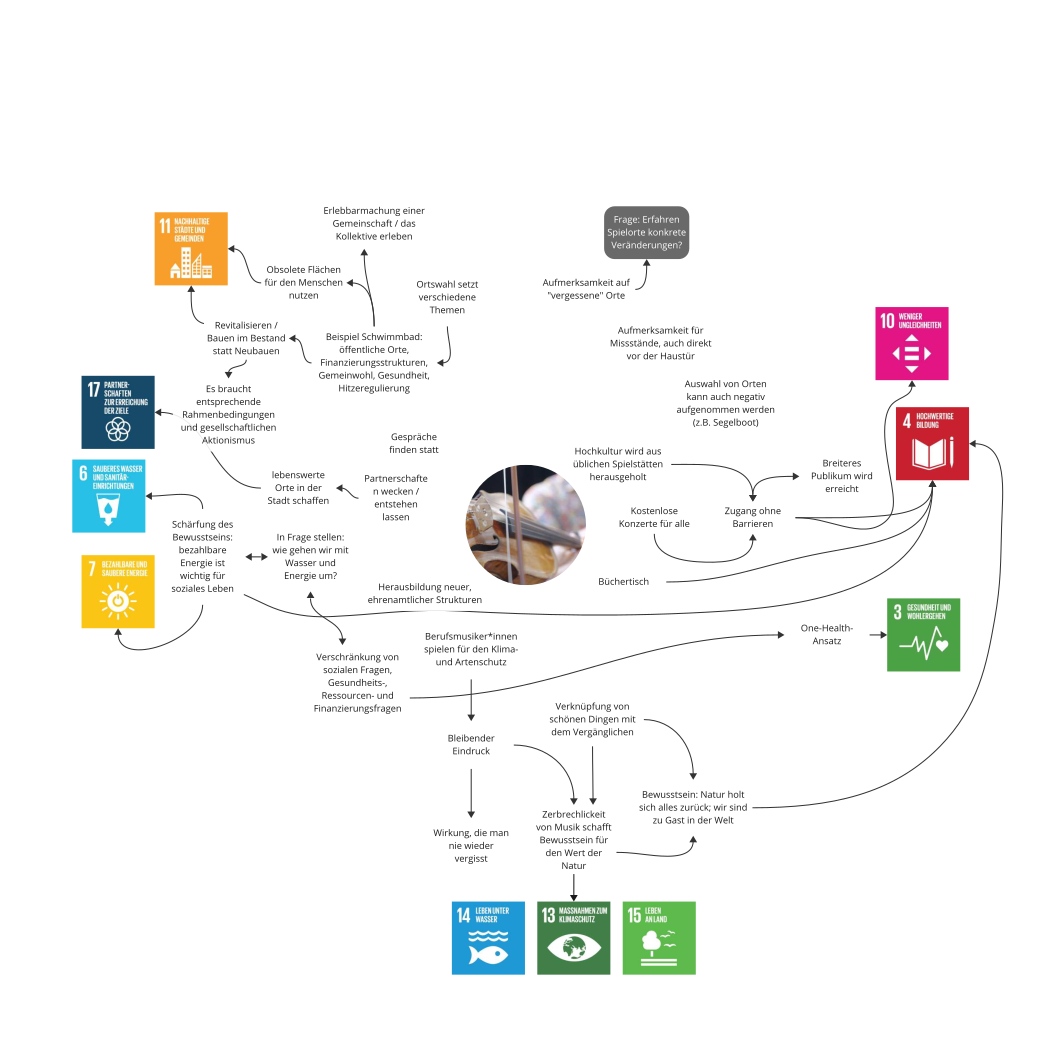
On November 19, 2024, an interdisciplinary group representing sustainability research, the skilled trades, art, and design analyzed the potential impact of the activities of the Orchester des Wandels using the Map/ing Sustainability method. Given the wide range of topics, they focused on the example of a concert held in a vacant swimming pool in Wuppertal—Freibad Mirke, once one of Germany’s oldest outdoor pools.


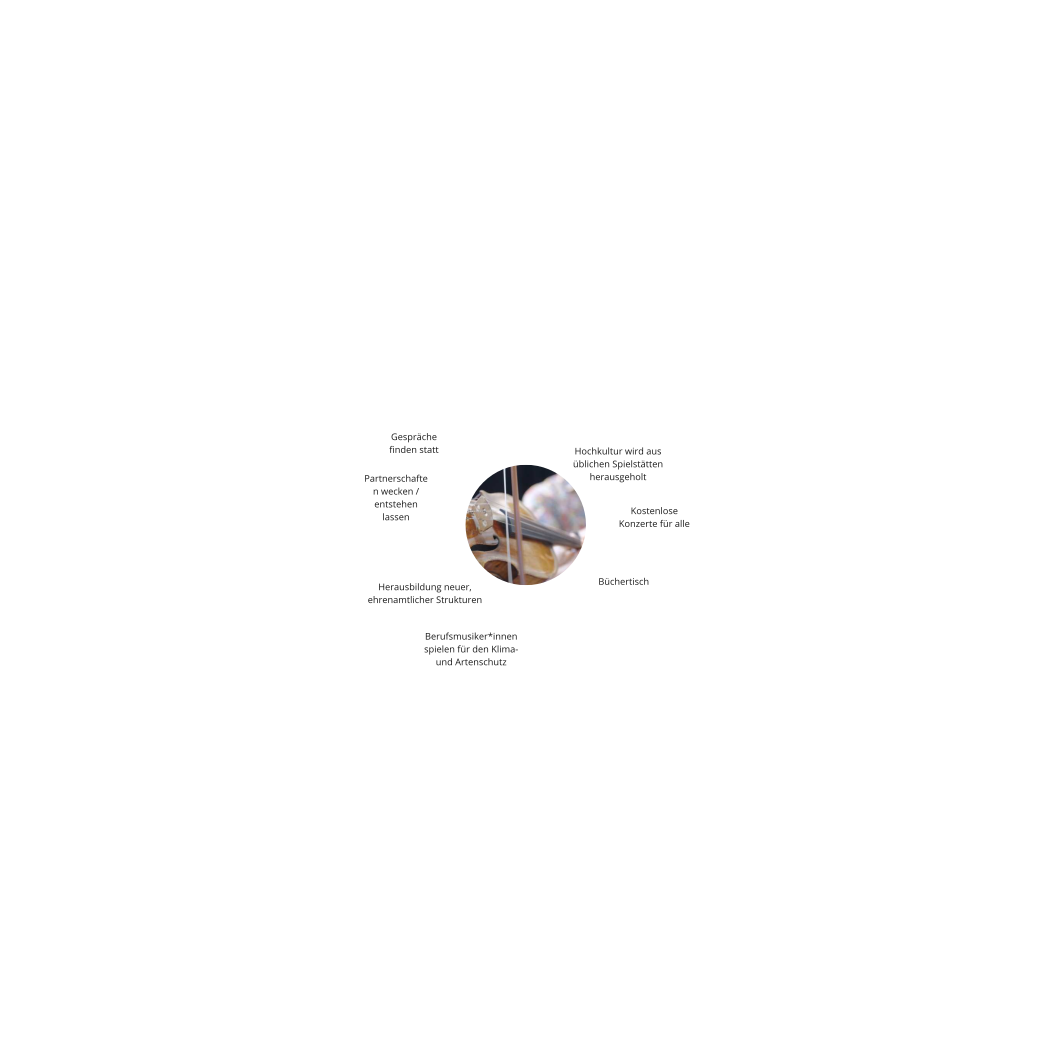
Participants particularly highlighted the project’s educational potential, as it imparted both theoretical knowledge and practical awareness of resources. While an accompanying book table provided targeted information on sustainability and social transformation, the choice of venues also encouraged reflection on how we treat our environment (SDG 4). Taking the concert at the vacant Freibad Mirke as an example, questions were raised about the future of dilapidated urban infrastructure and the collective use of spaces. As a public, familiar place, the swimming pool offers “low-threshold” entry points compared to traditional institutions such as the Wuppertal Stadthalle, thereby making it possible to reach a diverse audience. The principle of donation-based concert admission (“you can, but you don’t have to”) further breaks down barriers and ensures that people from different social groups not only gain access to classical music but can also participate in socially relevant discourses (SDG 10).
Furthermore, the importance of swimming pools as public water spaces for public health and a healthy urban environment was emphasized. In line with the One Health approach, which describes the close connection between a healthy environment and human health (“healthy planet, healthy people”), these places serve as essential public cooling options during periods of high temperatures and thus make an important contribution to health promotion (SDG 3), particularly in the context of increasing heat stress.
The participants discussed “obsolete spaces” and dilapidated infrastructure raised by the choice of venue. It became clear how design ingenuity, creativity, and music can create an emotional entry point that could inspire people to “restore old things” and revitalize existing places (SDG 11). Such projects could also promote dialogue and civil society collaboration, thereby strengthening both cultural participation and social cohesion (SDG 17).
Special attention was paid to resource efficiency: Unlike private pools, public swimming pools can accommodate significantly more people with the same amount of water, making them much more resource-efficient and potentially sparking a discussion about the responsible use of water and energy resources (SDGs 6, 7, 12). The increased attention on such places could also spur civic engagement to reclaim spaces for the public. Often, efforts to revitalize these spaces fail due to regulatory frameworks or historic preservation requirements. By highlighting these obstacles, the project promotes participatory negotiation processes regarding urban development (SDGs 11, 17).
In its manifesto, the Orchester des Wandels explicitly commits to the conservation of resources, the climate, nature, and biodiversity, and puts this commitment into practice through, among other things, donations to climate protection projects (SDG 13). The panelists also highlighted the potential of music’s emotional impact in striking locations—such as the abandoned swimming pool—to raise visitors’ awareness of sustainability. The dilapidated pool also makes visible the fragility of the built environment when left to its own devices. At the same time, the visible reclaiming of the empty pool by plants illustrates humanity’s role as a “guest in the world” as well as the role of natural regeneration processes. At the same time, the decay serves as a stark reminder of the resources invested in the construction of the swimming pool—resources that could have been preserved through the maintenance of existing infrastructure (SDG 15).