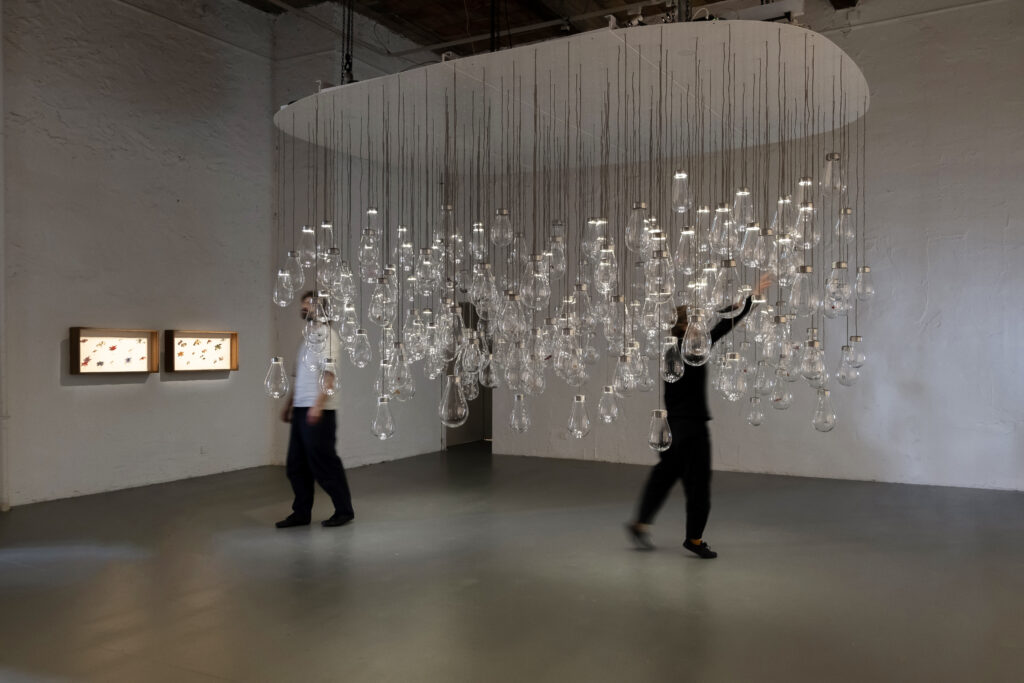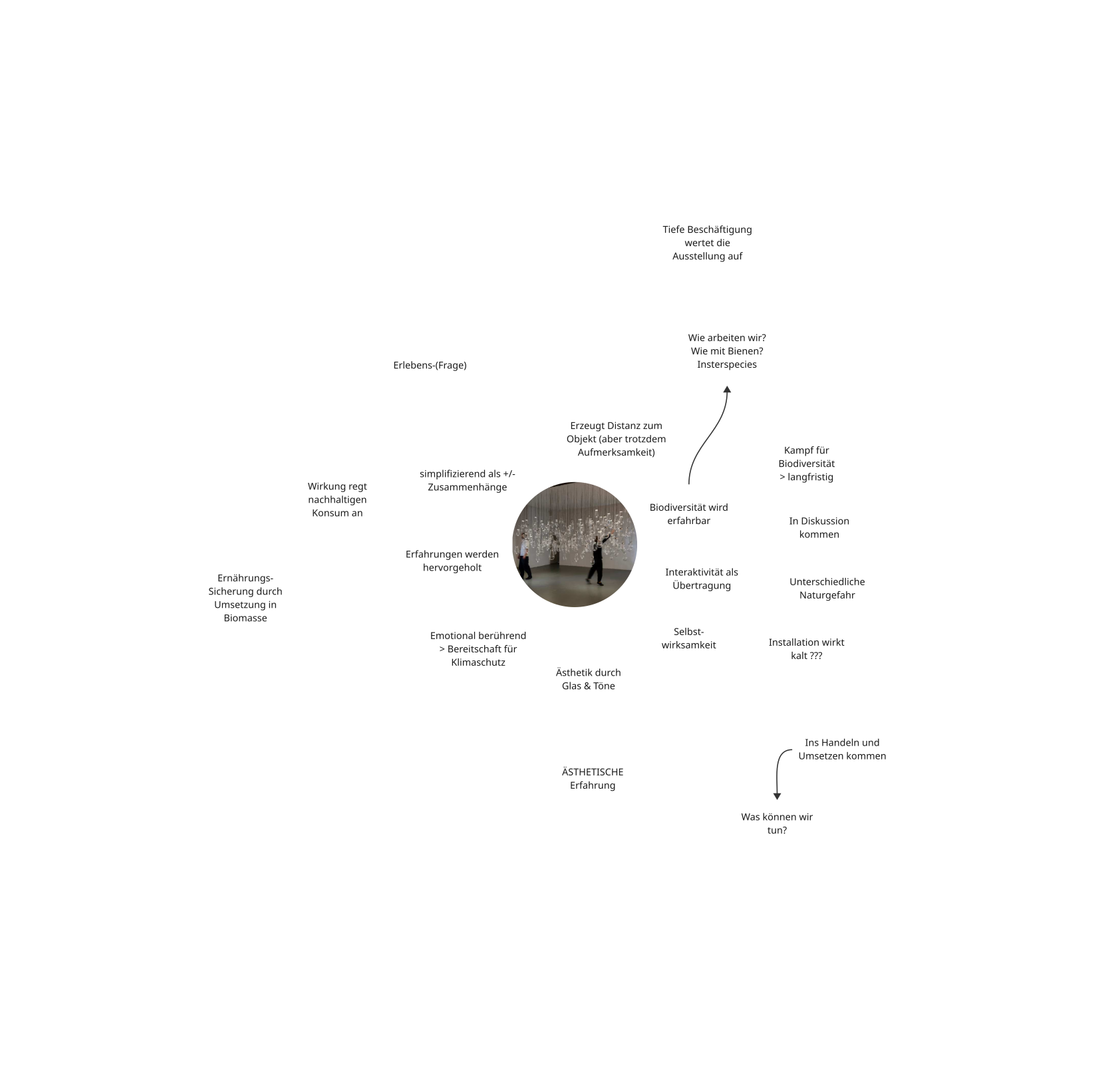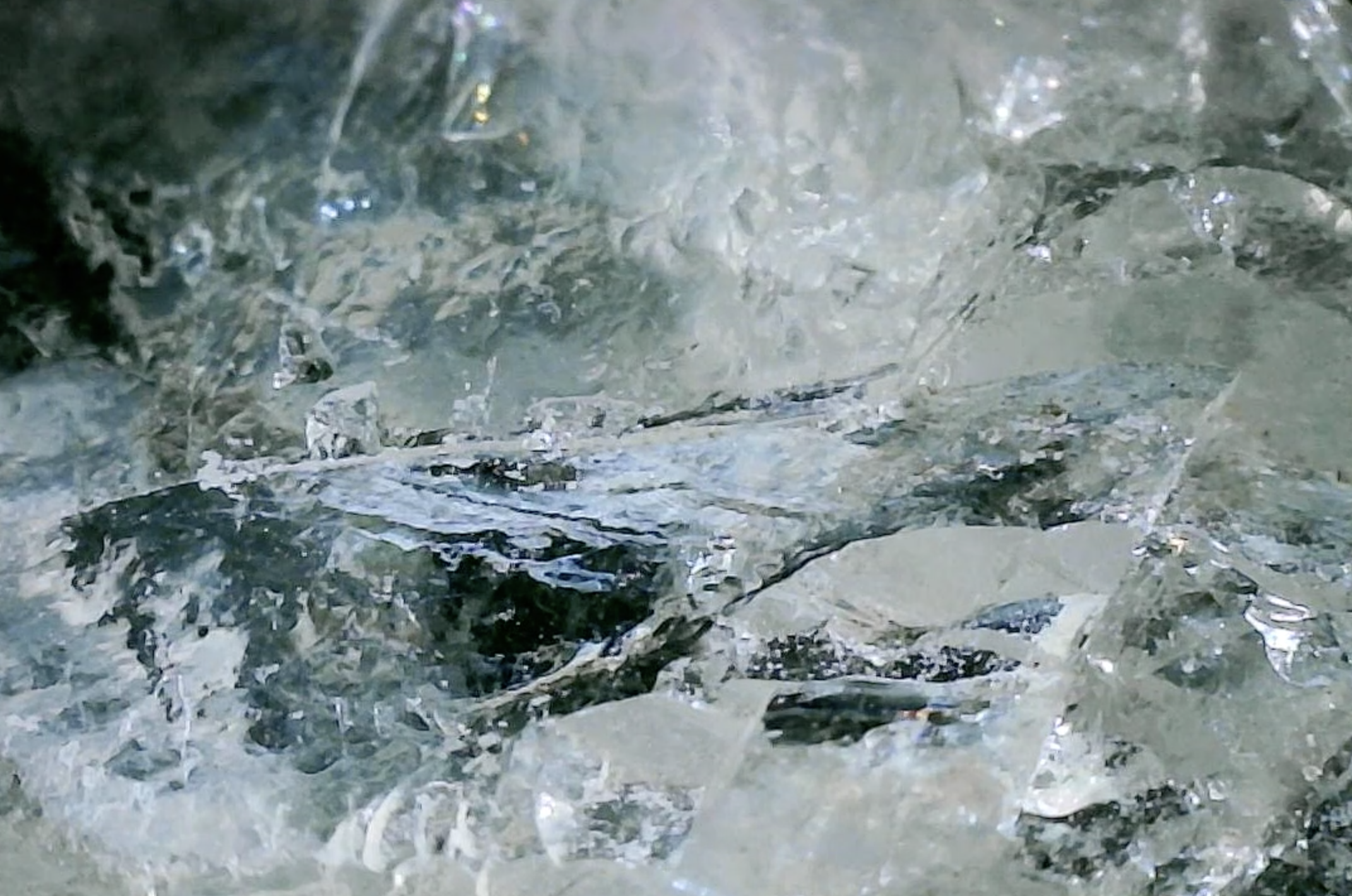
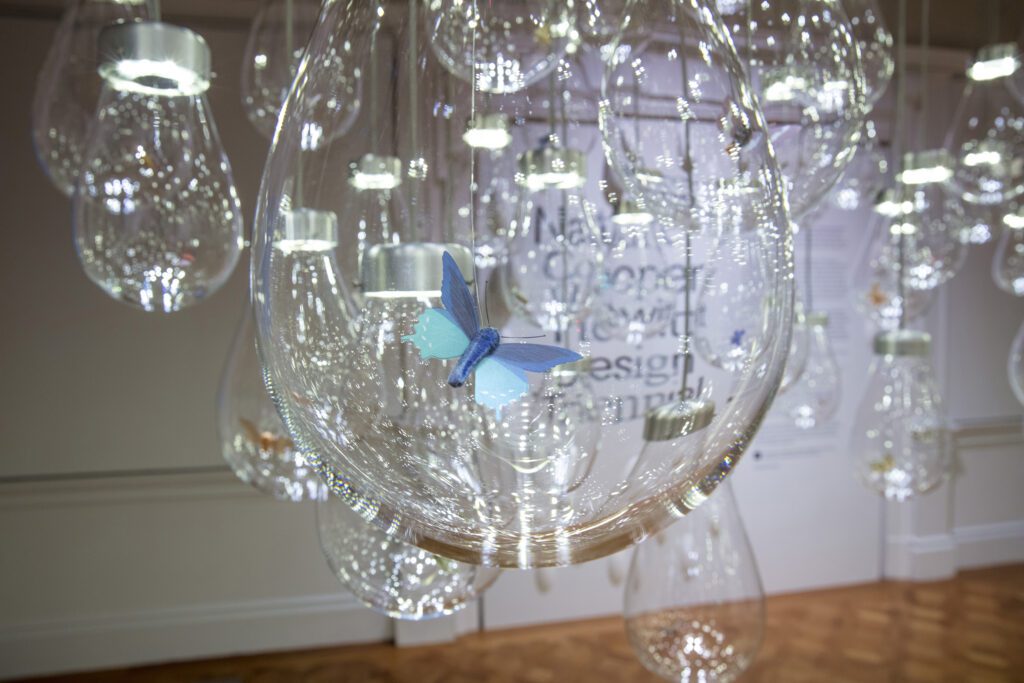
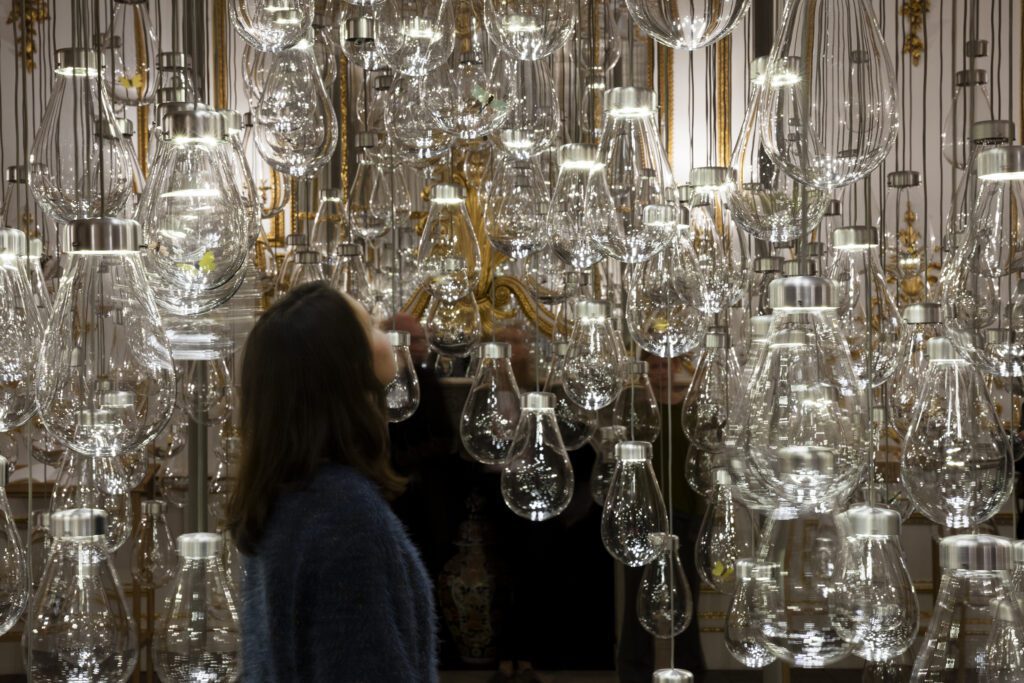
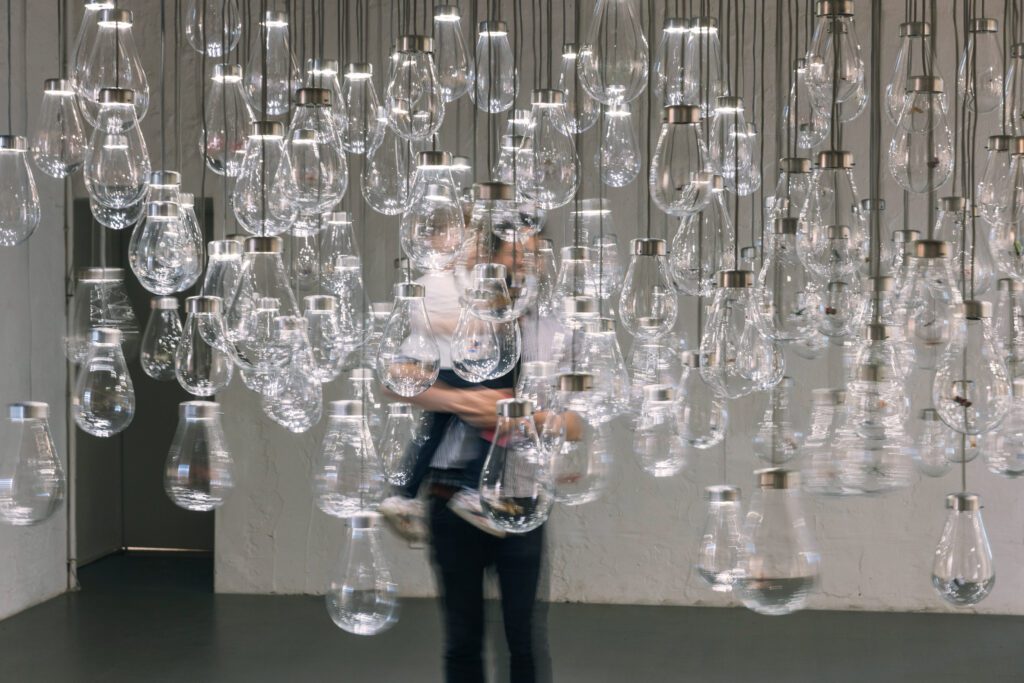
Curiosity Cloud is an interactive installation that celebrates the relationship between humans and nature. 264 hand-blown glass spheres contain handcrafted insects representing 25 species, ranging from extinct to newly discovered. As visitors approach, the insects come to life, moving within the glass spheres and producing sounds. Traditional craftsmanship meets modern technology, bringing an imaginary life cycle to life.
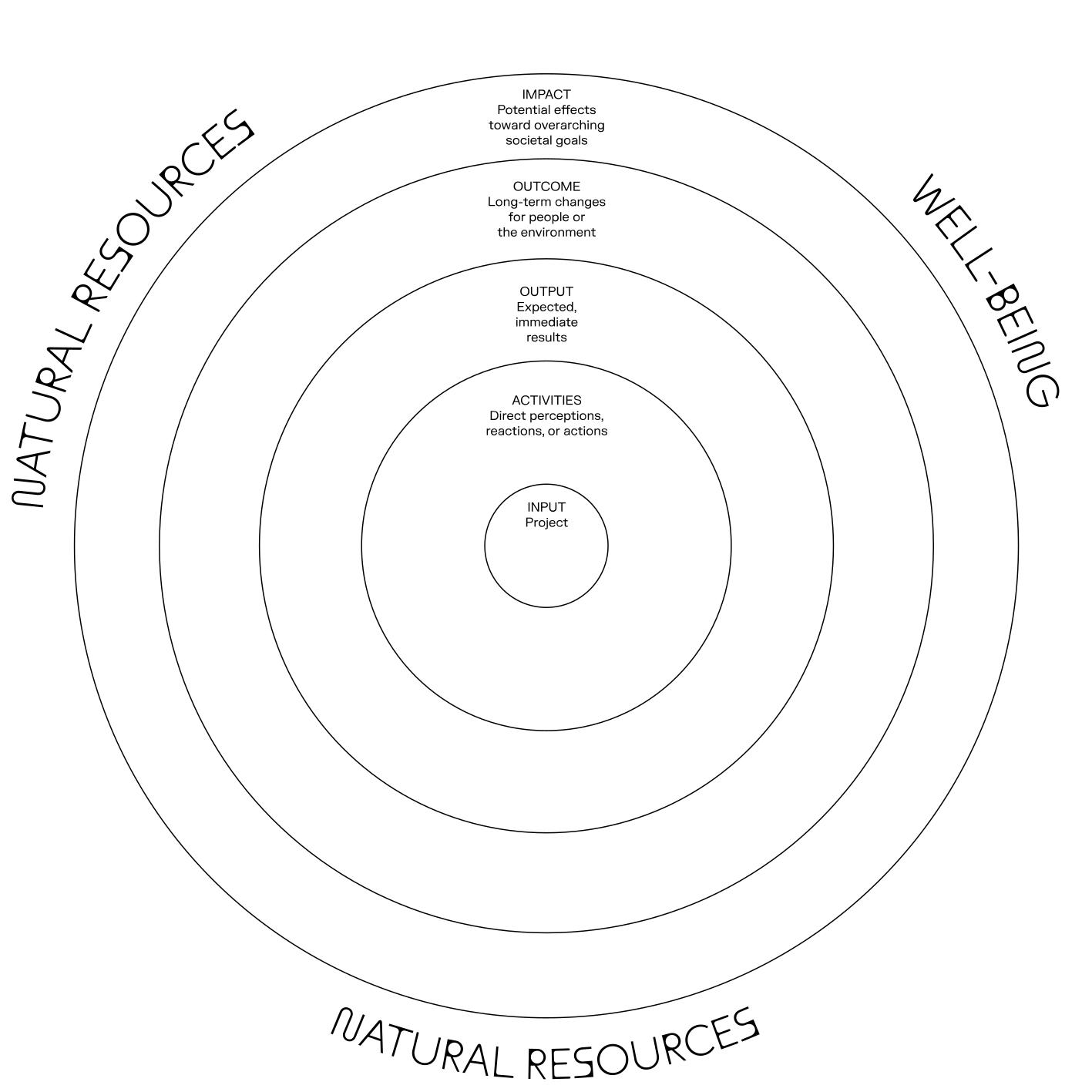
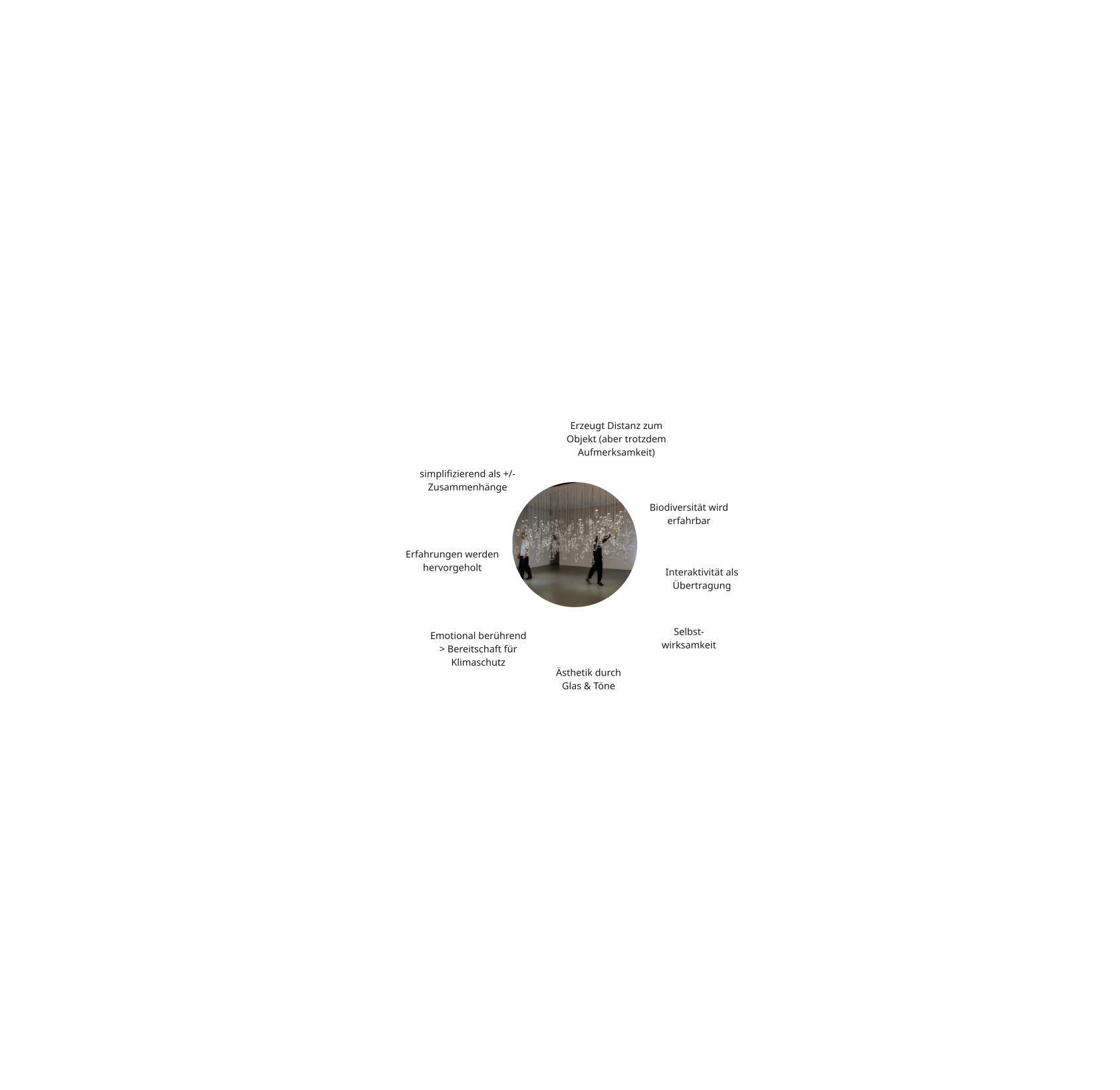
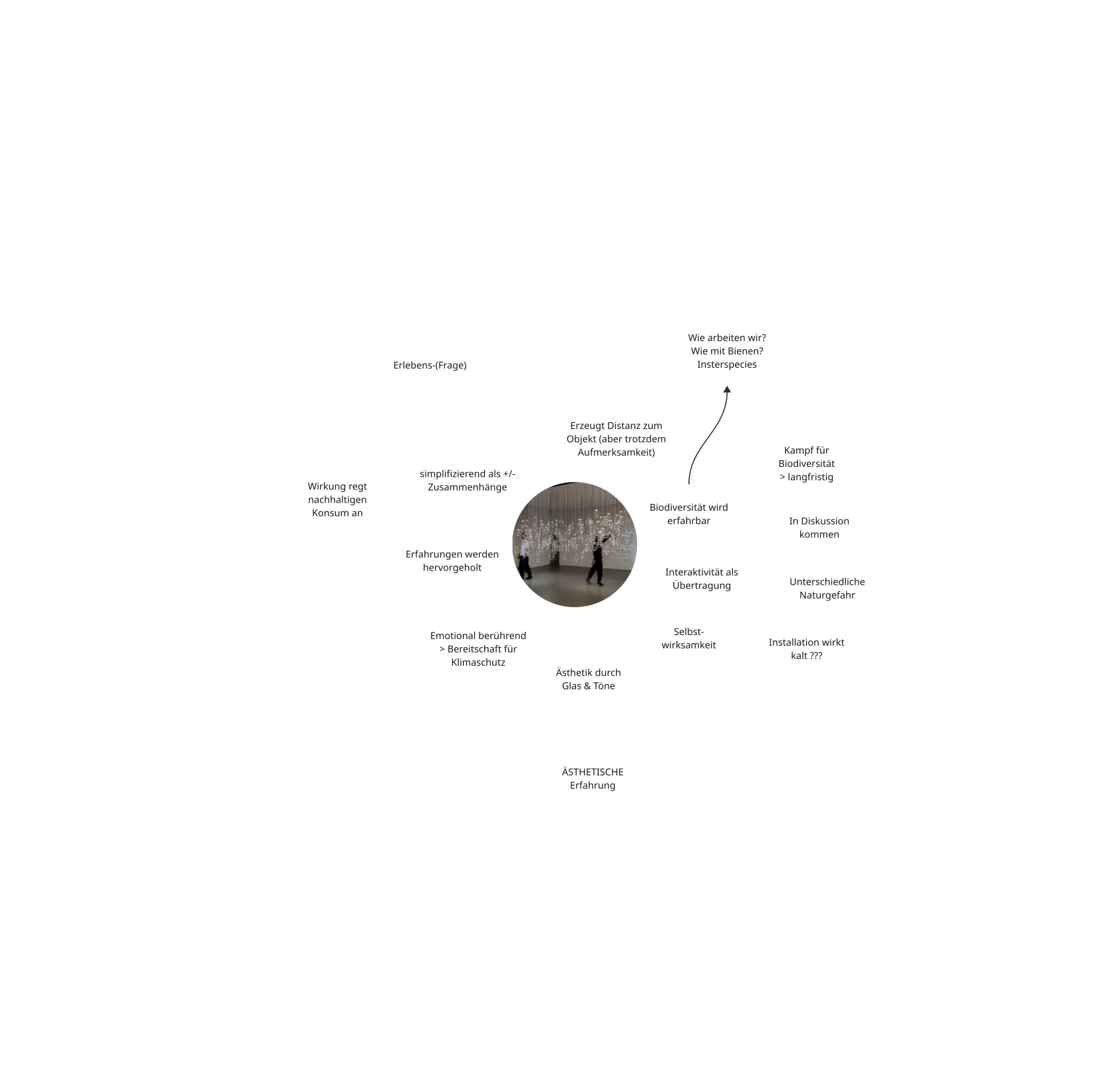
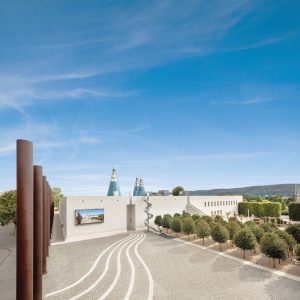
The potential impact of Curiosity Cloud was analyzed on June 7, 2025, during a workshop at the Bundeskunsthalle, where the installation was on display. The discussion panel consisted of nine participants with interdisciplinary backgrounds, including biology, horticulture, design, economics, journalism, and geoinformatics. All participants had previously had the opportunity to view and experience the installation for themselves.

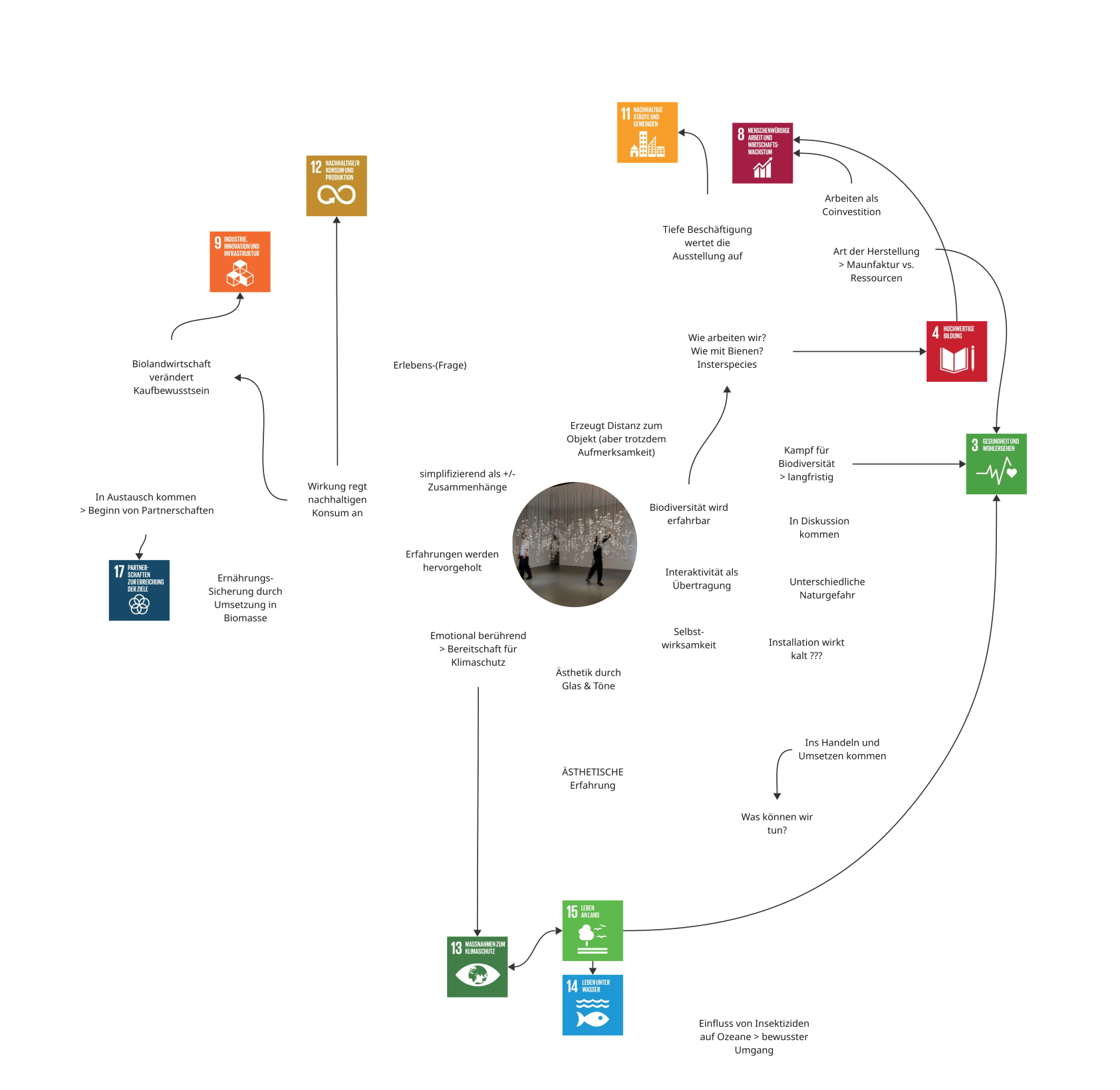
With regard to Provisioning Systems, participants in the Curiosity Cloud project see connections to sustainable urban planning (SDG 11): In particular, the topics of light pollution, resource use, and the circular economy are raised in the discussion. Thus, the project has the potential to inspire planners and architects to adopt a new approach to light and to incorporate this aspect into their work.
In addition, the participants in the discussion address the issue of the artwork’s “footprint versus handprint” and its longevity, since it “has been shown at international exhibitions since 2015 and will likely remain on view for another 20 or 30 years.” This relates to SDG 12 (Sustainable Consumption and Production).
Furthermore, the concept of cooperation and collective action (SDG 17) becomes clear: The project “brings people together to discuss goals” and promotes dialogue and collaboration. Economic and infrastructural connections (SDGs 8 and 9) also become apparent, for example when it is emphasized that insects are very valuable to us. Nature “does, after all, generally provide a great many free services” “for which we don’t have to pay”—as one participant put it.
The artwork thus becomes a space for reflection on sustainable economics, urban living spaces, and responsibility for production and consumption processes in a global context.
In the “Well-being” section, Curiosity Cloud highlights potential for positive change by making the close interplay between human well-being and ecological health tangible: “Insect life is an indicator of how we might fare—without insects, there can be no healthy environment,” as one participant concluded.
The artwork conveys knowledge about biodiversity and light pollution in a sensory way: The installation’s light sets the insects in motion and makes ecological connections immediately tangible. Through interactivity and aesthetic experience, an emotional engagement arises that encourages reflection on one’s own relationship with nature.
At the same time, the project is viewed as an educational space where children can recreate local insects and recognize interconnections. The installation thus creates a powerful level of experience and interaction: Anyone who approaches it encounters movement, sound, and reaction: “When you approach the installation, it comes to life—it becomes tangible and audible.” This sensory encounter fosters emotional engagement and makes the value of living things immediately palpable. At the same time, the work highlights the fragile relationship between humans and nature: “The closer you get, the more the insects elude close observation.” This ambivalence represents a special educational value.
In the area of Natural Resources, Curiosity Cloud is perceived by participants as particularly effective. Insects are understood as key indicators of ecological stability: “Insects equal biodiversity; biodiversity equals food.” This establishes a direct link to SDG 15—Life on Land.
It is repeatedly emphasized that insects are “of central importance to all biological processes on the planet” and that their decline points to deeper disruptions in the ecosystem. The connection to climate action (SDG 13) is also highlighted: “This vulnerability […] spurs a desire to protect the climate.”
In addition, the project highlights the interconnection between human activity and natural material cycles. One participant explains: “Nature is one huge cycle. We produce waste—nature doesn’t. It only produces raw materials.” This illustrates the principle of a resource-efficient, circular economy that should mimic natural processes.
Overall, the project raises awareness of ecological interdependencies, encourages people to reflect on ways they can take action—such as through nature-based gardening—and thereby strengthens the connection between people and the environment: “Essentially, it’s about building relationships with insects so that we can take steps to ensure their numbers grow again.”