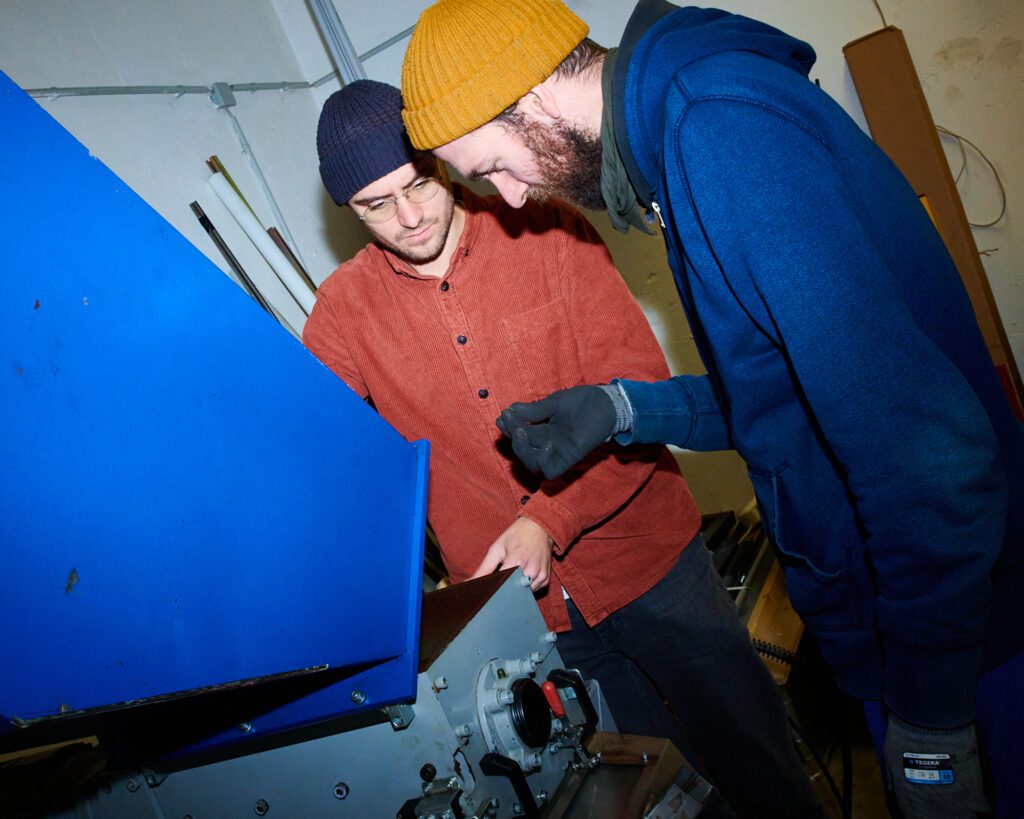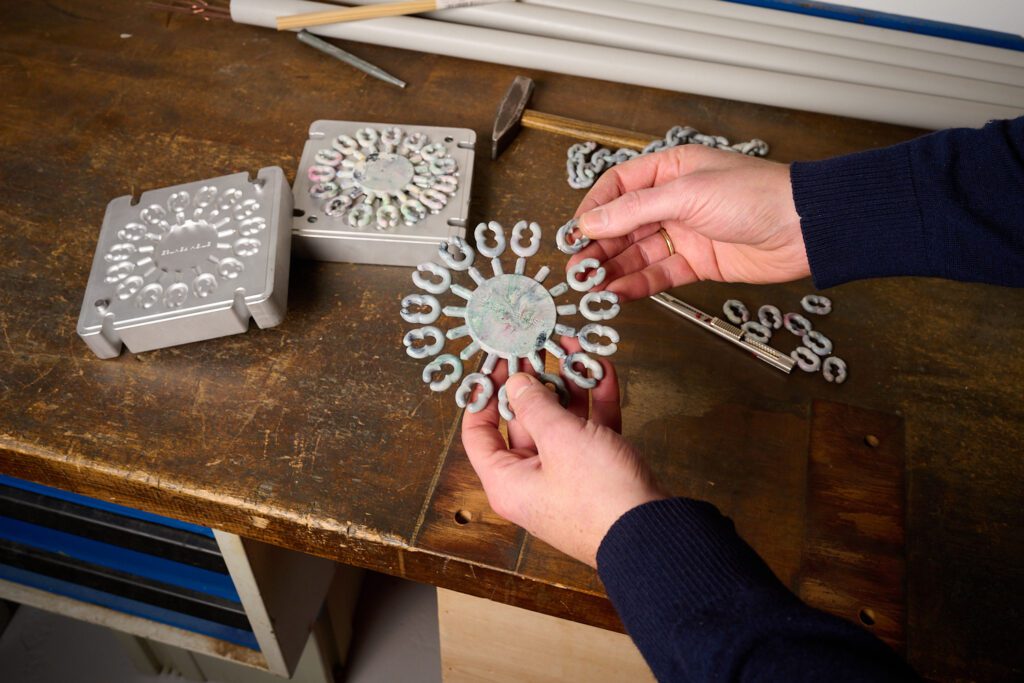

The Rezyklat is a design studio in Essen that was founded in 2022 by Steffen Hartwig and Dustin Jessen. In their plastic recycling workshop—the first Precious Plastic Workspace in the Ruhr region—they combine material sourcing and processing, design, and production all under one roof. The studio demonstrates how everyday plastic waste can be transformed into new, custom-designed products, ranging from coat hooks to wall decorations. As part of the international network of Precious Plastic combines Das Rezyklat combines urban mining and local manufacturing based on homemade production machines.
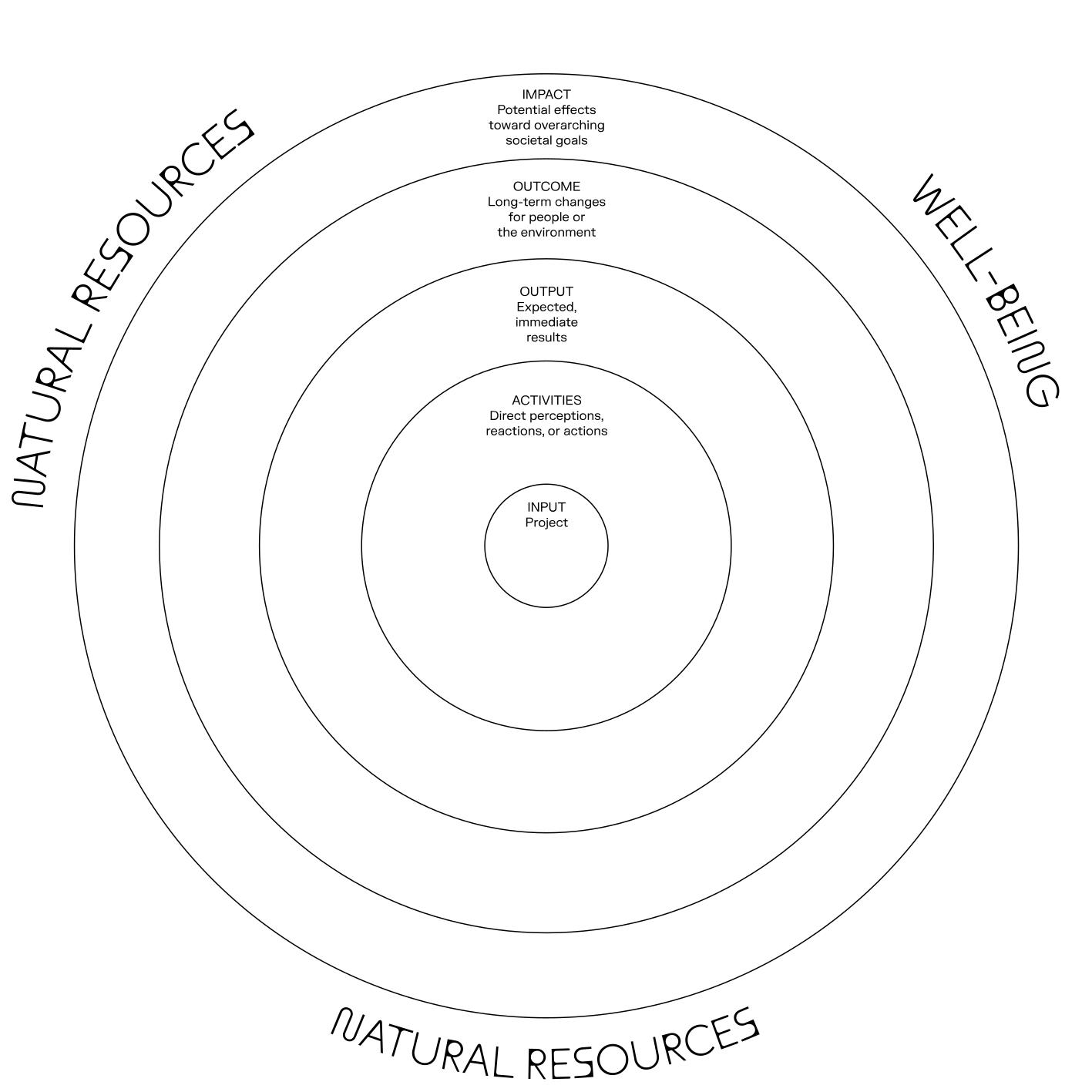
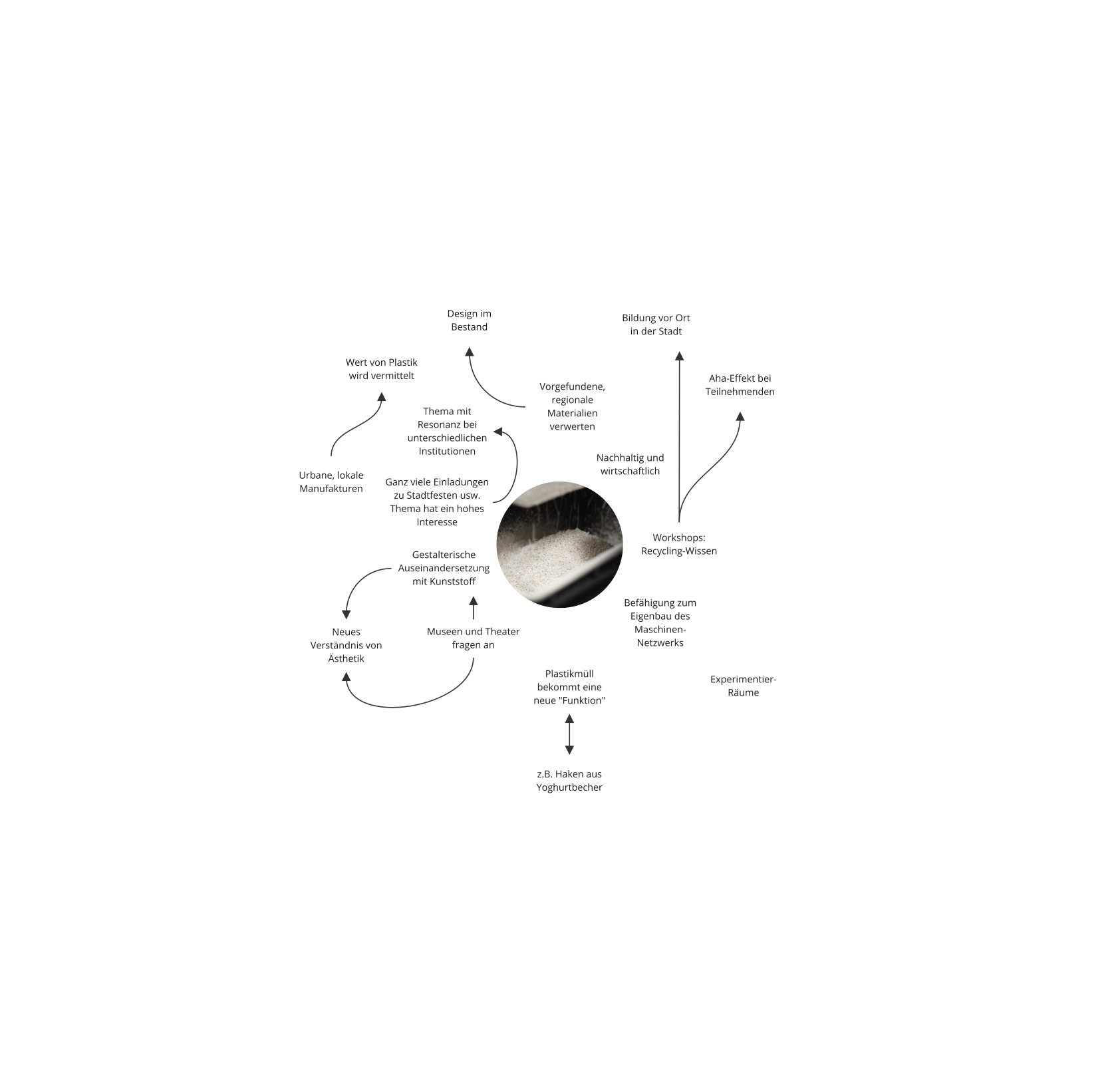
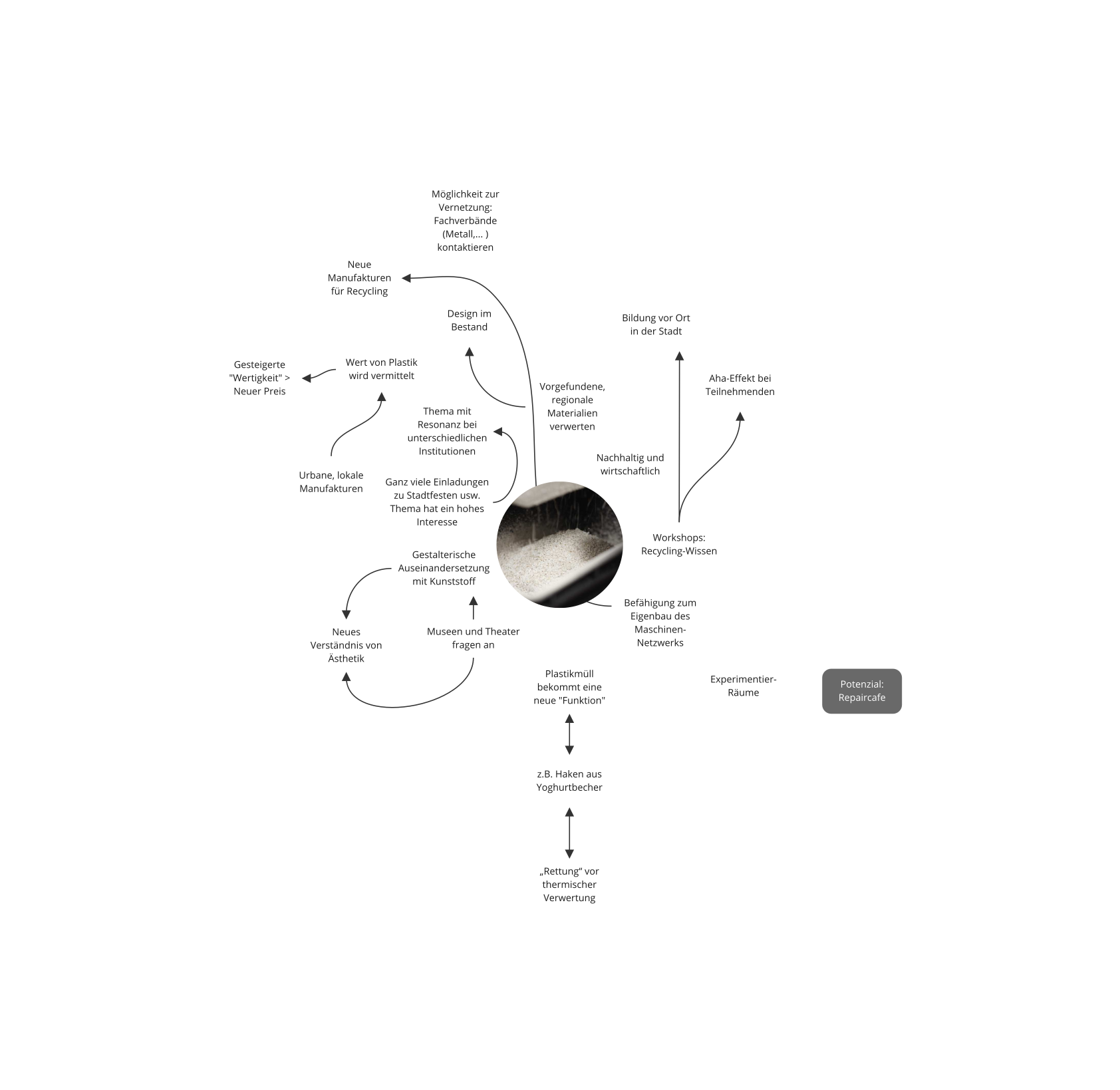
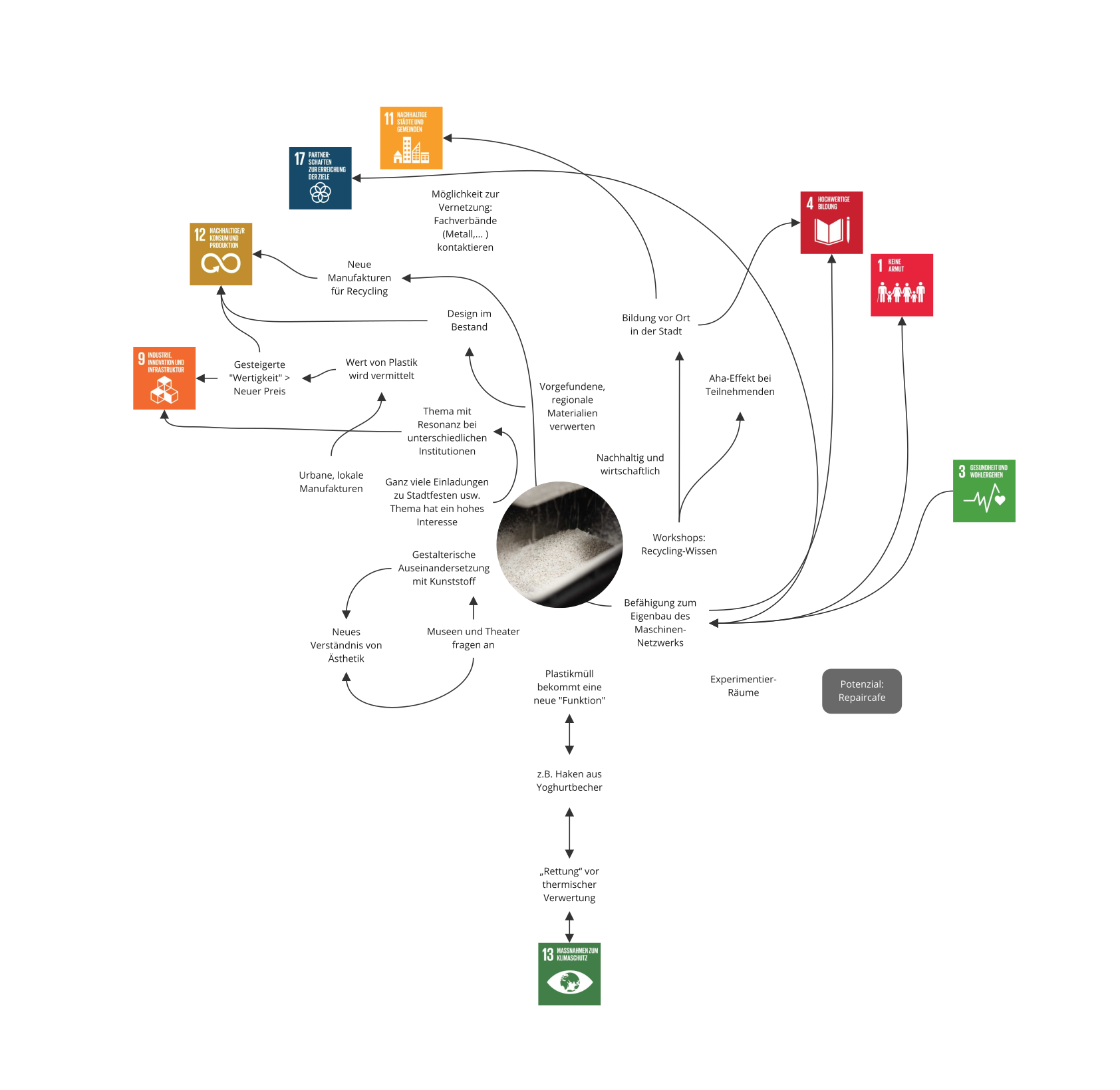
On December 3, 2024, the potential impacts of *Das Rezyklat* were analyzed using the Map/ing Sustainability method by an interdisciplinary group consisting of designers and design researchers, artists, and craftspeople. The project participants presented the project and took part in the discussion.


Das Rezyklat was discussed in the context of well-being, particularly as an educational and empowerment project, and was described by participants as an example of “education that takes place on an urban scale.” In many cities, there is growing consideration of how formal educational offerings can be supplemented and expanded through open learning and experimentation spaces and the provision of machines and tools. This example sparked numerous ideas in this regard: Through workshops, exhibitions, and lectures, Das Rezyklat could make recycling processes tangible and address questions about material properties, product lifespan, and recyclability. Collaborations with Repair Cafés were cited as one way to strengthen repair awareness, self-efficacy, and thus sustainable action across society as a whole (SDG 4).
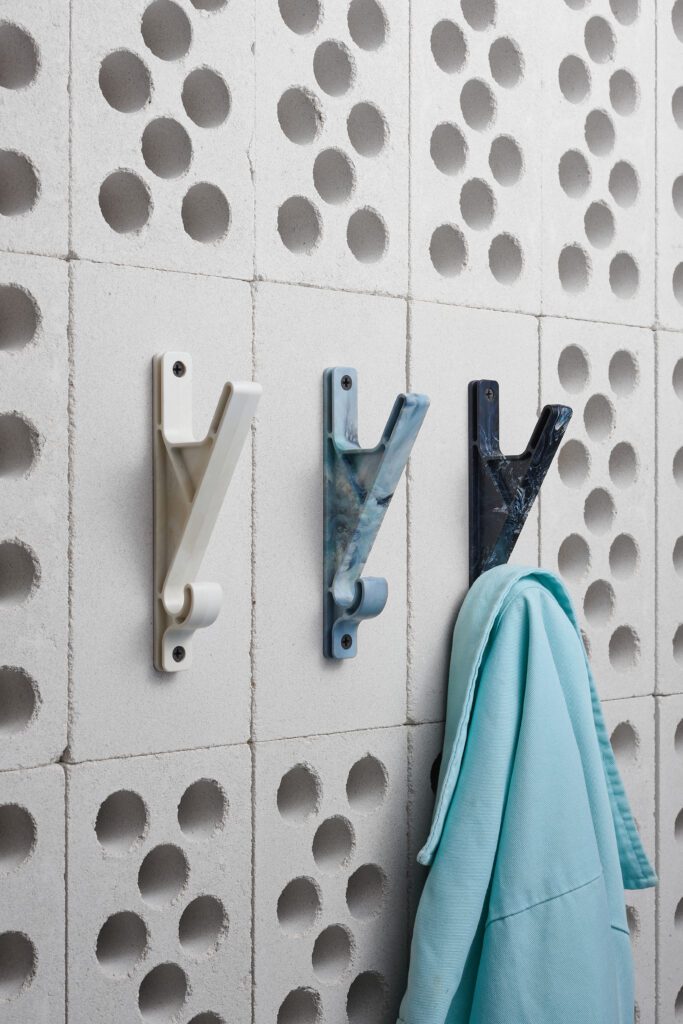
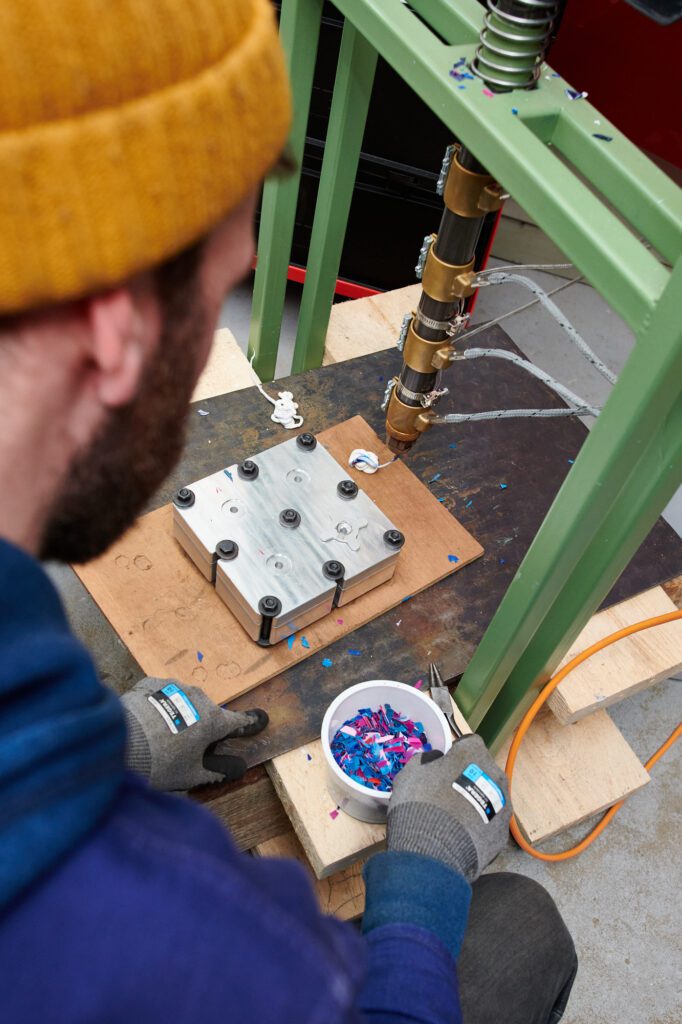
The project participants reported that the studio is receiving an increasing number of inquiries from companies interested in producing custom products in small to medium quantities. In this context, Das Rezyklat is perceived less as an industrial operation and more as a workshop, and its products are regarded as handcrafted, locally rooted one-of-a-kind items: Melting down plastics of different colors creates batik-like effects that make each piece unique. It was also discussed that customers could contribute their own plastic waste to personalize the color design and enhance the product’s emotional longevity (SDG 12).
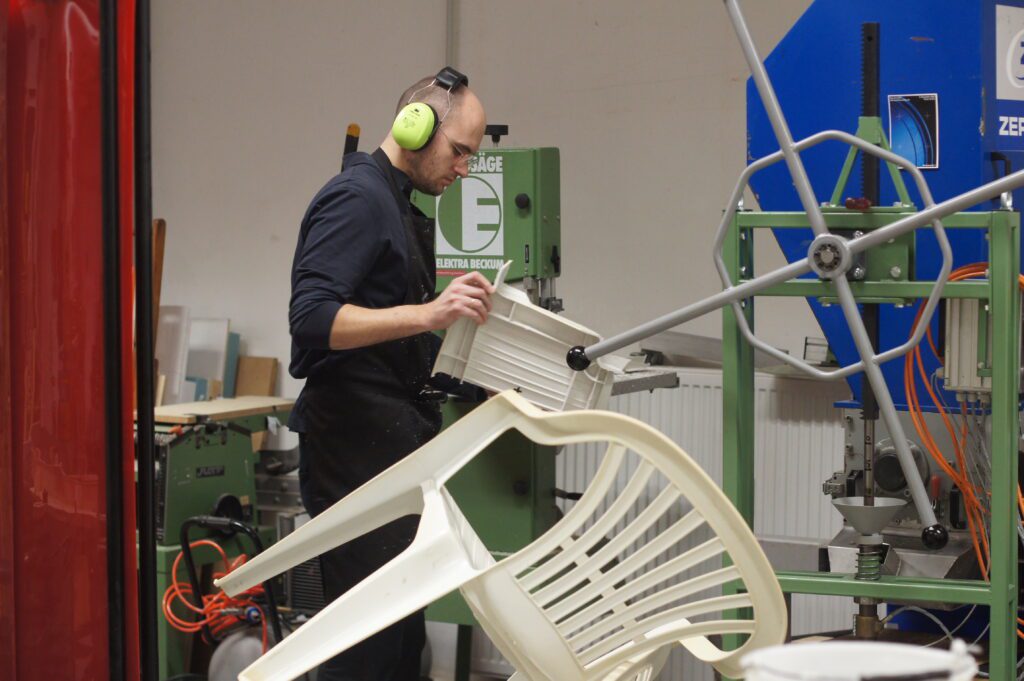
The homemade, hand-operated machine assembly was discussed as a “showcase element,” as it represents a model project for urban production both in terms of materials and the associated production processes (SDG 9). Building on this, the project has the potential to locally manufacture replacement parts for repair and maintenance through partnerships with commercial enterprises. This can inspire other stakeholders to establish their own workshops in the context of the “right to repair.” Customization, small-batch production, and the “added value of the story” behind unique pieces could strengthen the ripple effect (SDGs 11, 12, 17). The studio and workshop model enables forms of work that are craft-based, customizable, resource-efficient, easy to learn, and locally rooted (SDG 8).
Collaborations with cultural institutions, craft businesses, and trade associations were seen as an opportunity to test this production method, which could only realize its full potential as part of a comprehensive, sustainable repair and recycling ecosystem.
The participants highlighted Das Rezyklat as a resource-saving project, since it saves plastic waste from being destroyed and transforms it into new products. The project stakeholders pointed out that in Germany, about two-thirds of all plastic waste is currently incinerated in waste-to-energy plants to generate energy. In contrast, Das Rezyklat creates “material storage,” as the plastic continues to be used for years and the CO₂ bound within it is not released (SDG 13). The project stakeholders noted, however, that recycling processes also require energy: For each product, electricity consumption results in approximately 7 to 10 gramsof CO₂. For the participants, however, the positive effects—including materials that remain in use longer and increased awareness of resource consumption and use—outweighed the negative impacts.