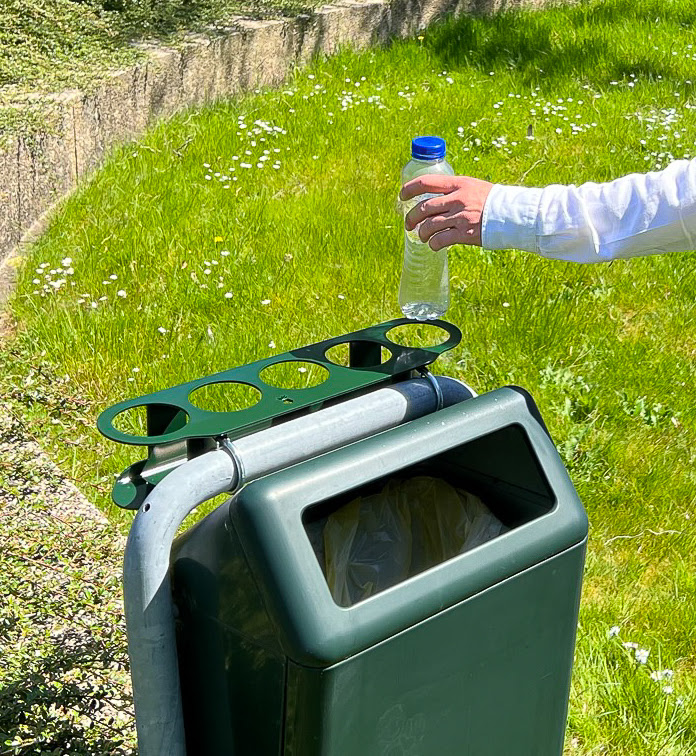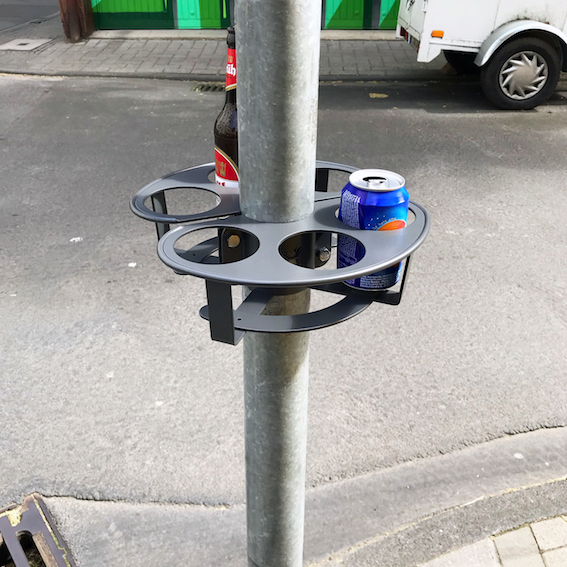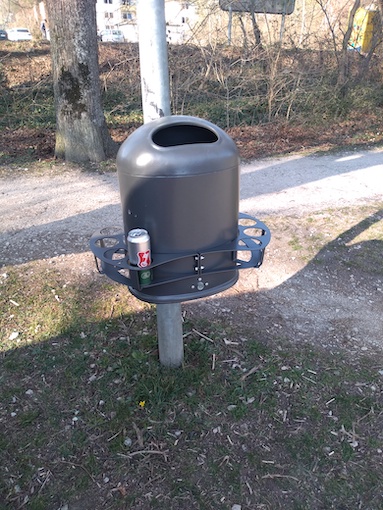
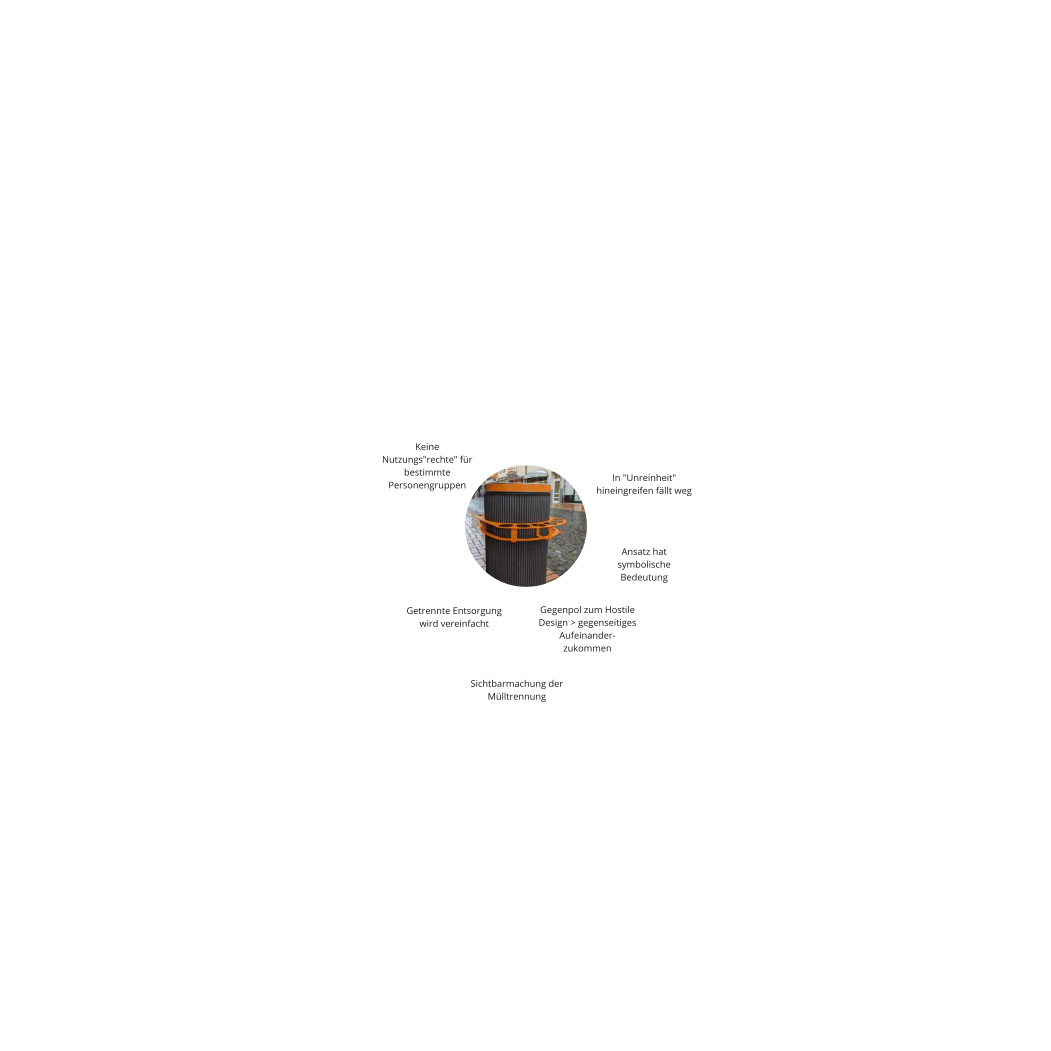


The Deposit Ring is a metal device developed by product designer Paul Ketz that has been installed on public trash cans since 2012. The product allows consumers to place returnable bottles visibly and securely outside the trash can instead of throwing them inside. Empty bottles can be removed and taken to collection points without having to reach into the trash. This allows more recyclable materials to be returned to the recycling cycle. The initiative began as a pilot program; the Pfandring is now available—albeit not nationwide—in over 60 cities across Germany.

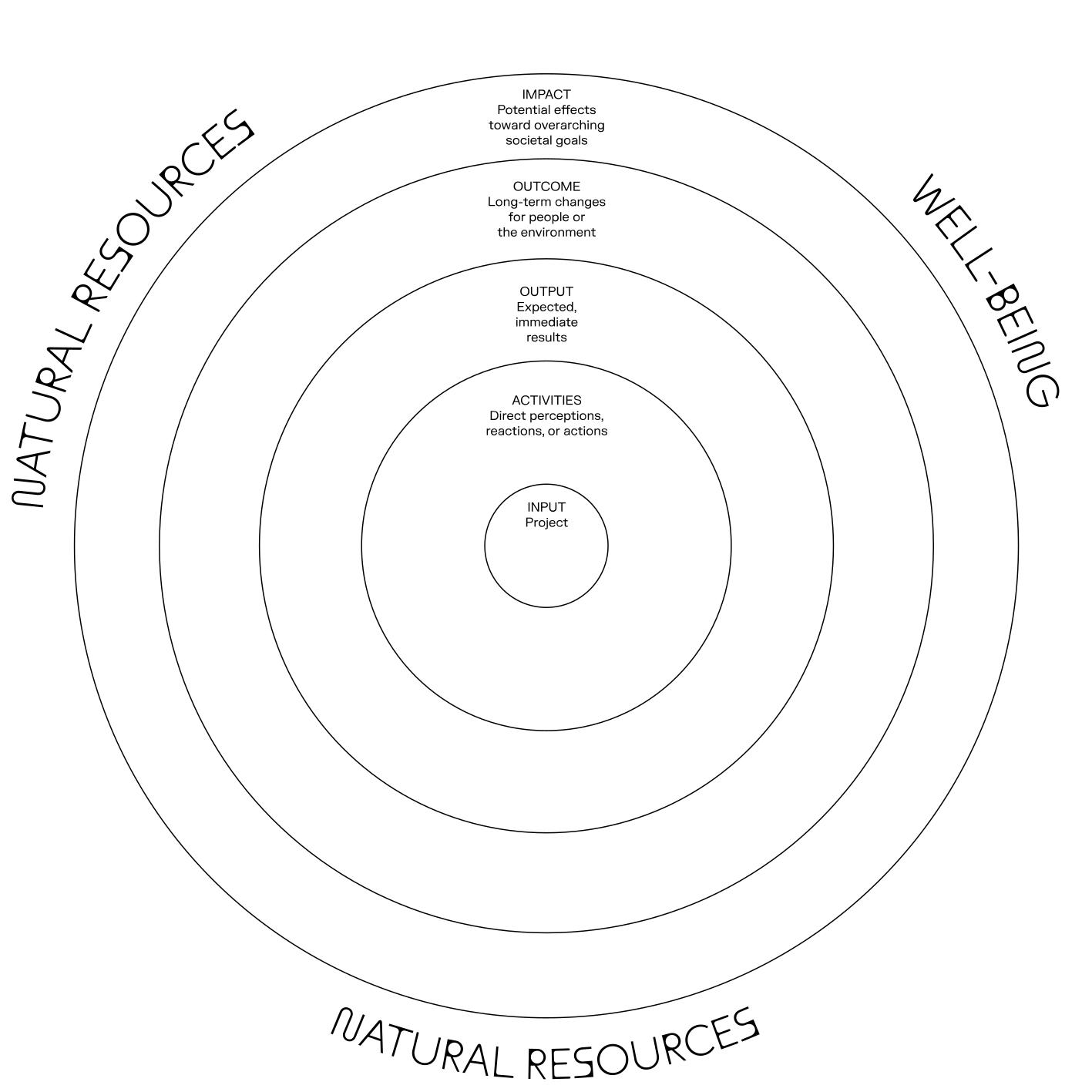
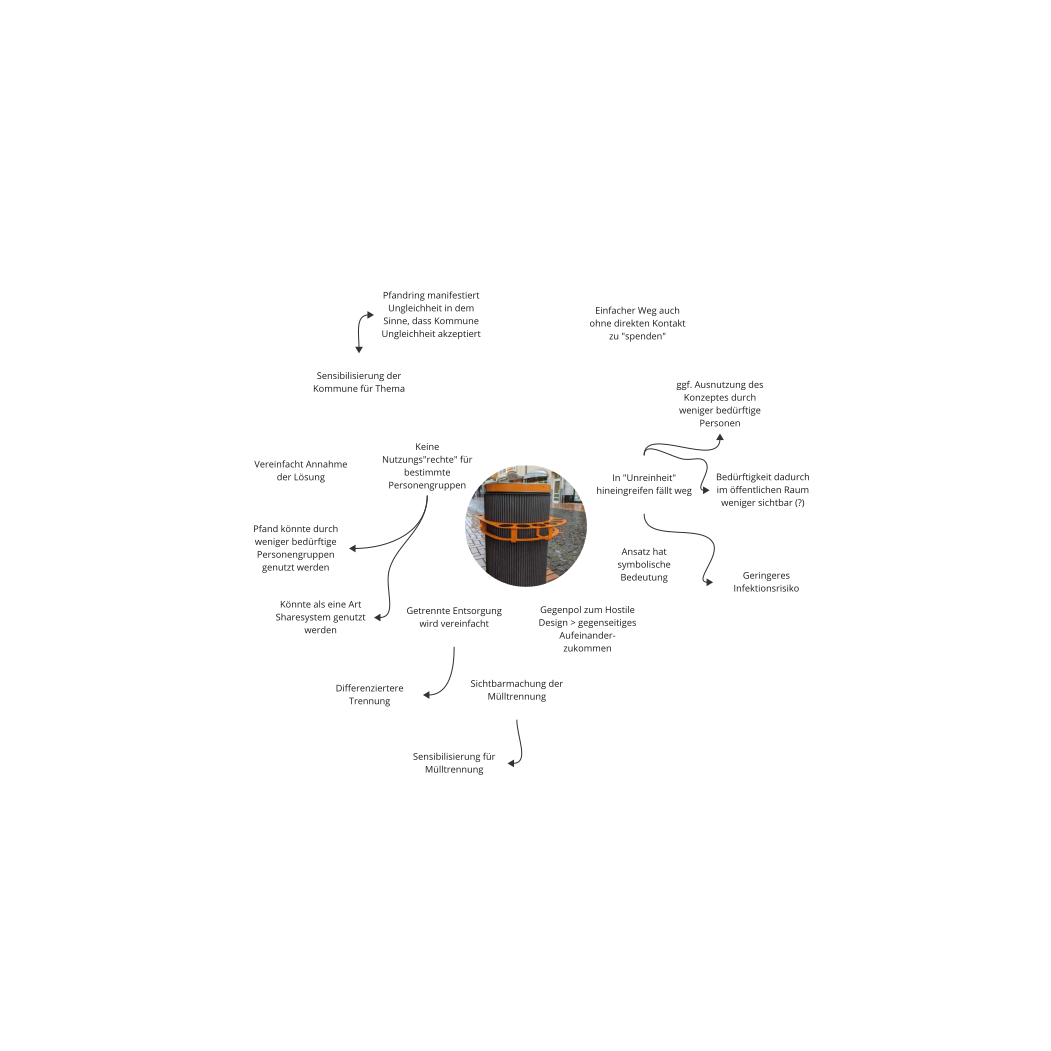
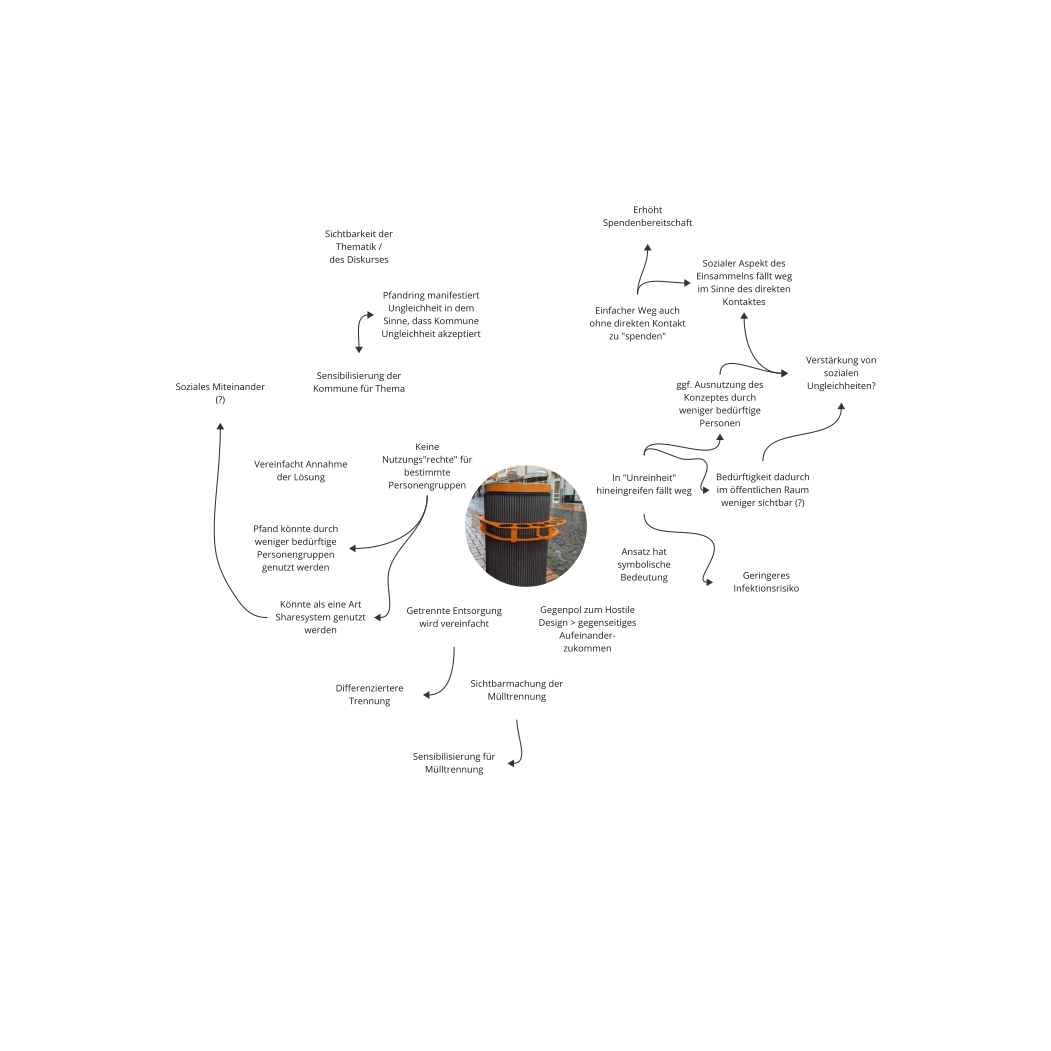
The potential impacts of Pfandring were analyzed on June 11, 2024, using the Map/ing Sustainability method by an interdisciplinary group of experts in design research, sustainability science, urban administration, product and innovation development, and industrial design.


From a practical standpoint, the participants in the discussion viewed the Pfandring as a functional and design-oriented solution that makes it easier for bottle returners to access returnable containers. By separating returnable bottles from general waste, the device reduces health and safety risks (SDG 3). From a social perspective, the Pfandring was viewed with mixed feelings: On the one hand, it highlights social inequalities—while some people can afford not to return deposit-bearing containers and carelessly throw away recyclables, others rely on the income from collecting deposits (SDG 1, 10). On the other hand, this straightforward solution was also viewed critically, as there is a risk of unquestioningly perpetuating social inequalities when consumers can conveniently shift the responsibility for recycling their empty containers onto those in need—perhaps even viewing it as a donation. In this context, the question of whether initiatives like the Pfandring can contribute to more socially conscious interpersonal interactions was also discussed. The participants concluded that the Pfandring serves as a subject of discourse that forces society to confront poverty within our own ranks, but does not contribute to solving the problem at the societal level. In this regard, individual objects can only have an impact within appropriately designed sociopolitical and sociotechnical structures.
At the level of Provisioning Systems, the Pfandring was viewed as a complement to urban infrastructure (SDGs 9, 11). Given the prevailing infrastructural and social conditions, it represents a “pragmatic solution to a waste disposal problem” by offering a way to prevent recyclable materials from being incinerated with residual waste and instead divert them to recycling. This contributes to “initial waste separation” and thus to a more efficient circular economy (SDG 12).
The group discussed potential contributions related to Natural Resources only indirectly—for example, in terms of improving recycling rates—but did not explicitly establish impact chains linking these contributions to any of the relevant SDGs during the discussion.