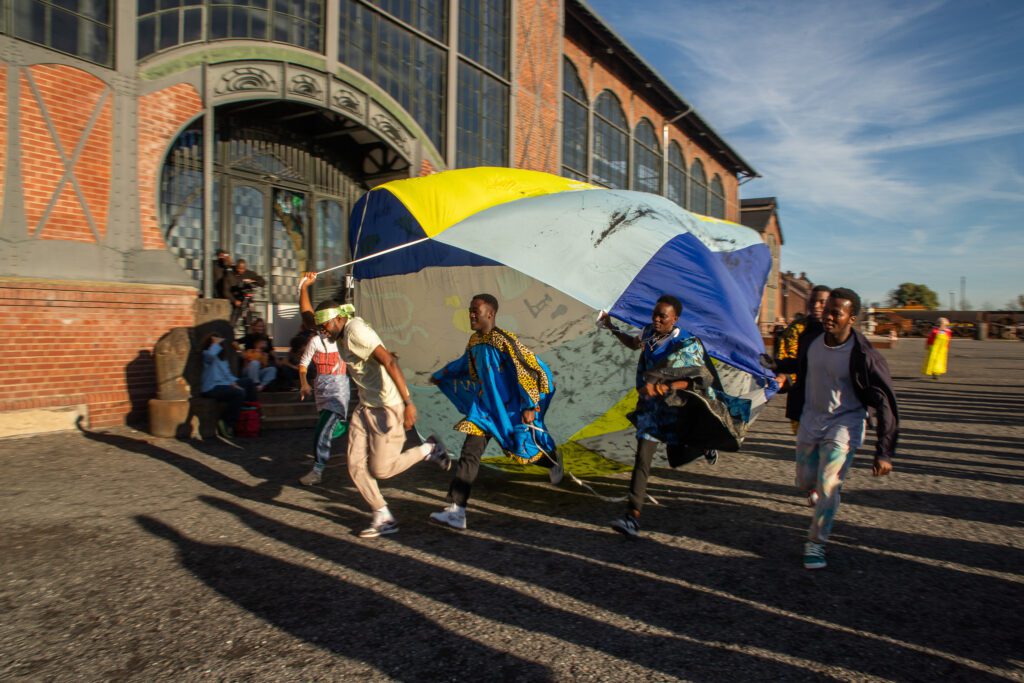


Folklore, die es nicht gab is a project of the Transnational Ensemble Labsa, which explores local colonial history. Specifically, the ensemble has engaged artistically and through research with materials from the LWL Museums’ collection that were produced in the Ruhr region and Westphalia during the 19th and 20th centuries using fabrics with seemingly “typically African” patterns in the 19th and 20th centuries for export to African countries. Labsa At the Tomorrow Kiosk in Dortmund, it offers a space where people—regardless of their background, gender, or age—can come together regularly to engage in artistic and creative activities. While the choice of art form is open, there is a focus on theater, dance, and performance in combination with sewing and other textile techniques.
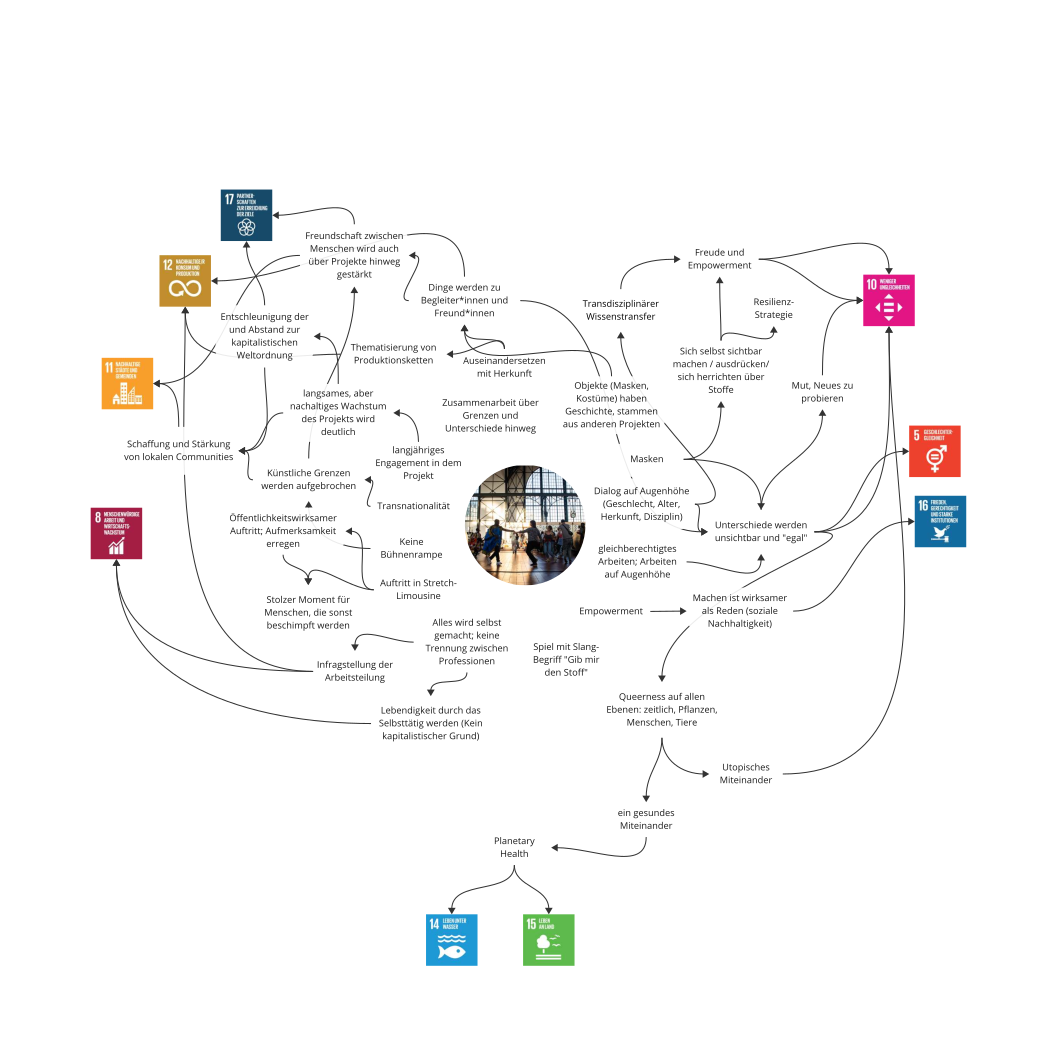
On March 26, 2026, an interdisciplinary group consisting of designers, cultural studies scholars, theater scholars, education scholars, biologists, sociologists, actors, dramaturgs, philosophers, engineers, and business psychologists. Two representatives of the ensemble introduced the group and screened the music video“Gib mir den Stoff,” which was created as part of the “Folklore, die es nicht gab” project. The discussion focused on the ensemble’s work in general.


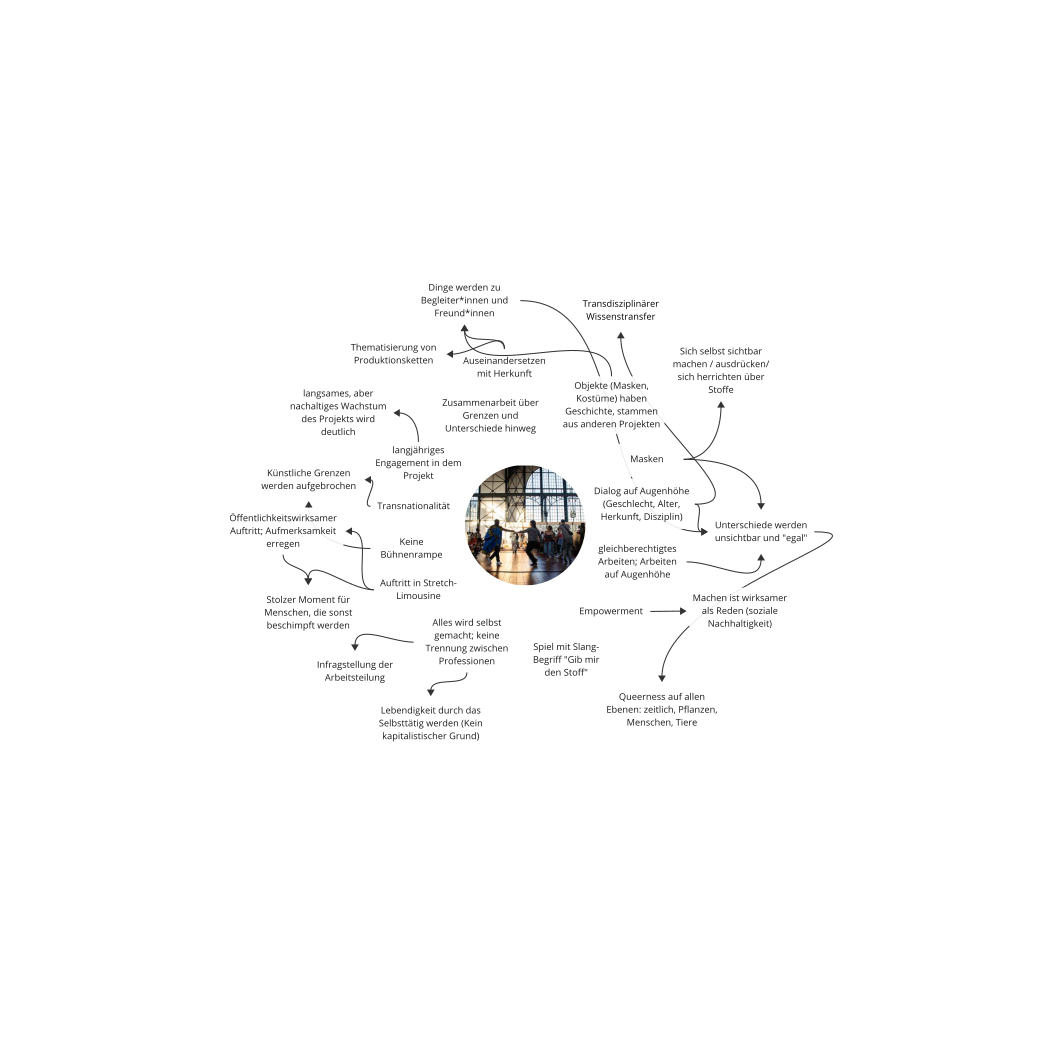
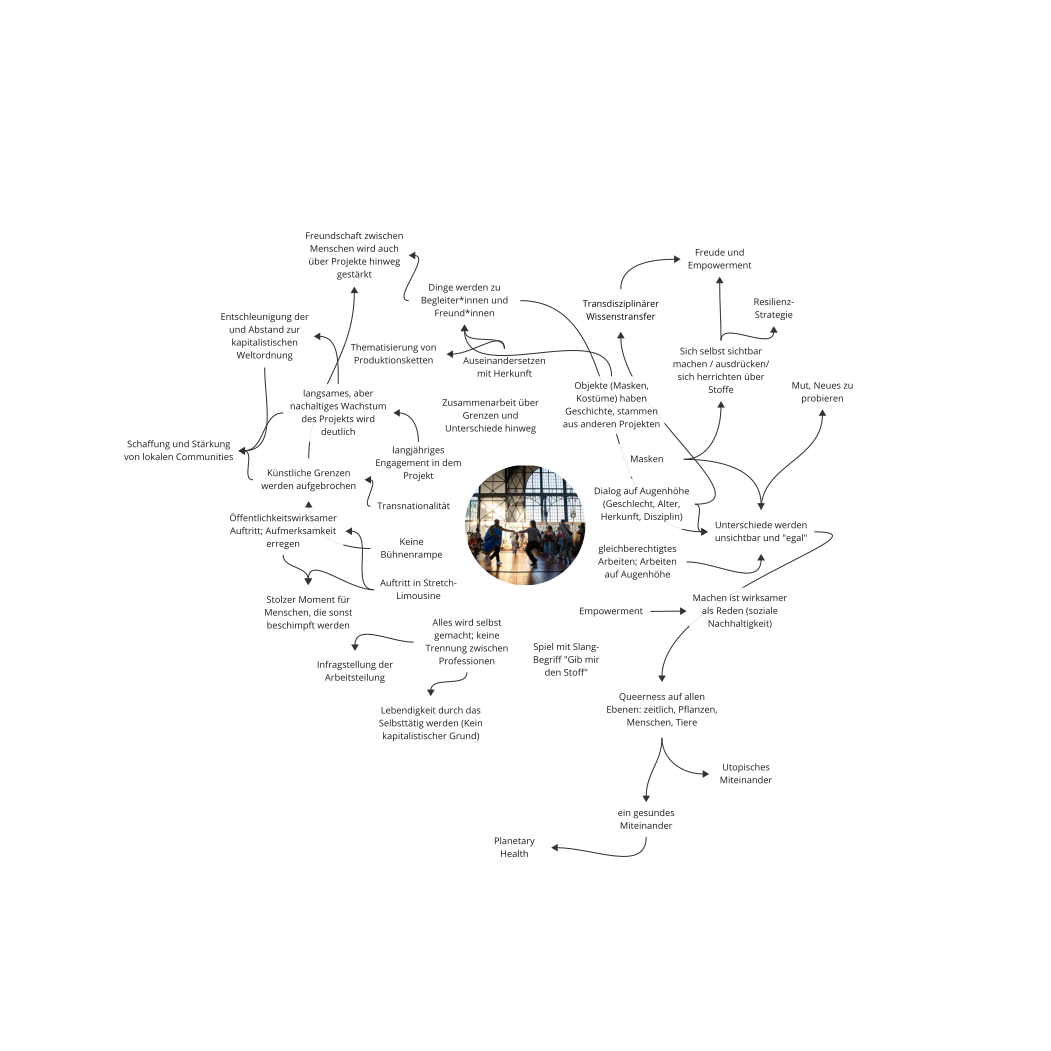
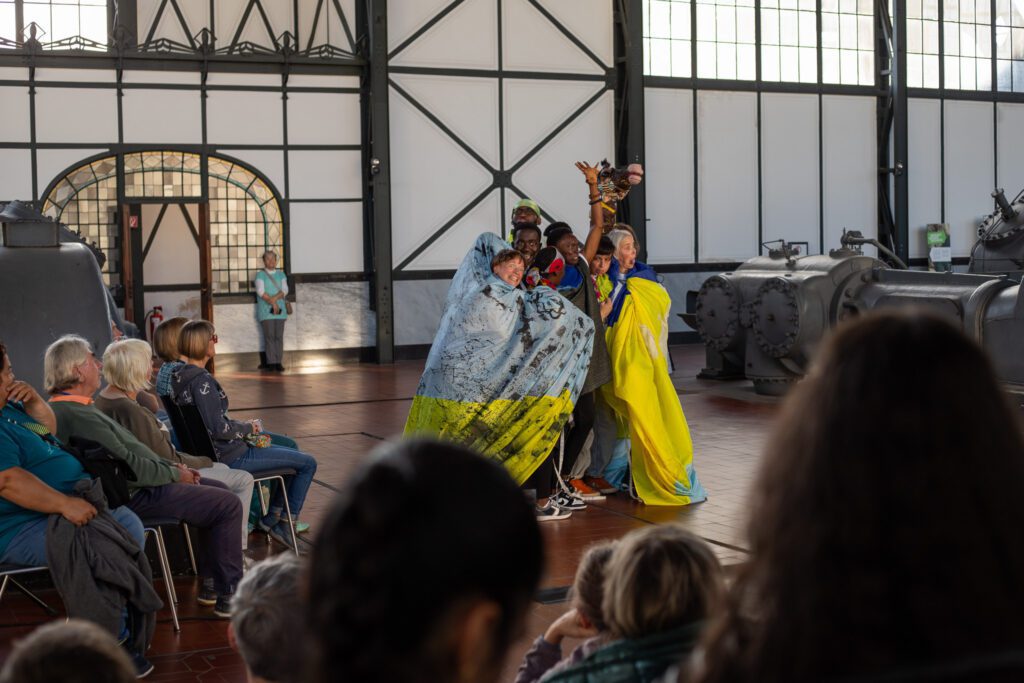
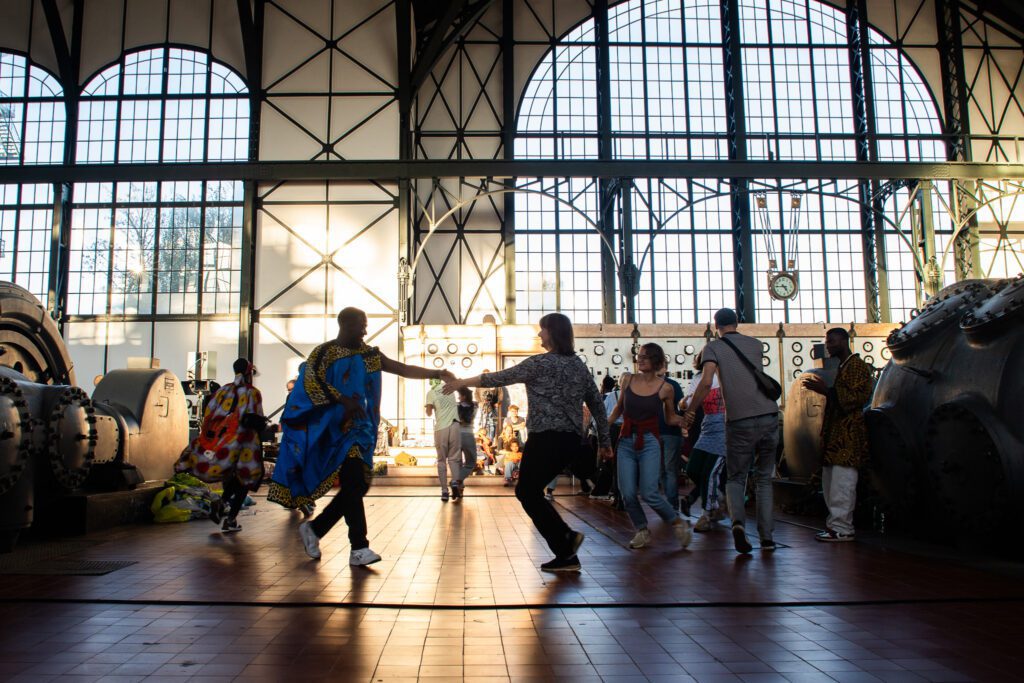
During the discussion, it quickly became clear that Labsa’s working methods, medium, and content are closely intertwined: Because everyone is involved in all tasks—”from cleaning the restroom to writing concepts”—the members’ diverse backgrounds, genders, ages, and disciplines fade into the background. They become “irrelevant” (SDG 5, 10). With the help of textiles and masks, they express themselves and their personalities. Through collaborative work on an equal footing, processes of collective negotiation and mutual recognition can unfold, in which joy and empowerment go hand in hand. Against this backdrop, participants in the GPB discussion expressed the view that the project—in line with the idea that “action is more effective than talk”— —could contribute to social sustainability because it puts the utopia of a peaceful and inclusive community to the test in practice and makes it tangible (SDG 16).

The ensemble’s practice of doing everything themselves—in order to counteract the separation and hierarchy between professions and services—is reflected upon by the participants as a critical practice. Through this, prevailing forms of work and economic systems can be challenged, and alternatives developed. The decision to forgo externally purchased services is discussed as having a positive impact on the results and, according to one participant, leads to a “vitality that cannot be bought” (SDG 8). Consequently, a work practice structured in this way could also counteract experiences of alienation from production processes and from the products themselves in other contexts, because it fosters intense experiences of resonance.
The ensemble explores the theme of origin not only in relation to people, but also to objects: Labsa also explores where fabrics, masks, or costumes come from and prefers objects that have long been part of her work and thus carry a personal history, so she can retell their stories anew in various productions and thereby continually imbue them with fresh meaning. For example, a mask can thus become a “lifelong companion” and an “archive of knowledge.” The long-term approach the ensemble takes in handling objects creates a distance from the “project-based, fast-paced” nature of the capitalist world order. This encourages—also in light of the resonant experiences mentioned above—critical reflection on production chains and one’s own consumption behavior (SDG 12).
Labsa’s work helps break down “artificial boundaries” on various levels: from the ensemble’s transnational nature to the deliberate use of ground-level staging—with performances taking place without a stage ramp—thereby breaking down barriers to the audience and, in a broader sense, to urban society as well (SDG 11). Through high-profile public actions, the ensemble reaches new audiences and, in addition, creates a “moment of pride” for its members, many of whom otherwise often experience discrimination or verbal abuse in public spaces (SDG 11). For example, during a performance featuring a stretch limousine at Dortmund’s bustling Nordmarkt, the car serves simultaneously as a status symbol and as a stage. Over the course of the project’s long history, a resilient community has grown, one that represents an important part of the local social environment for many of its members. Labsa not only fosters “joyful understanding” and friendships among its members but also ensures that these connections endure beyond individual projects (SDG 17).
The discussion group understood that unbiased coexistence across differences—particularly the multifaceted “play with beings” in the form of animal masks and costumes—as well as respect for the diverse histories and origins of people and things, were expressions of “queerness in all areas.” In this way, Labsa offers a world shaped by a deep awareness of the importance of global communities that transcend species boundaries. In the context of the sustainability discourse, this can serve as a bridge to planetary health approaches, as it makes the interdependence on intact ecosystems and the survival of other species tangible for both participants and observers (SDGs 14, 15). With regard to the sustainable integration of objects into the ensemble, it can be assumed that practices will be developed and disseminated that value resources and thereby prevent new consumption.