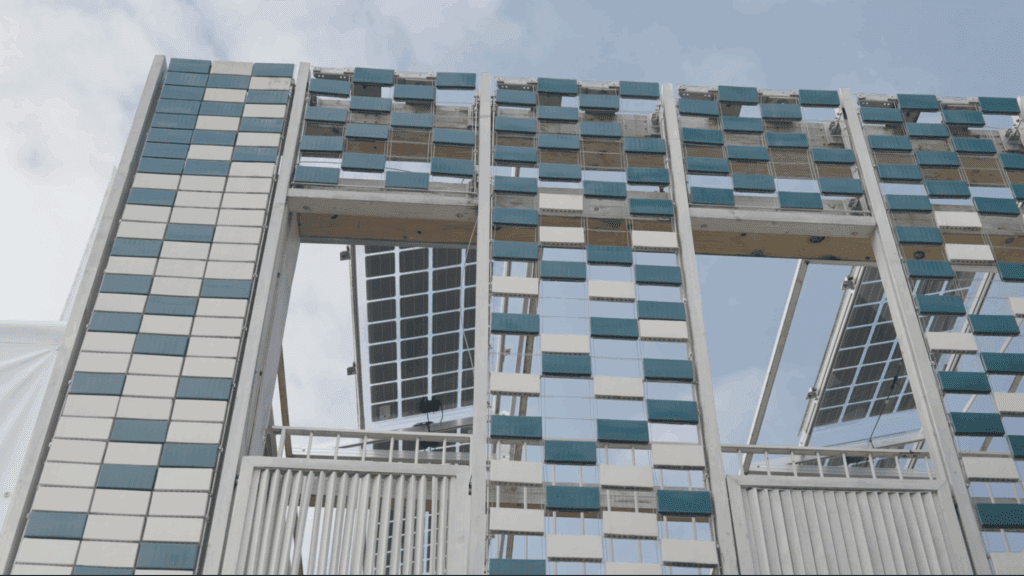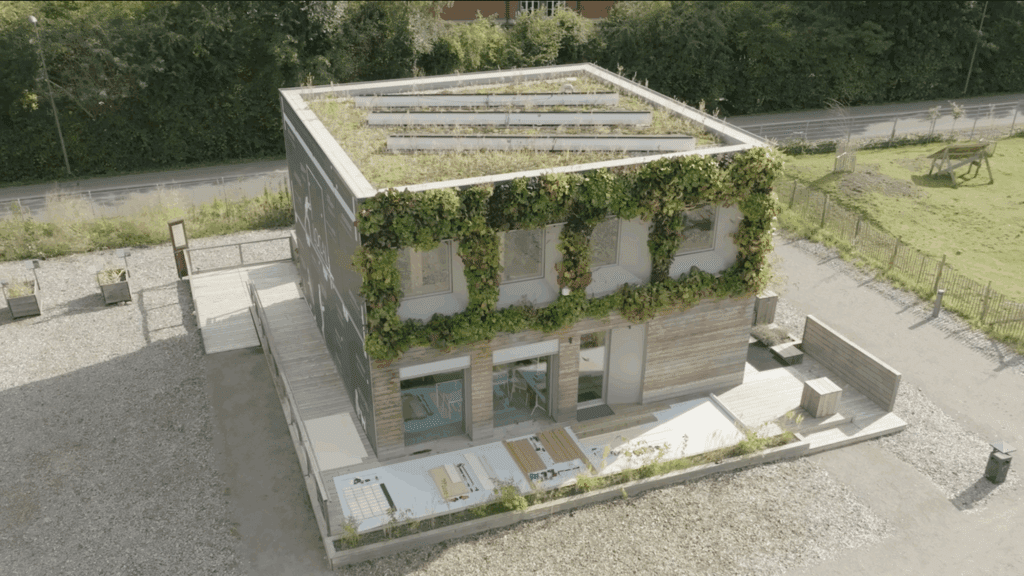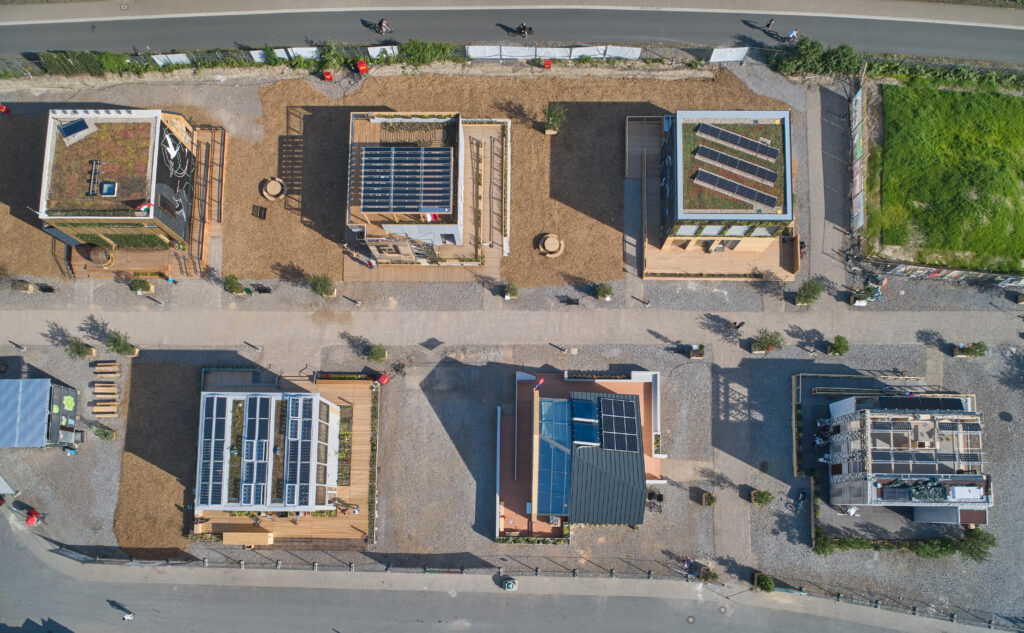
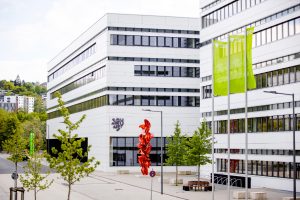
The Living Lab NRW is a research and education platform at the University of Wuppertal that brings sustainable construction to life. As a network spanning both North Rhine-Westphalia and all of Germany, its goal is to promote research and education in the fields of climate-neutral construction and energy-efficient energy supply. The Lab originated from the international Solar Decathlon SDE21/22 competition, in which student teams constructed energy-efficient buildings using circular materials. After the competition, some of these buildings remained on the Nordbahntrasse in Wuppertal as research and exhibition sites and were occasionally open to the public as educational venues.
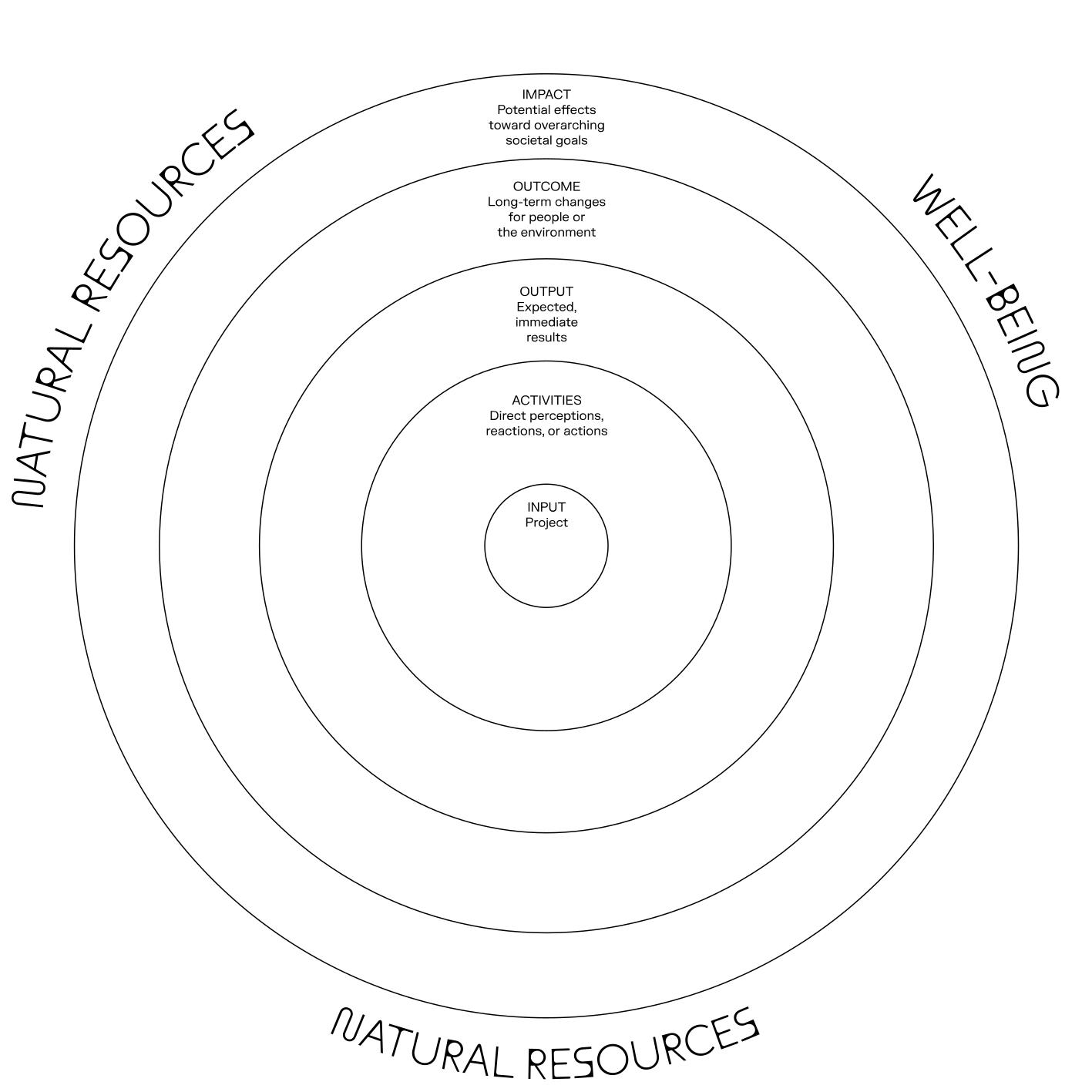
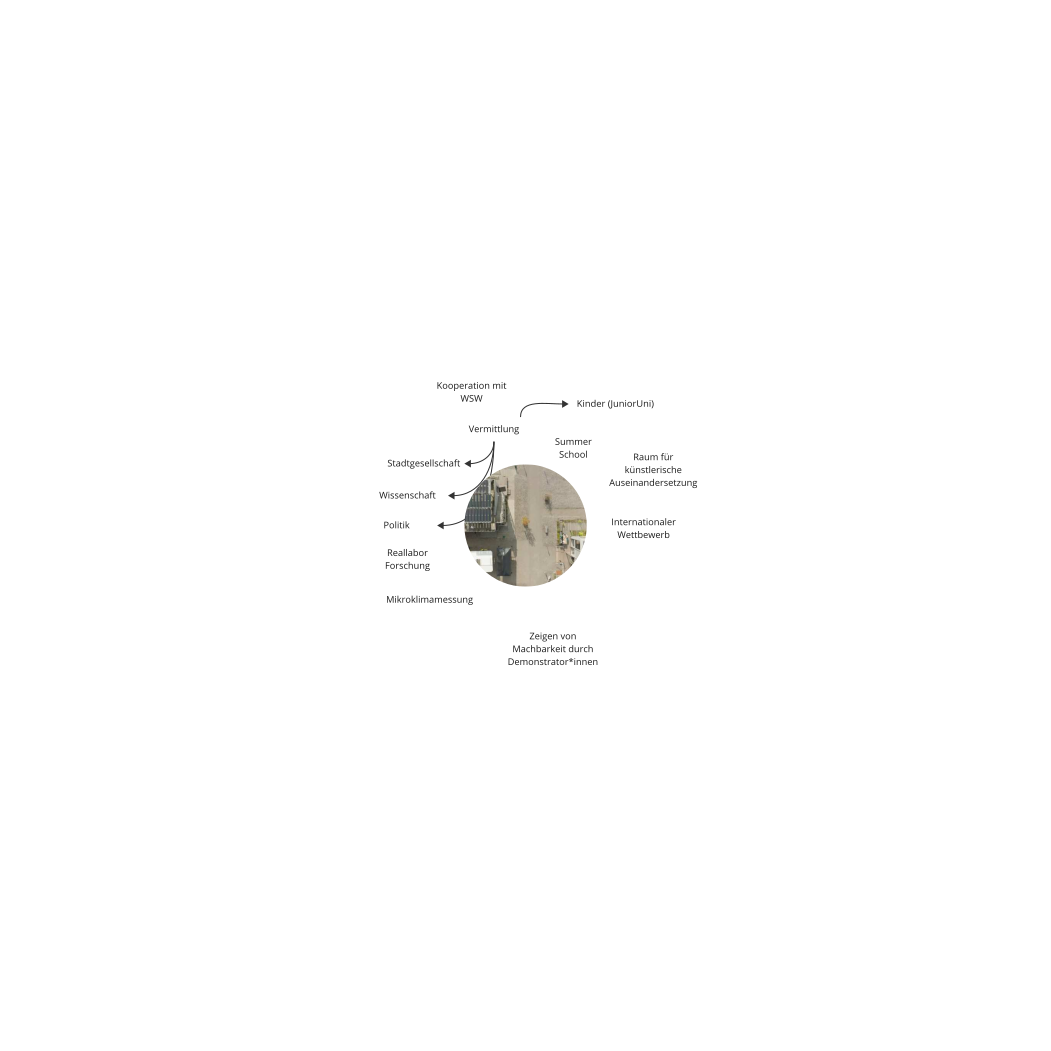
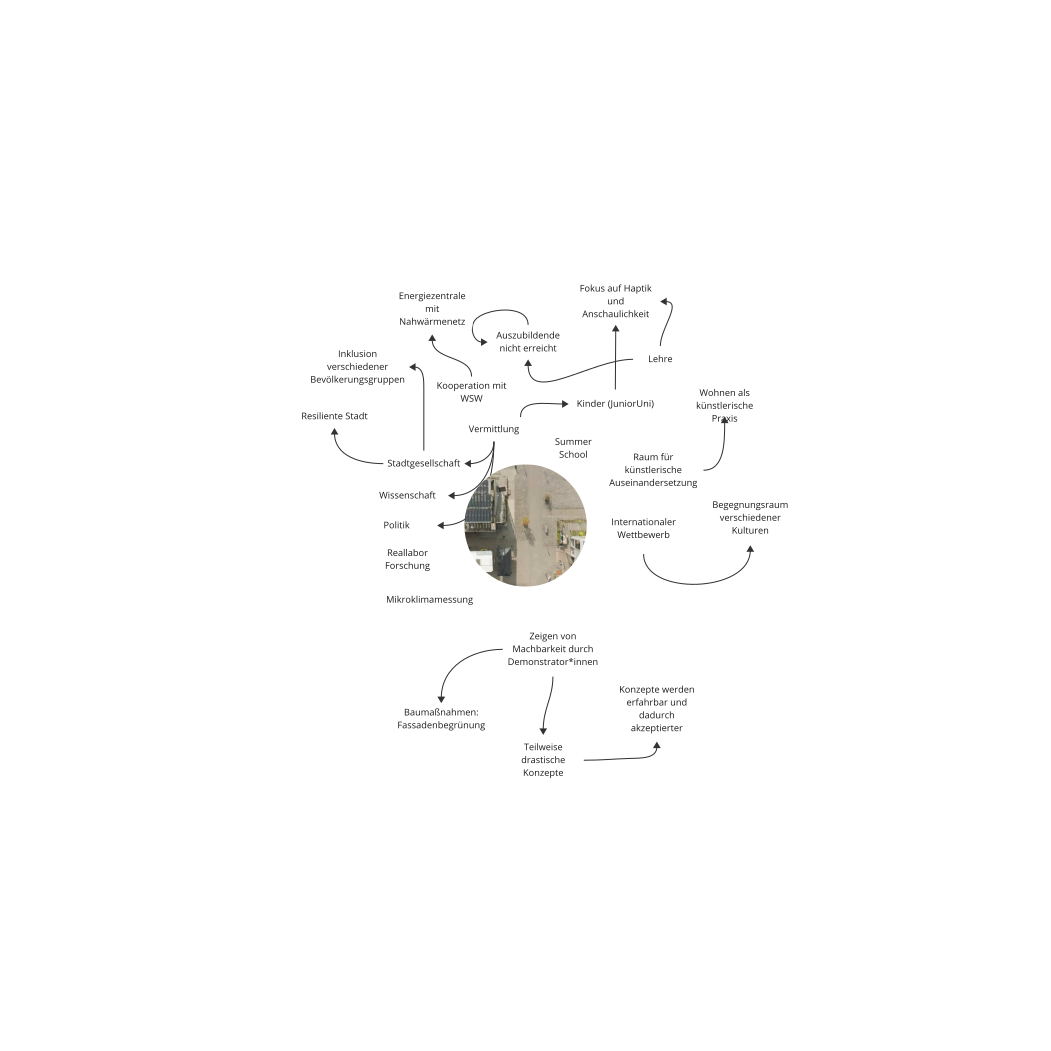
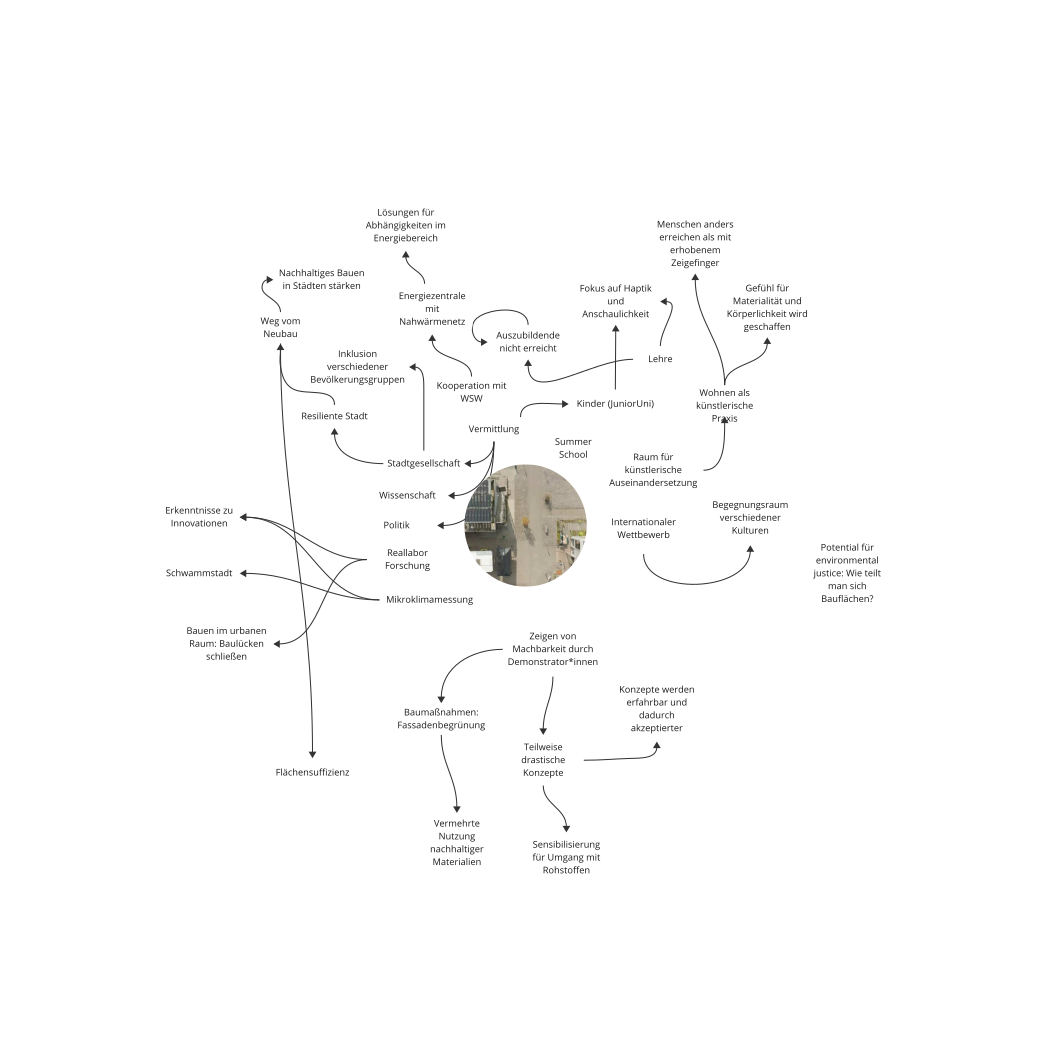
On December 3, 2024, the potential impacts of Living Lab NRW were analyzed using the Map/ing Sustainability method by an interdisciplinary discussion group consisting of architects, civil engineers, designers, and experts in sustainability research, theater studies, stage design, and art education. Katharina Simon, the project manager of Living Lab NRW, presented the project and participated in the discussion.
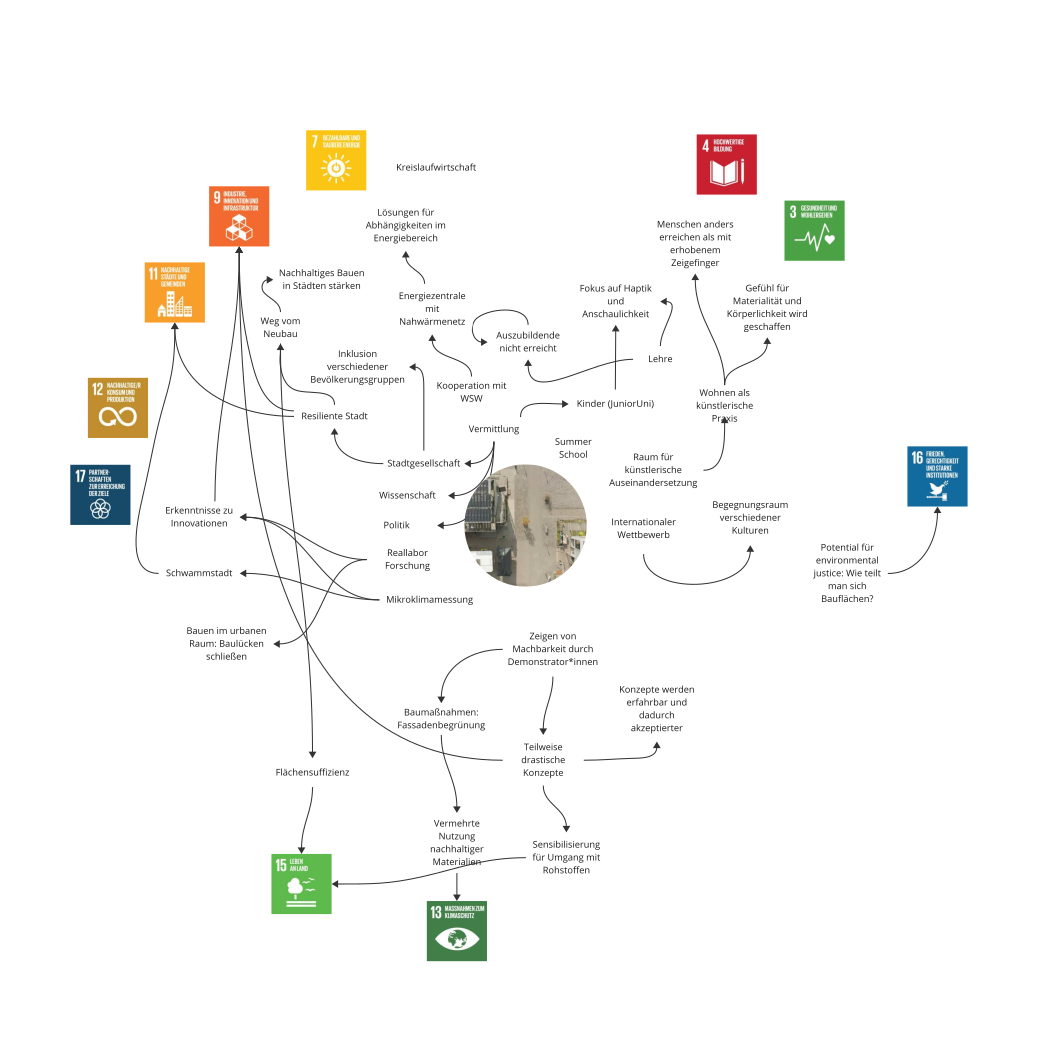
The participants in the discussion saw significant potential for impact in the diverse teaching and learning methods being tested as part of the Living Lab NRW. These methods actively involve citizens—and students in particular—and offer an experiential entry point that enables long-term learning from practice for practice. In this way, the Lab serves as a place of learning and education for sustainable development (SDG 4).
The participants discussed the idea of expanding on this approach by inviting artists to actively engage with the Living Lab NRW sites: Art can “serve as a bridge to lower barriers” and has the power to inspire people emotionally to embrace sustainability. The Lab could thus become a space for experimentation where citizens can actively participate as part of an “alternative institution” and explore social dialogue in light of resource scarcity (SDG 16).
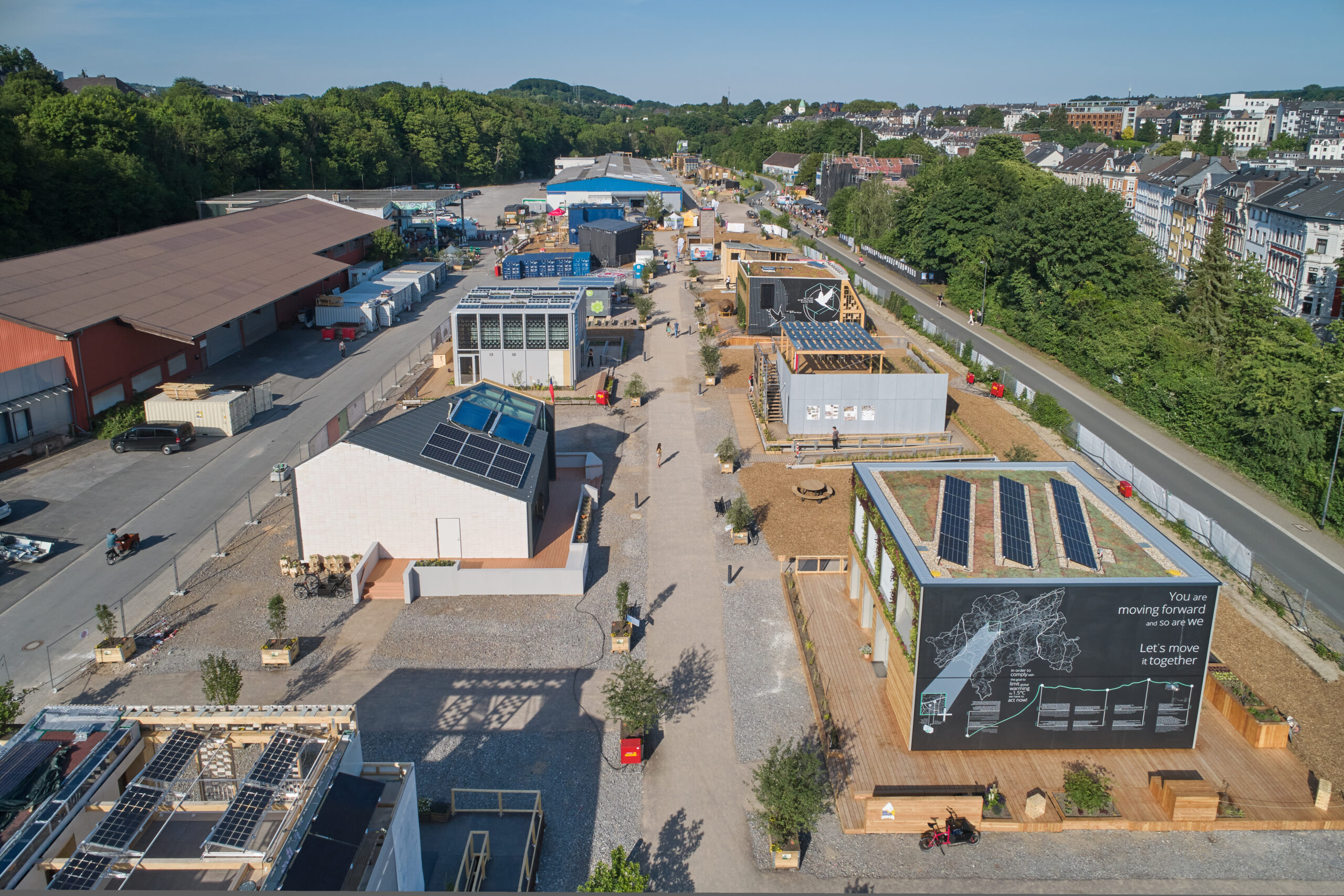
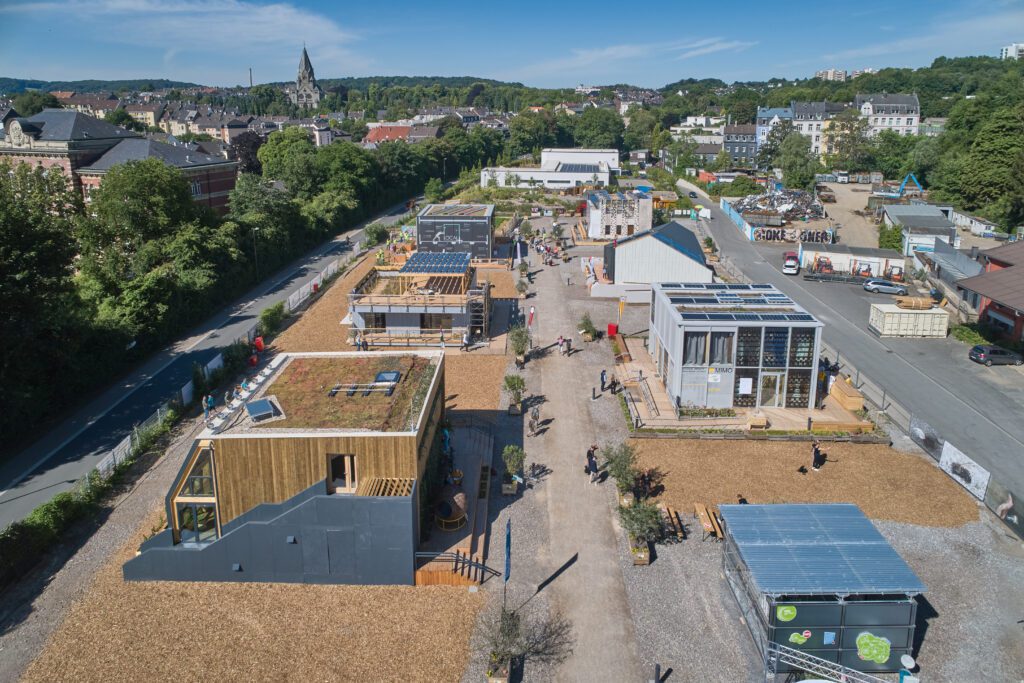
The project’s greatest potential impact lies in addressing the question of how to achieve an adequate standard of housing for all by utilizing vacant lots, effectively incorporating shared urban spaces, and testing new, resource-efficient construction methods. The goal is to move away from “new construction on green spaces” and instead raise awareness of approaches such as repurposing or infill development, which enable the creation of more high-quality housing in urban areas with less resource and energy input (SDG 11).
As a real-world laboratory, the Living Lab offers the opportunity to test new housing concepts by involving citizens in the research process and to gain new insights into comfort and quality of life, resilient cities, and a functioning circular economy in the construction sector (SDGs 9, 12). In addition, the project demonstrates how photovoltaics, a local heating network, and a partnership with Wuppertal’s municipal utilities can contribute to a local, independent energy supply (SDG 7).
Finally, the participants identified another area of potential impact in the project’s international focus and the collaboration among various stakeholders: The project emerged from an international competition involving teams from different parts of the world—such as Taiwan, France, and Spain. The participants in the discussion noted that this international character and cultural diversity would also be reflected in the buildings (SDG 17).
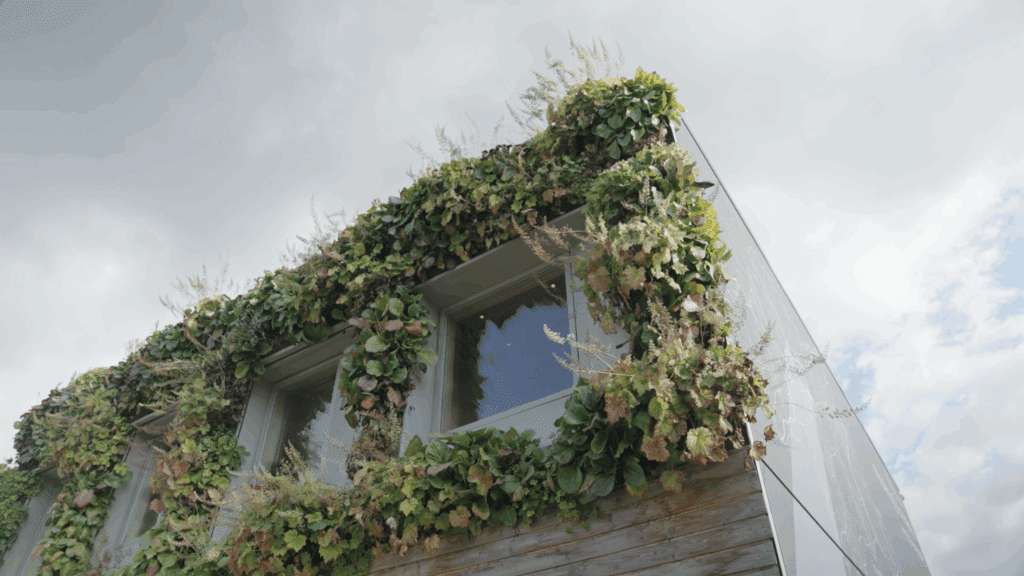
With regard to natural resources, the discussion group emphasized that the project aims to promote the responsible use of raw materials—by testing and processing a variety of natural materials, through green facades and roofs, and by applying the principles of a “sponge city.” These measures conserve resources and contribute to adaptation to climate change. Furthermore, the project raises awareness of land-use efficiency and thus promotes the economical use of limited urban space (SDGs 13 and 15).