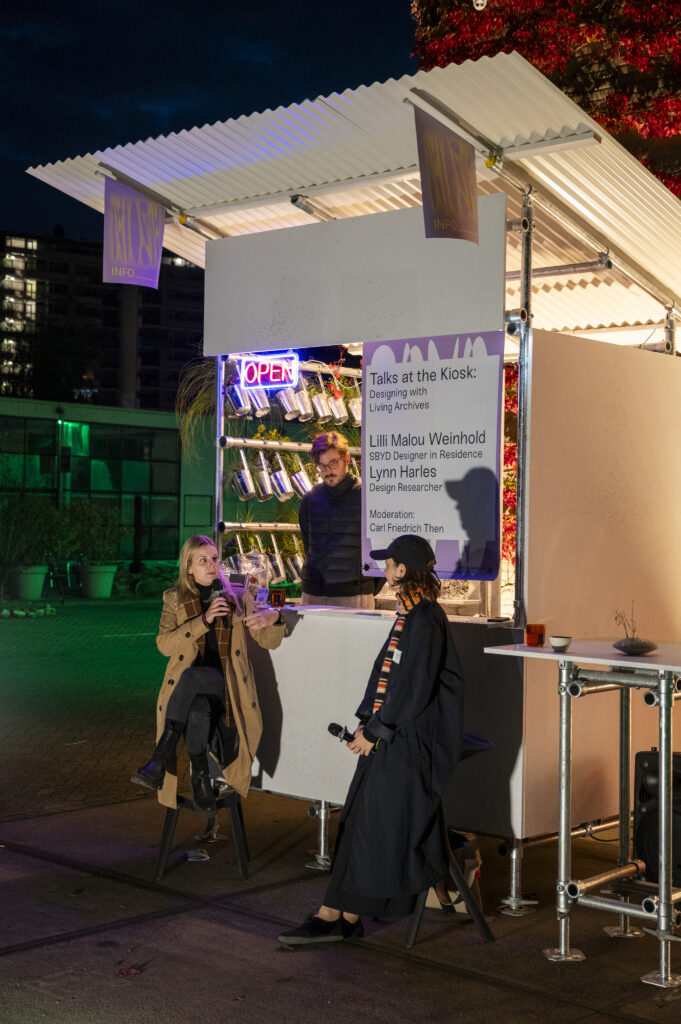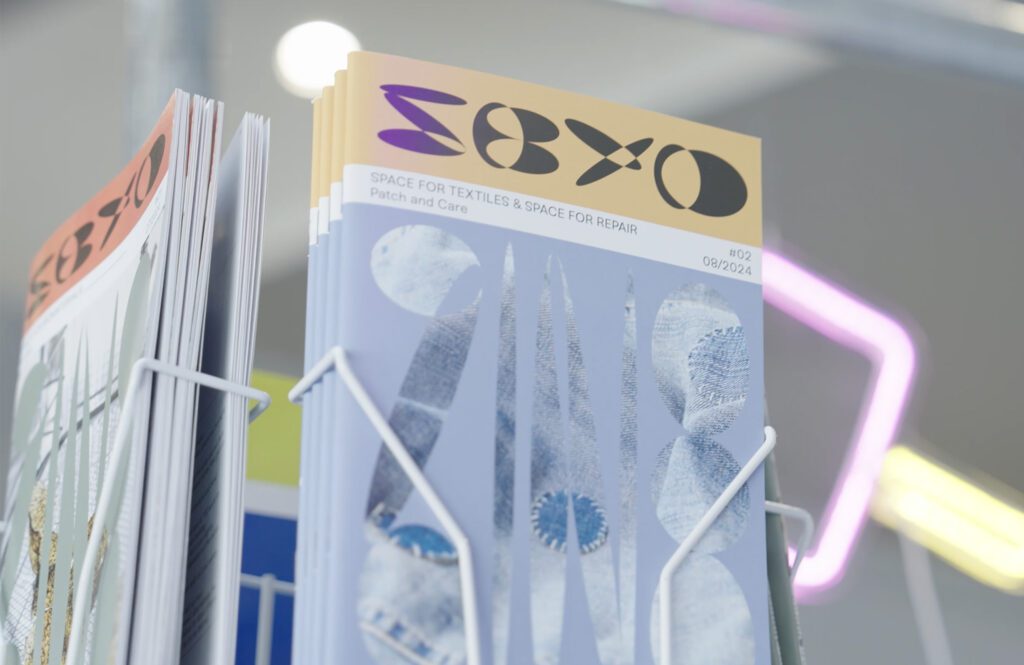


Sustainability by Design (SBYD) is a research and knowledge-transfer project at the Folkwang University of the Arts that explores climate-neutral and resource-efficient ways of living and producing, and uses design to integrate this knowledge into everyday life and the economy. In cooperation with the Wuppertal Institute and Fraunhofer UMSICHT, research, design, and teaching are interwoven. The work is divided into various areas, such as the Space for Repair, Space for Textiles or Space for Biomaterials. Formats such as artist residencies, zines, and workshops support the transfer of knowledge. SBYD is part of the funding program Innovative University by the Federal Ministry of Research, Technology, and Space (BMFTR).
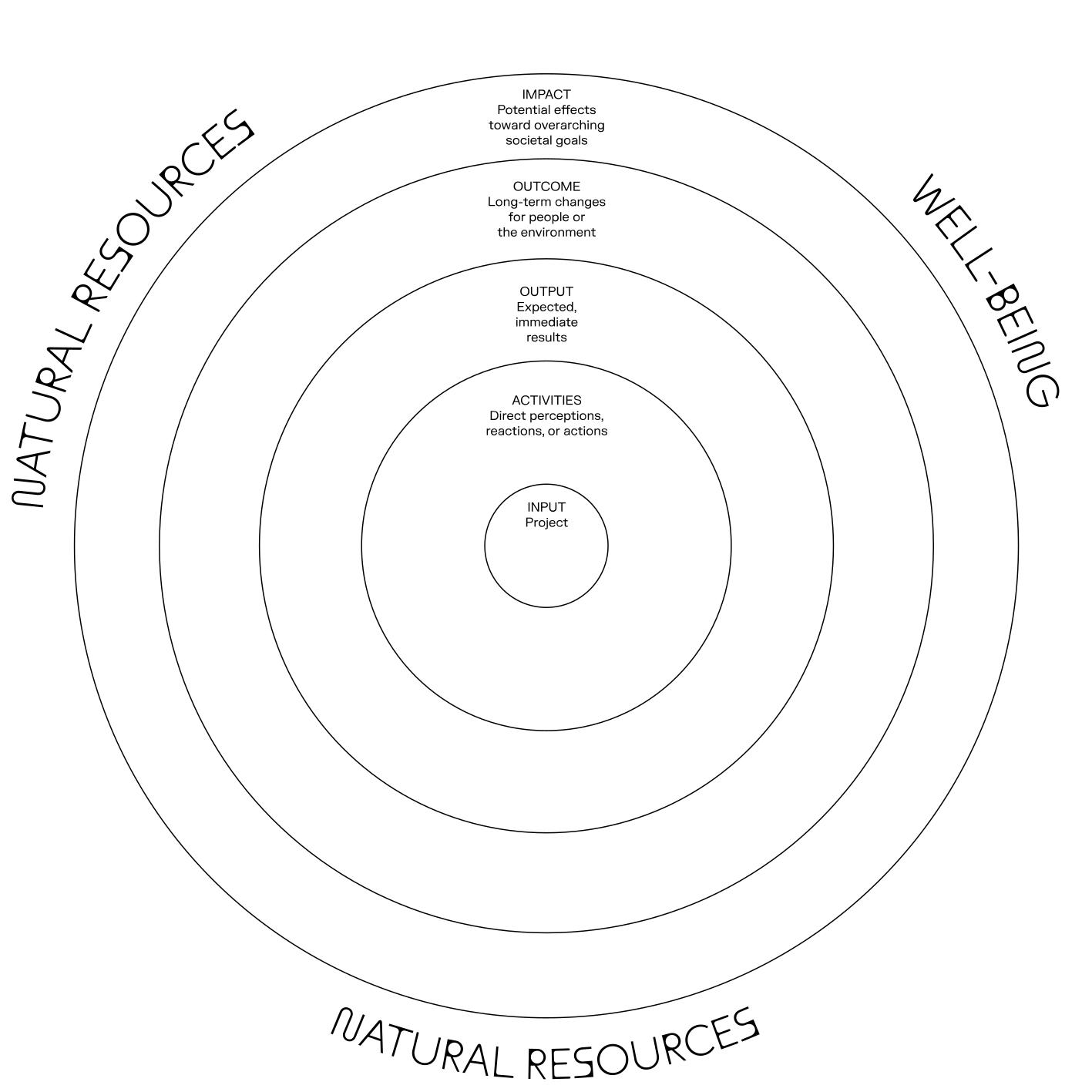
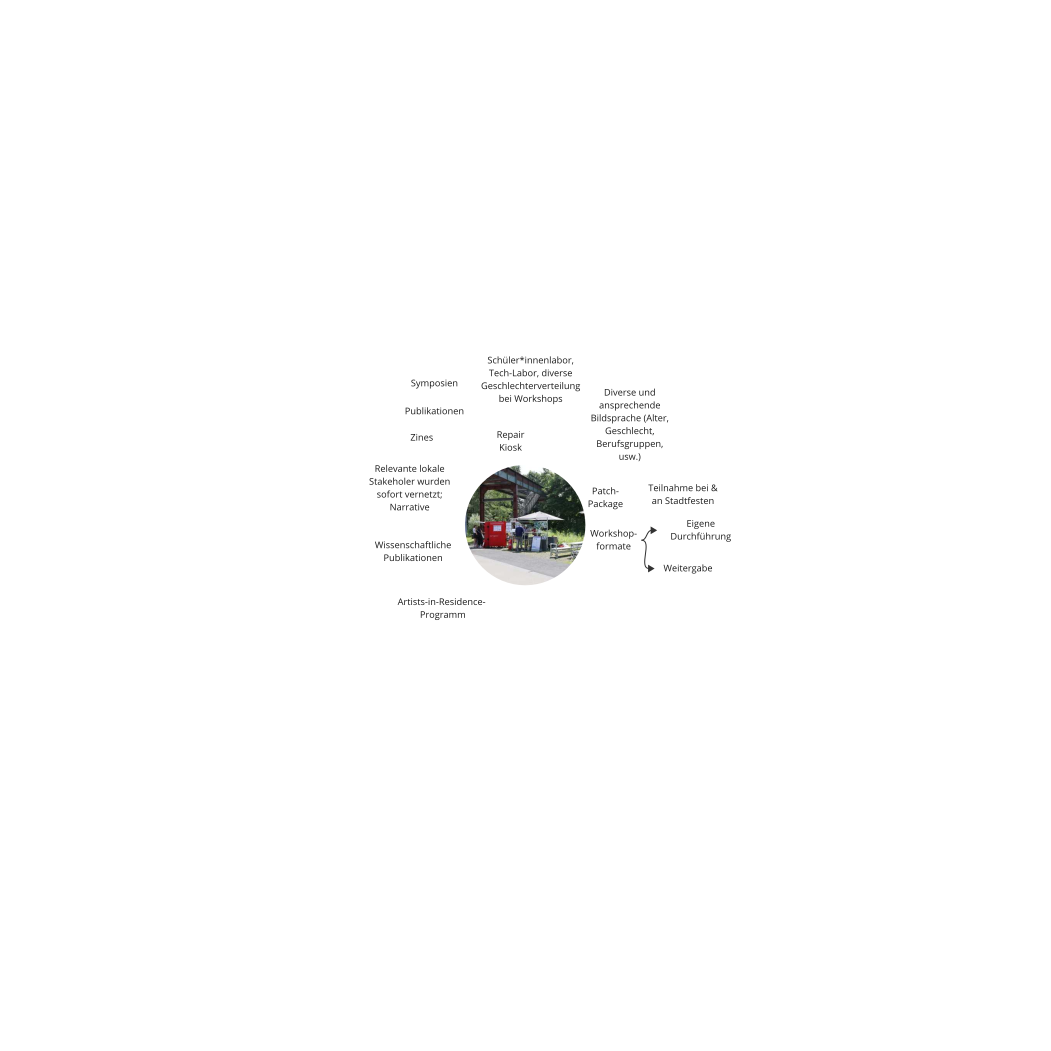
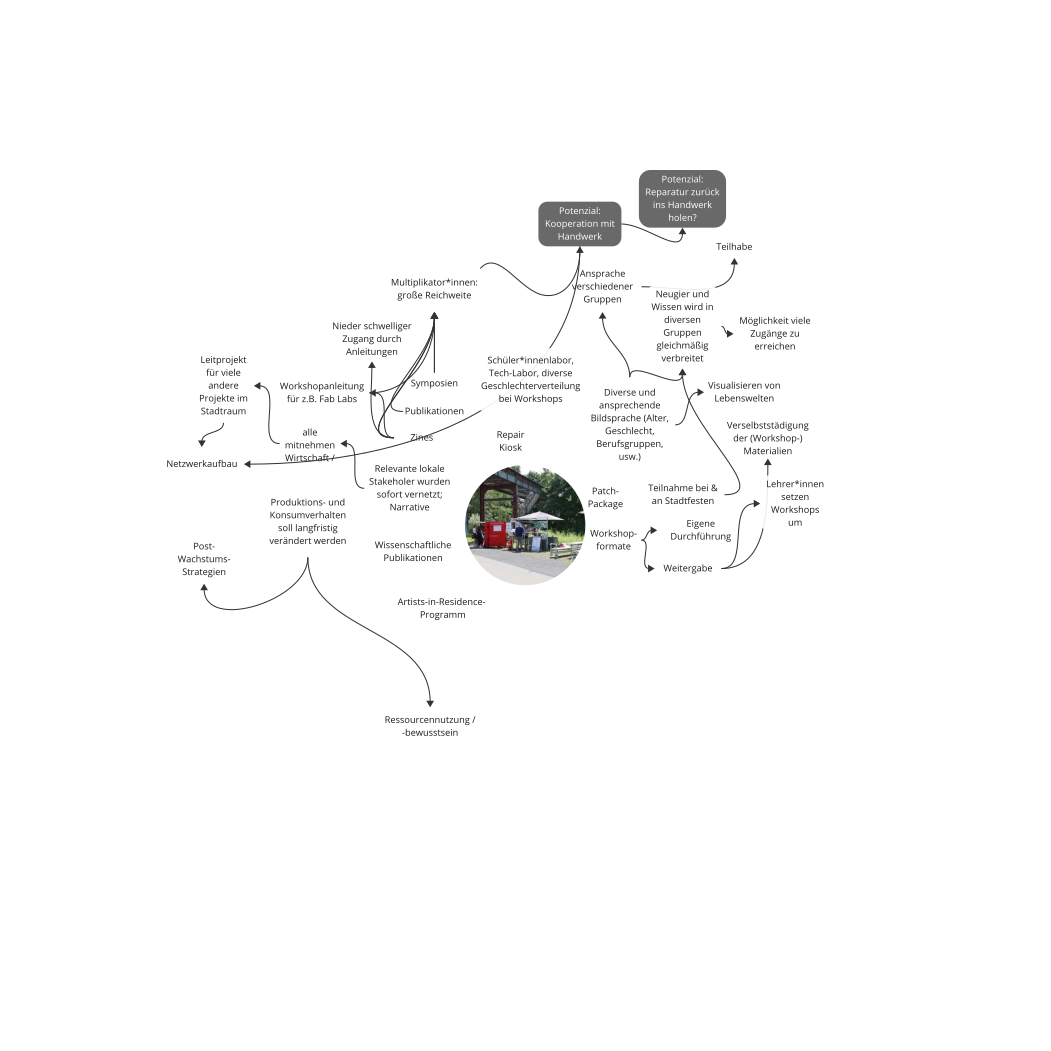
On December 9, 2024, the potential impacts of SBYD were analyzed using the Map/ing Sustainability method by an interdisciplinary group consisting of designers and design researchers, sustainability researchers, geographers, and individuals from the fields of film, crafts, and cultural management. Two of the project leaders presented the project in person and participated in the discussion. The analysis focused on the overall project as well as exemplary formats such as the Repair Kiosk and the “Spaces for Tomorrow” exhibition at Dutch Design Week.


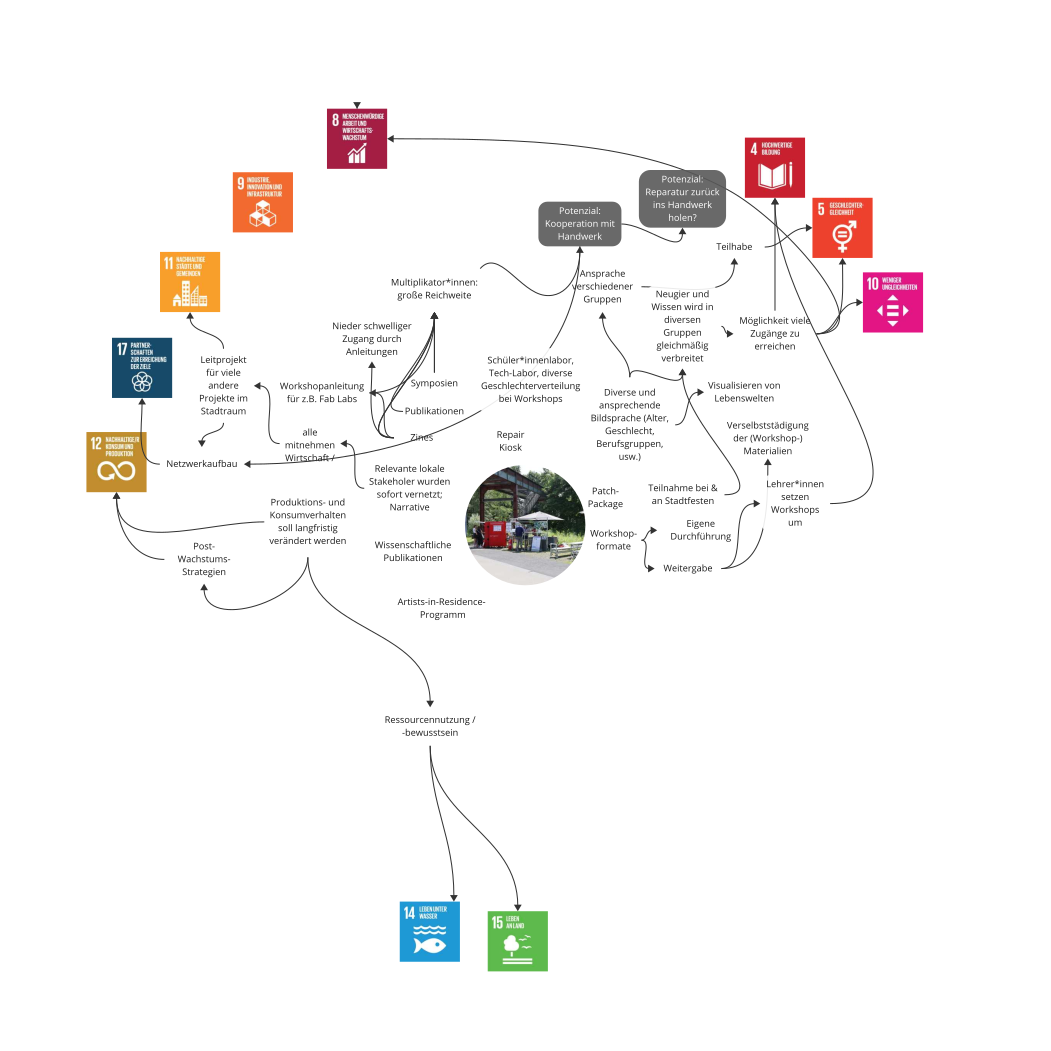
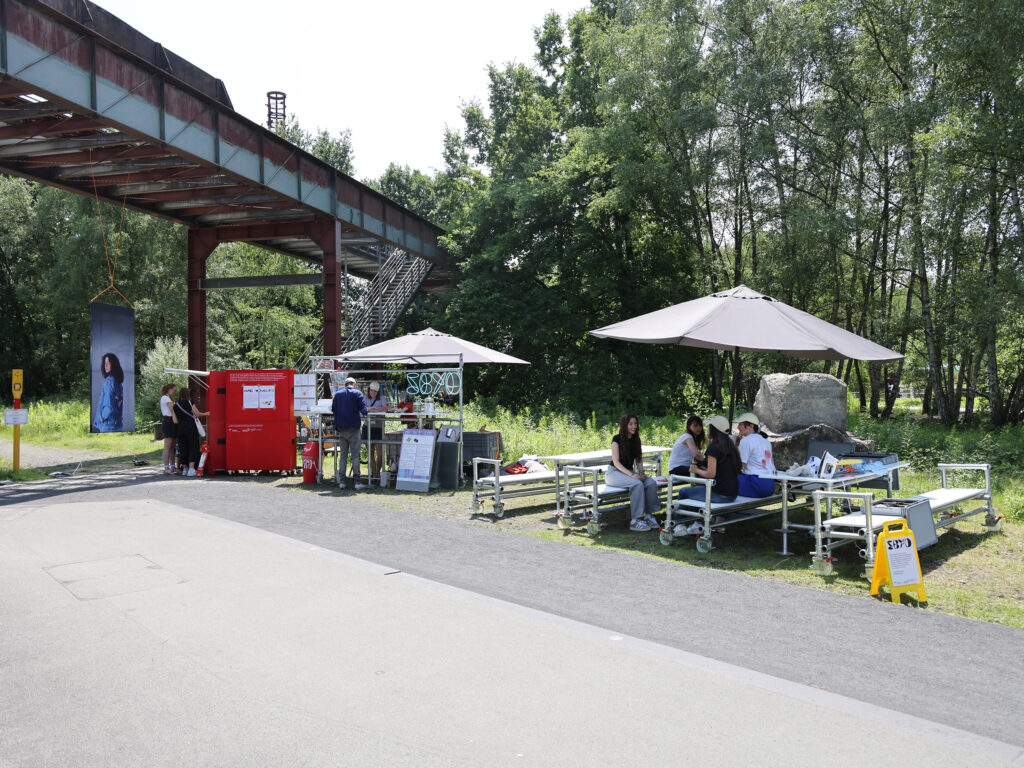
With regard to the dimension of well-being, SBYD was discussed as a contribution to educational and participatory processes (SDG 4). SBYD engages diverse social groups through various entry points and integrates them into circular practices. In particular, workshops that can be held at various locations using mobile equipment such as the Repair Kiosk can help convey knowledge and practical skills in an accessible way. The role of multipliers (such as schools and teachers) was also taken into account, as they could help ensure that such approaches have a long-term impact beyond short-term project contexts. Open workshop formats, for example at city festivals, can help break down barriers to technical or hands-on activities and thus also reach people who have had little exposure to the topic of repair so far. Participants saw this as an opportunity to engage diverse communities and make sustainable action options more widely accessible (SDG 10).
The discussion group particularly noted that SBYD deliberately works with different forms of representation and various visual languages that do not fit into a binary gender system in the typical way. For example, during a photo shoot featuring repaired clothing, male models also wore garments typically perceived as feminine. This, they noted, contributes to gender equality and diversity (SDG 5). The participants noted that certain fields—such as textile repair practices on the one hand and electronic and technical fields on the other—remain strongly gendered outside of SBYD, and that it would be desirable for the project to have an impact on society at large.
The group identified the project’s key contribution to Provisioning Systems as its ability to motivate people to reflect on their repair, production, and consumption practices. In doing so, it makes resource-efficient and circular alternatives to standard practices in various areas of life easily accessible and tangible (SDG 12).
Another potential benefit of SBYD is that, by integrating the project into local networks, it can strengthen those networks as key infrastructure for implementing sustainable projects. During the discussion, participants pointed to the possibility of building on municipal structures or entering into partnerships with various stakeholders—ranging from civil society to the business sector—which could facilitate broader societal integration (SDGs 9, 11, 17).
Issues related to decent work were also addressed: In the discussion, repair and craft practices were not viewed as purely technical activities, but rather as social processes that could facilitate exchange, shared learning, and new forms of cooperation (SDG 8).
With regard to Natural Resources, the discussion group particularly highlighted the resource-conserving nature of SBYD’s repair- and circular-economy-oriented approaches. By repairing or upcycling items—such as by patching textiles—the consumption of raw materials is reduced and the life cycle of existing products is extended. At the same time, the informational materials and instructions provided raise awareness of which critical resources are contained in everyday disposable products and why their short lifespan is problematic from an environmental perspective. In this way, the project combines practical craftsmanship with a reflection on resource consumption (SDGs 14, 15).