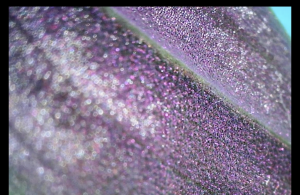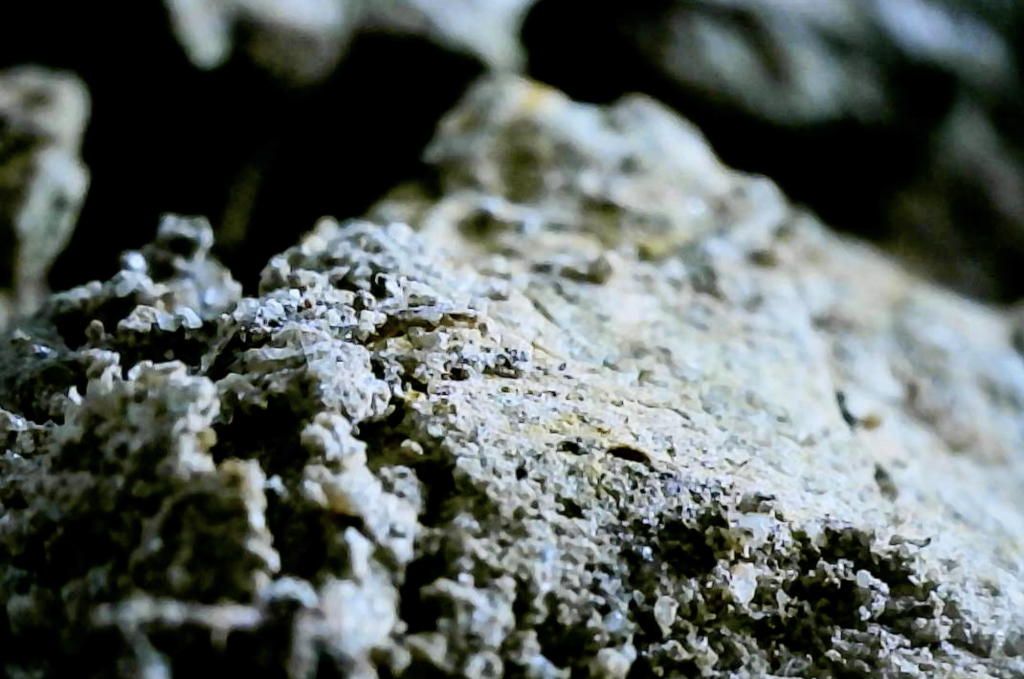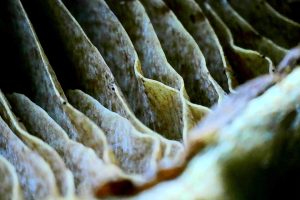
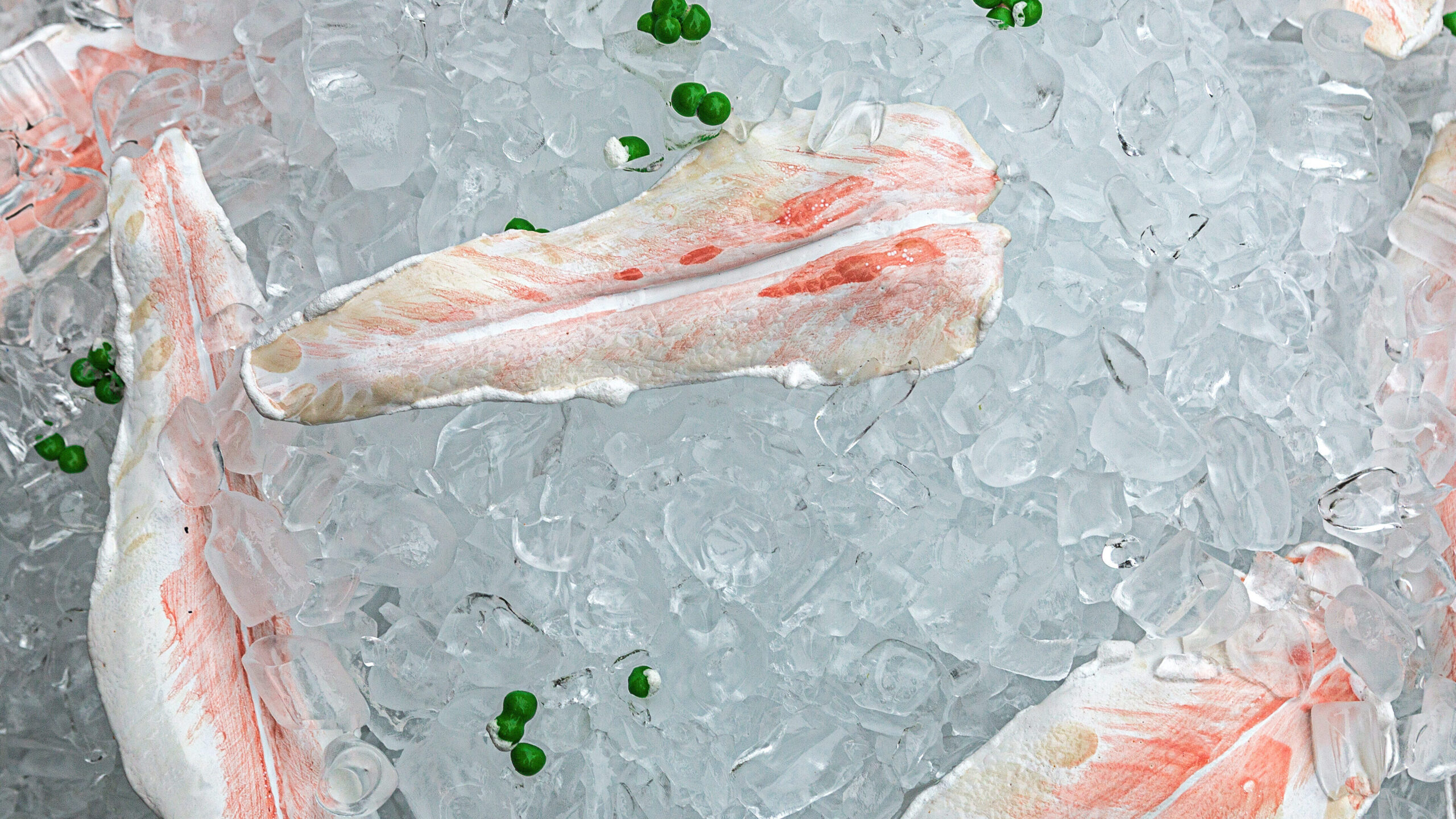
Pangasius is an installation by artist Katharina Maderthaner consisting of a mountain of real ice cubes, atop which are arranged deceptively lifelike ceramic replicas of pangasius fish fillets and small peas. The installation is complemented by a standard rental e-scooter, which illuminates the slowly melting iceberg after dark. The scene, which is reminiscent of both frozen foods in a supermarket and food displays in delicatessens, was first presented at Malkastenpark in Düsseldorf.
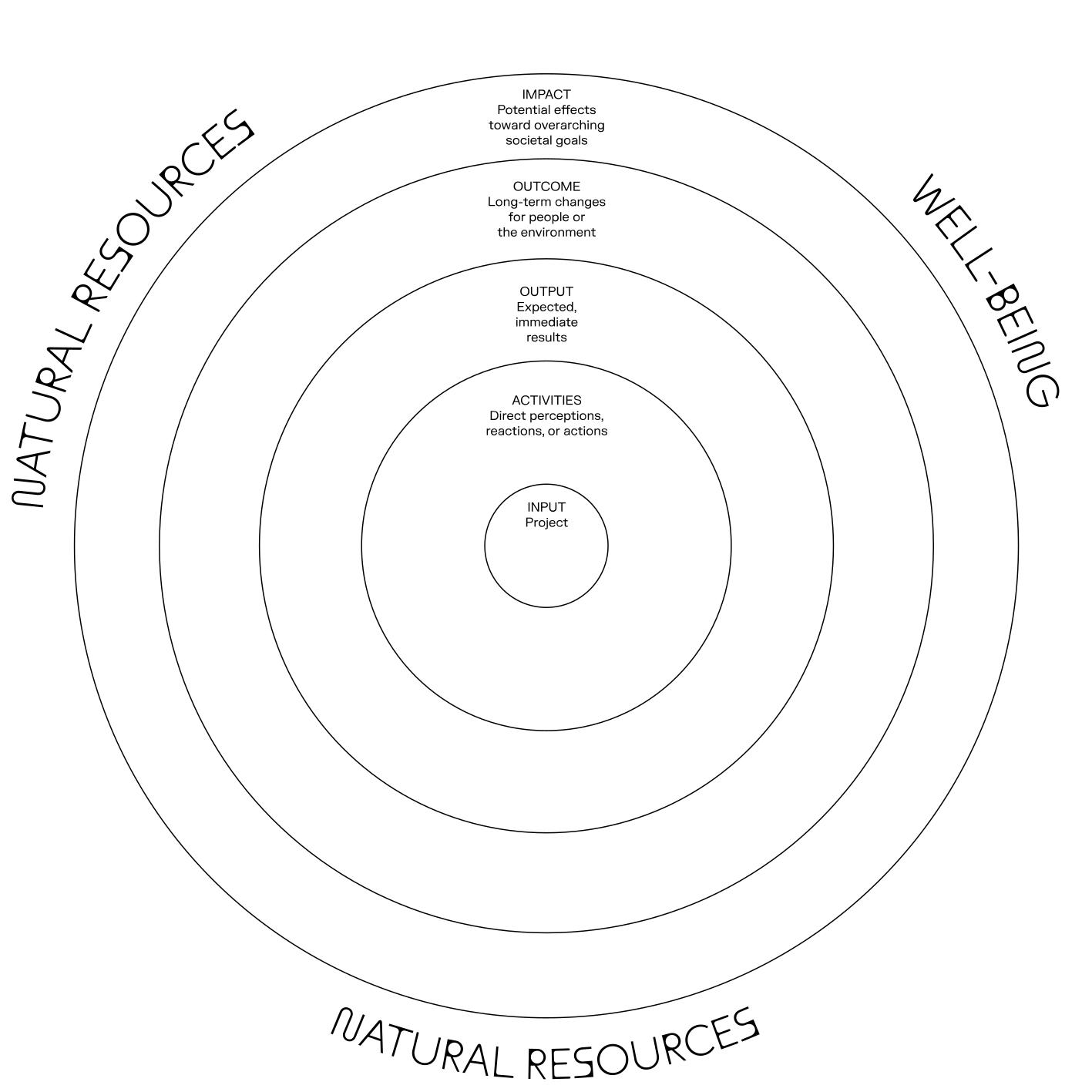
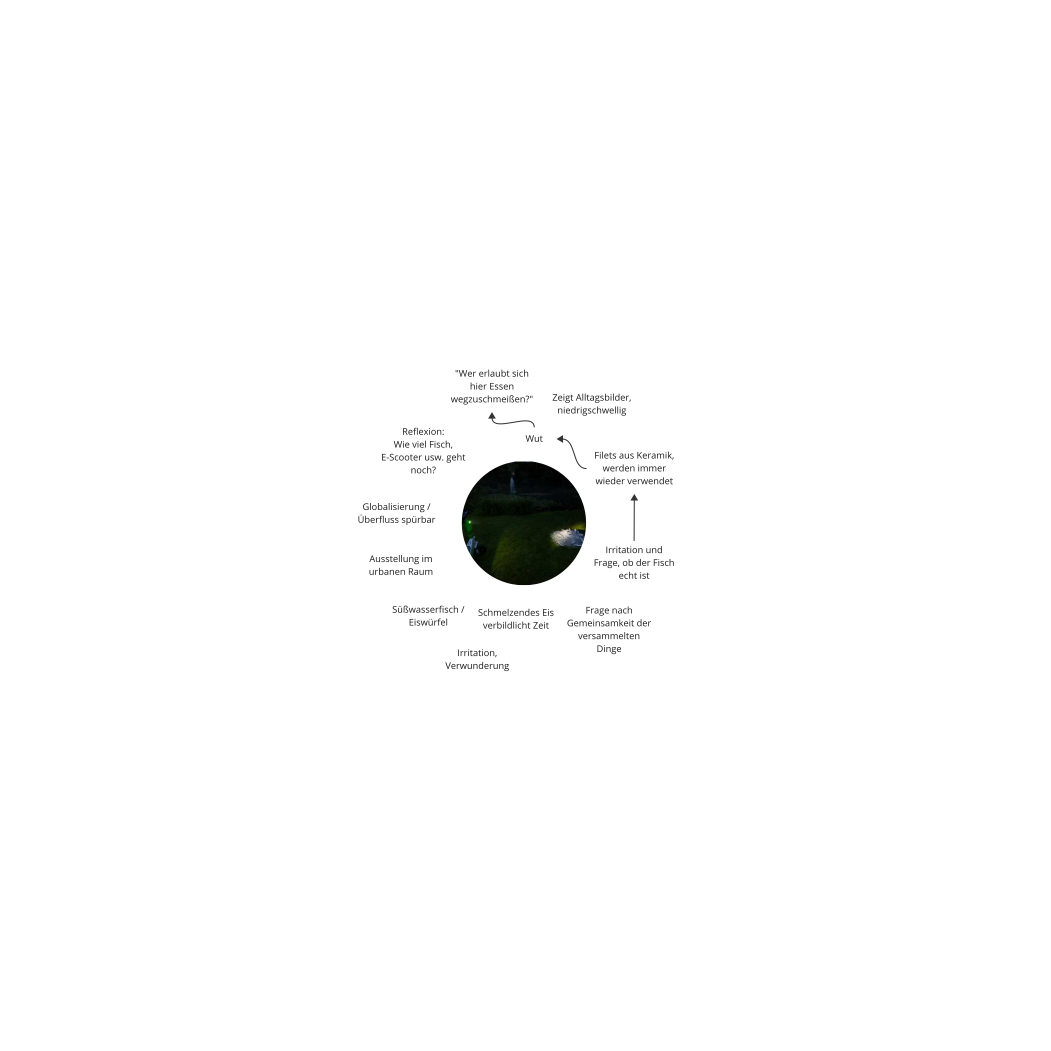
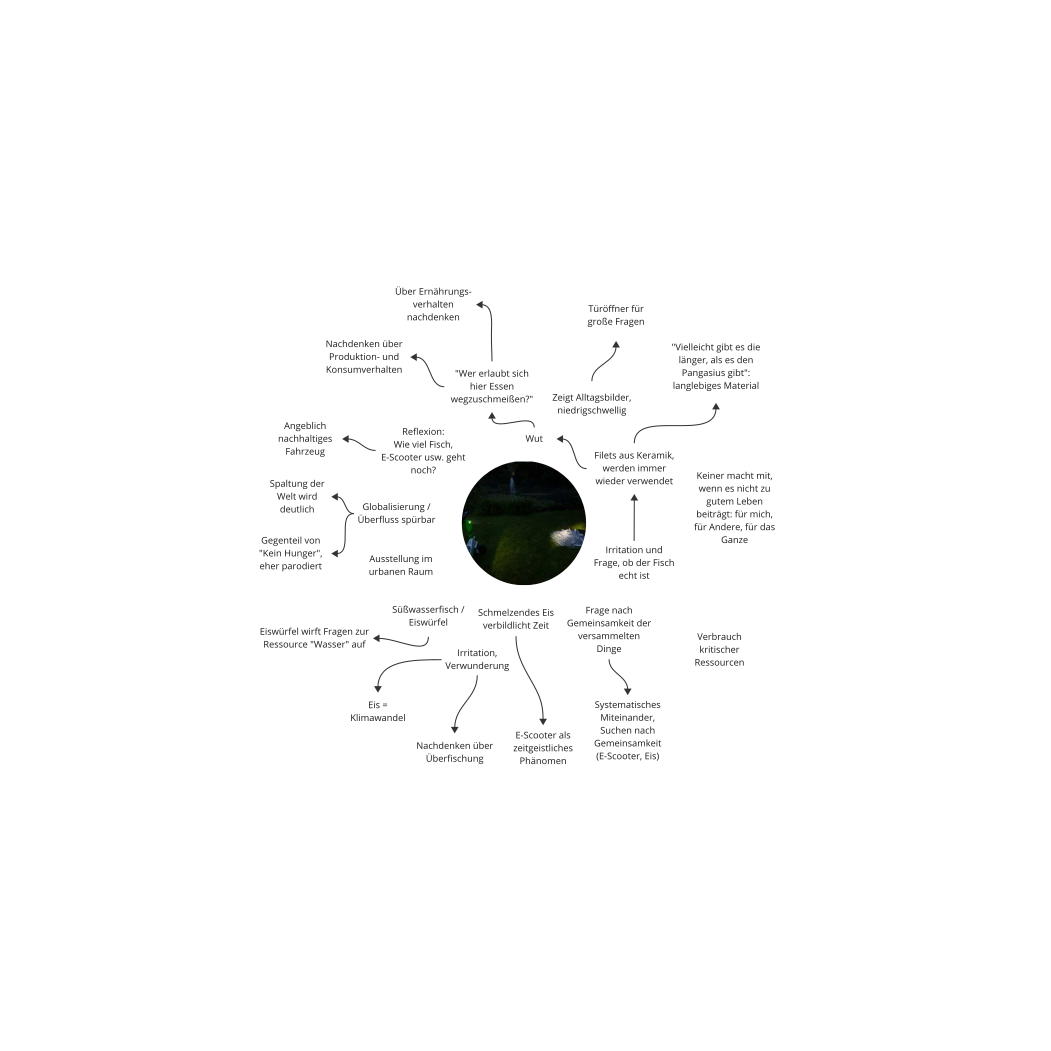
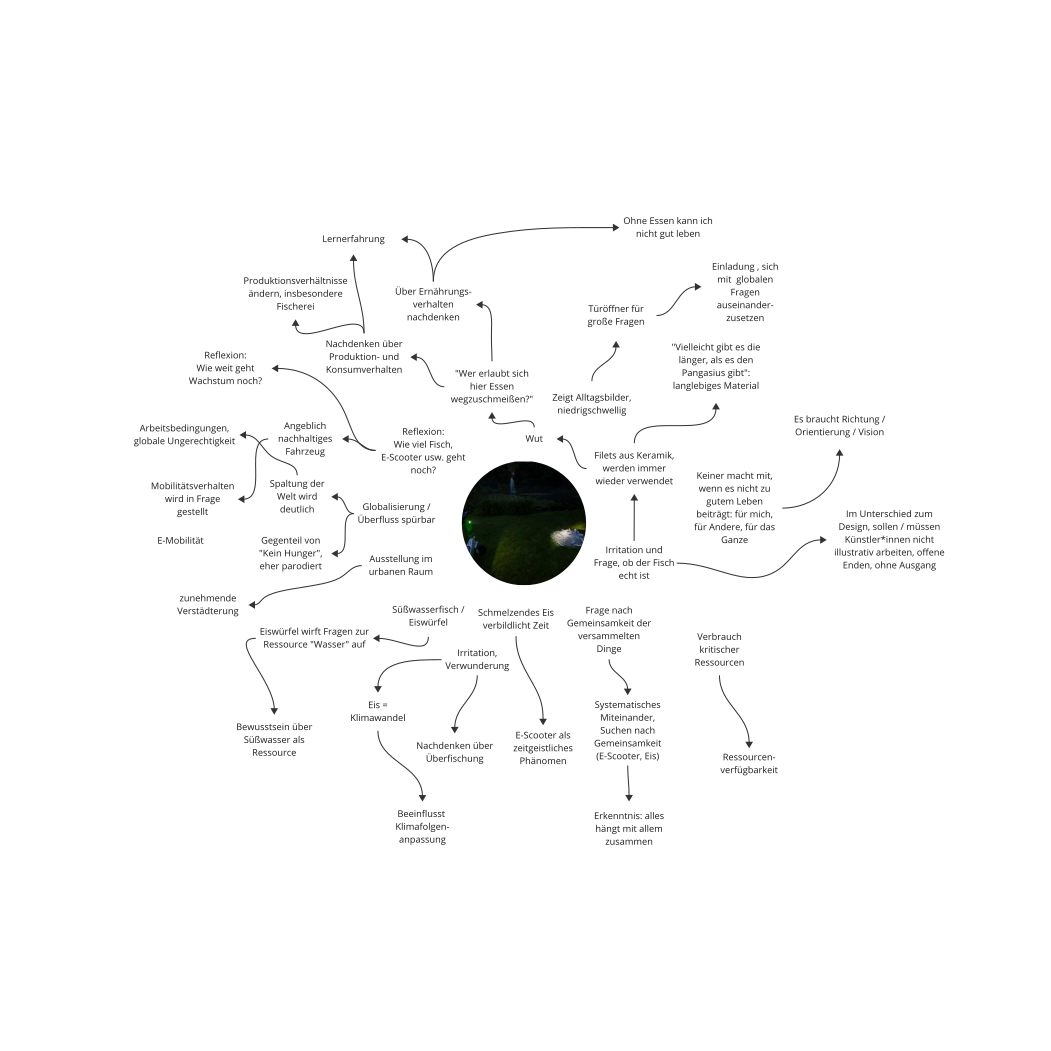
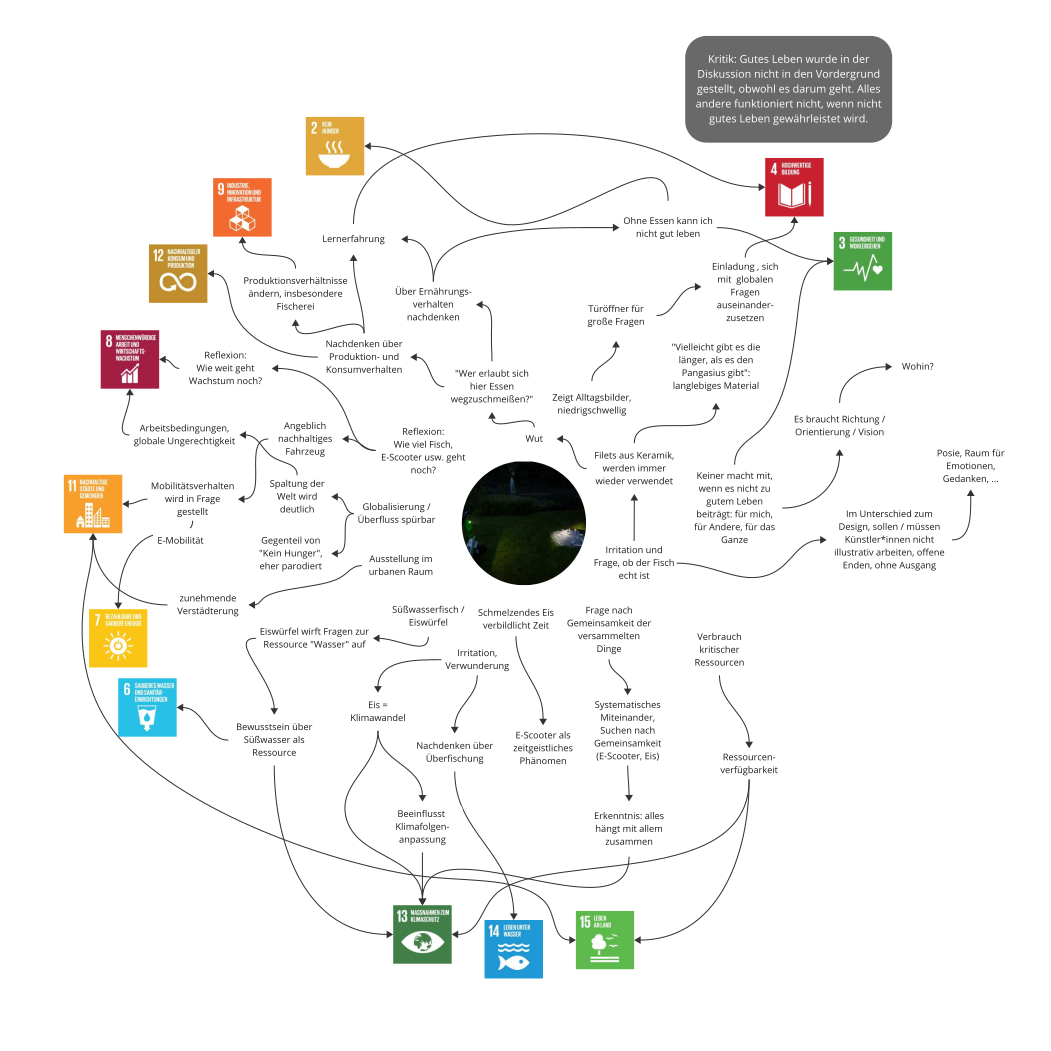
On February 24, 2026, the potential impacts of pangasius were analyzed using the Map/ing Sustainability method by an interdisciplinary group of artists, designers, and experts in the fields of sustainability management, participatory planning, and climate-neutral construction.


The work was discussed in terms of its effect—as seen in the photographs—which lies somewhere between free association and concrete learning experiences: Rather than providing clear instructions for action, the artwork relied on provocation and poetry, leaving viewers room for their own perceptions, emotions, and thoughts as necessary complements to purely factual knowledge about climate change (SDG 4). The participants assumed, for example, that the work’s placement in public space would immediately trigger confusion or wonder among viewers (What is “raw fish” doing in the park? Was something thrown away here?) and could evoke both positive and negative emotions. Building on this, questions about alleged food waste, among other topics, were raised. On the other hand, viewing the installation was regarded as a productive learning experience, encouraging reflection both on one’s own consumption and dietary habits (see Provisioning Systems, SDG 2) and on the production and trade of food (see Provisioning Systems, SDG 12). In particular, the panelists felt that the artistic depiction of familiar everyday objects made it possible to engage with these global issues without theoretical barriers, especially when the social and environmental problems surrounding pangasius farming are well known.
The main finding of the analysis was that the “bizarre assortment” of fish, ice, and e-scooters—especially given its placement in the middle of a meadow—could draw attention to and raise awareness of systemic interactions and interconnections. In this way, pangasius could encourage people to reflect more deeply on their own lives of prosperity and health in light of the global conditions at the expense of which we create and maintain them (SDG 3). The participants in the discussion felt that people are more likely to be won over to change if they recognize a positive vision for their own lives in it.
For the participants in the discussion, the work made the abundance of a globalized world—where everything is available at any time—tangible with a “certain wink,” but without pointing a finger. At the same time, the installation also highlighted the division in the world: while we live in abundance, people in other regions struggle with hunger and poverty (SDG 1, 2).
With regard to industry and Economic Growth, the work raised critical questions about problematic production conditions in global value chains, such as fish farming in artificial tanks or the working conditions of fishermen (SDGs 8, 9, 12). Furthermore, the installation’s mix of materials could inspire calls for long-term changes in production methods: even if the ice melts, the durable ceramic fillets could outlast the pangasius as a species.
The installation’s placement in a park setting sparked discussion regarding sustainable urban infrastructure (SDG 11). The e-scooter was described as a “phenomenon of our time” intended to contribute to more sustainable mobility and energy use (SDG 7), while its production, use, and often unregulated disposal consume not only critical resources but also public spaces—such as sidewalks. The installation raises awareness that we depend on finite resources—such as materials and land—not only to maintain our mobility but also to preserve our urban recreational spaces. In this way, Pangasius places our Provisioning Systems within the context of ecological limits.
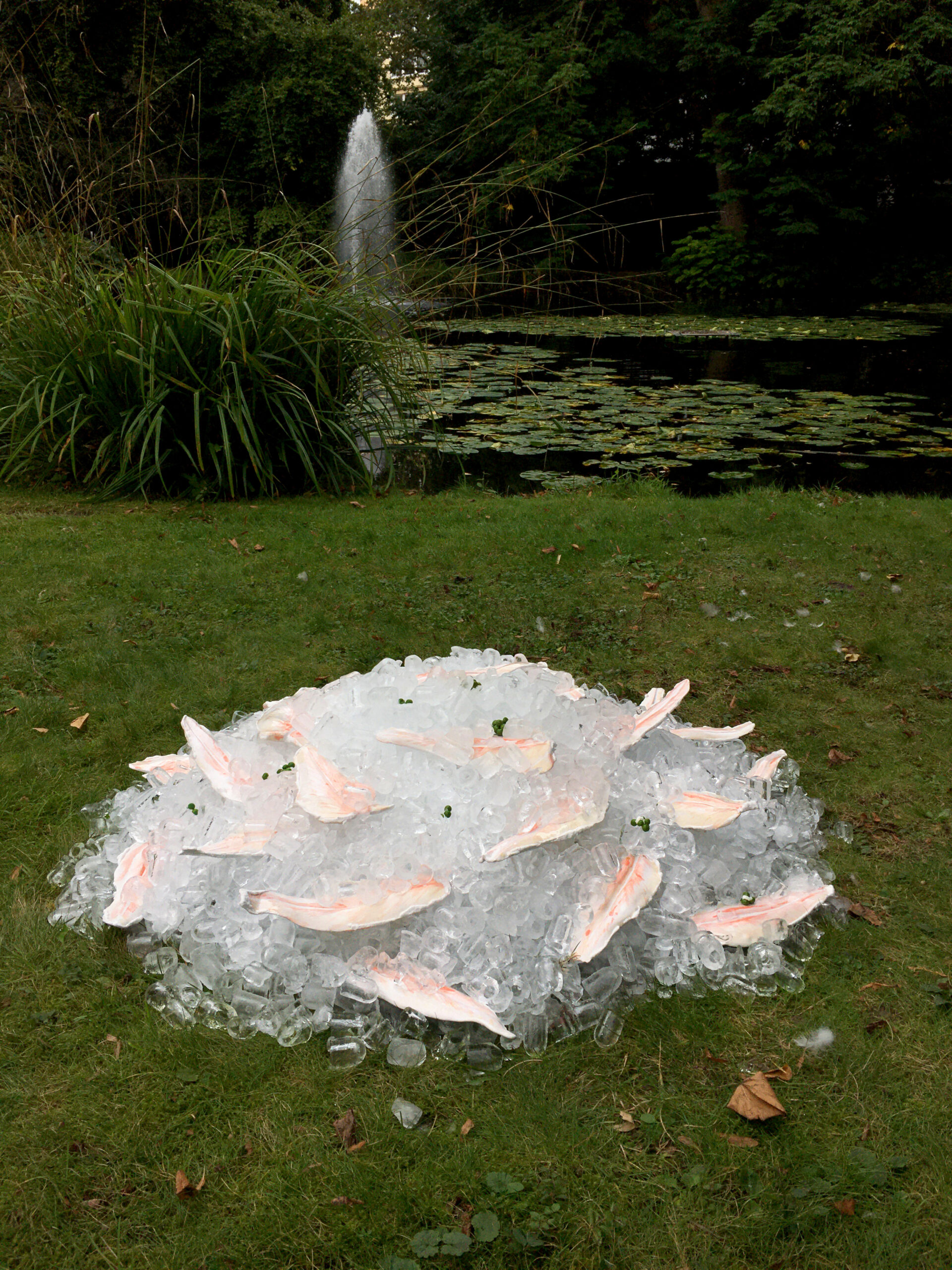
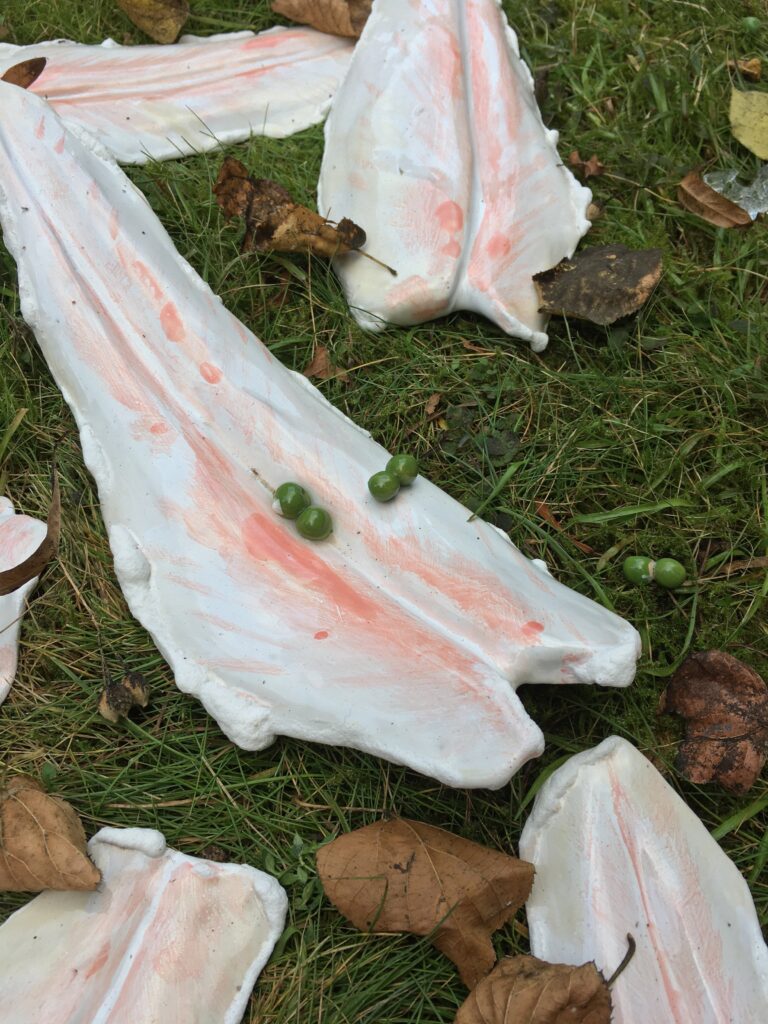
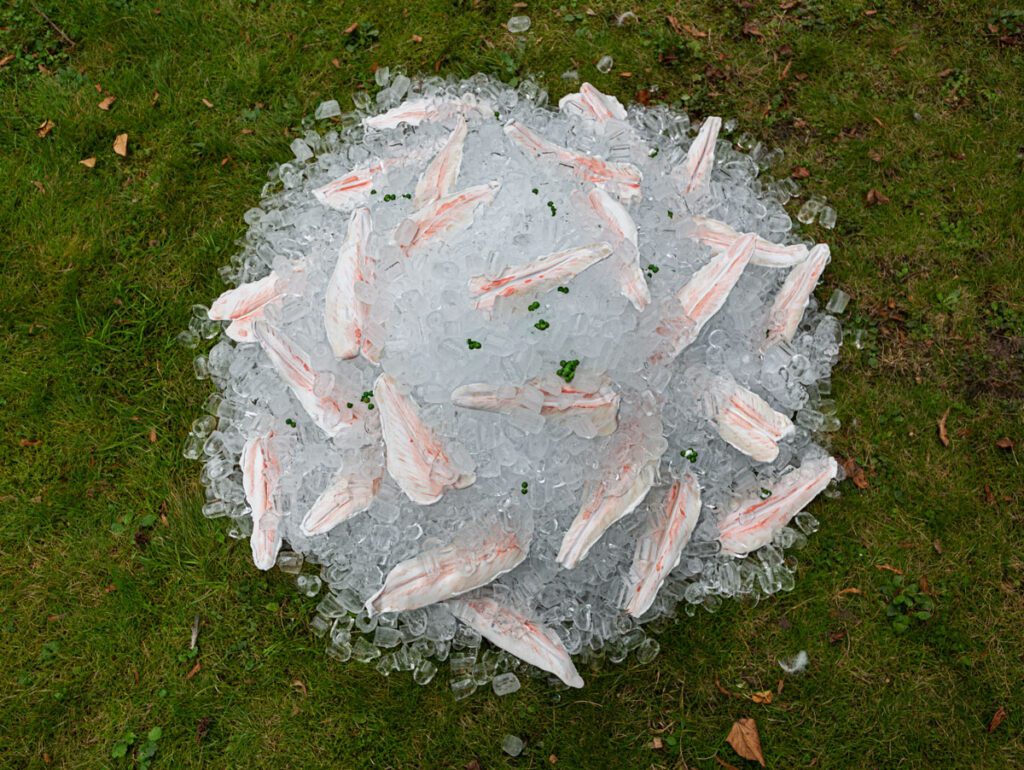
From the participants’ perspective, the installation immediately makes it clear that ecological systems are inextricably linked to our Provisioning Systems. The combination of fish and melting ice simultaneously brings to light issues such as the destruction of biodiversity and climate change (SDGs 13 and 14). Anyone who draws a connection between the slowly melting pile of ice, the ceramic pangasius fillets, the e-scooter, and the park can recognize a systemic “mishmash” that encourages them to look for the connections between these elements.
The pangasius, a freshwater fish, when featured in an urban setting, also draws attention to water—a vital but dwindling resource (SDG 14). The project illustrates just how much Life on Land (SDG 15) is influenced by environmental changes and the impacts of climate change. The installation makes this complex “systemic interdependence” tangible and can help us understand our world as a interconnected whole.