Symposium – November 13, 25
Table of Contents
- 1. LECTURE: Prosperity in Times of Transition
- 2. AGORA Part I: Daring to Embrace Transformative Relationships
- 2.1. Daniela Jacob
- 2.2. Zita Sebesvári
- 2.3. Nicole Zabel-Wasmuth and Lars Jessen
- 2.4. Bianca Herlo
- 2.5. Jacob Sylvester Bilabel
- 3. AGORA Part II: Salons
- 3.1. Panel 1: Daring to Explore New Sociocultural Realities
- 3.2. Salon 2: Daring to Explore New Relationships Between People and the Environment
- 3.3. Panel 3: Economic and Institutional Conditions
- 4. AGORA Part III: Results and Outlook
- 5. FILM LECTURE WITH METAHAVEN: Designing with the Earth
LECTURE: Prosperity in Times of Transition
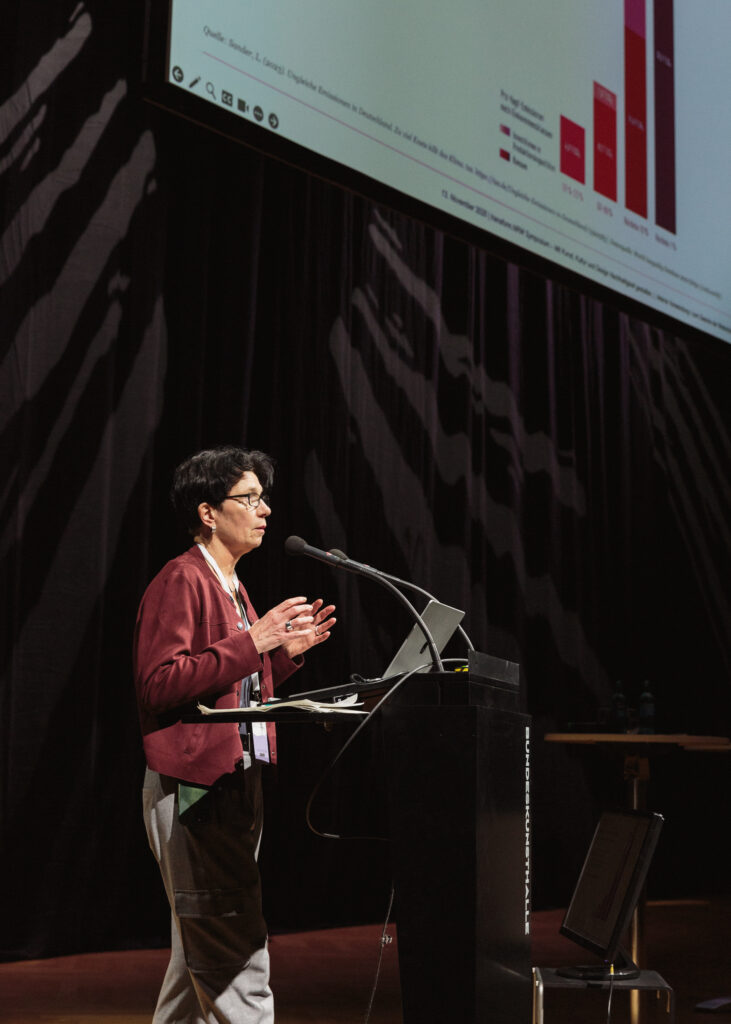
As part of the symposium, Christa Liedtke provided the academic framework for the event. As a department head at the Wuppertal Institute (WI) and an adjunct professor of sustainability in design at the University of Wuppertal, she embodies the intersection of natural sciences, design, and social development in the context of transformation and sustainability.
Her lecture, based on her book of the same title— “Prosperity in Times of Transition,” offered a well-founded analysis of current upheavals and posed the central question of how prosperity can be reimagined and reshaped in the face of profound ecological, social, and economic changes.
Christa Liedtke describes herself as a “material flow specialist”—a term that aptly captures her biology- and materials-based perspective on sustainability. Just as in natural systems, she argues, society must also direct materials, energy, and structure-forming information in such a way that they are effective where they create value and contribute to the conservation of ecosystems.
Sustainability thus appears less as a moral ideal than as a logistical challenge that can be shaped. This perspective relieves the sustainability discourse of some of its moral burden and makes transformation understandable as a concrete, manageable task.
Central to Christa Liedtke’s argument is the agora as a symbol of democratic negotiation. According to Liedtke, prosperity arises not solely from material growth, but where people interact with one another and shape their world together—where social relationships and people themselves can flourish in and through this process of shaping. The agora stands for democratic discourse, for moderation and balance, and for processes that prevent the exclusion of people and view diversity—social, cultural, and biological—as a resource. Especially in light of growing social tensions, it is indispensable for constructively resolving conflicts as an integral part of democratic processes and social relationships, for understanding diversity as the foundation of innovation and creativity, and for translating this into collectively supported developments.
A key focus of Christa Liedtke’s lecture was the analysis of meritocracy and social inequality. While the performance-based order of modern societies initially promises social mobility, it is often accompanied by the devaluation of those perceived as weaker and a decline in practices of solidarity. In its exclusivity, it contributes to social division and thus hinders open entry points to desired social positions—thereby reproducing and reinforcing structural inequalities of opportunity.
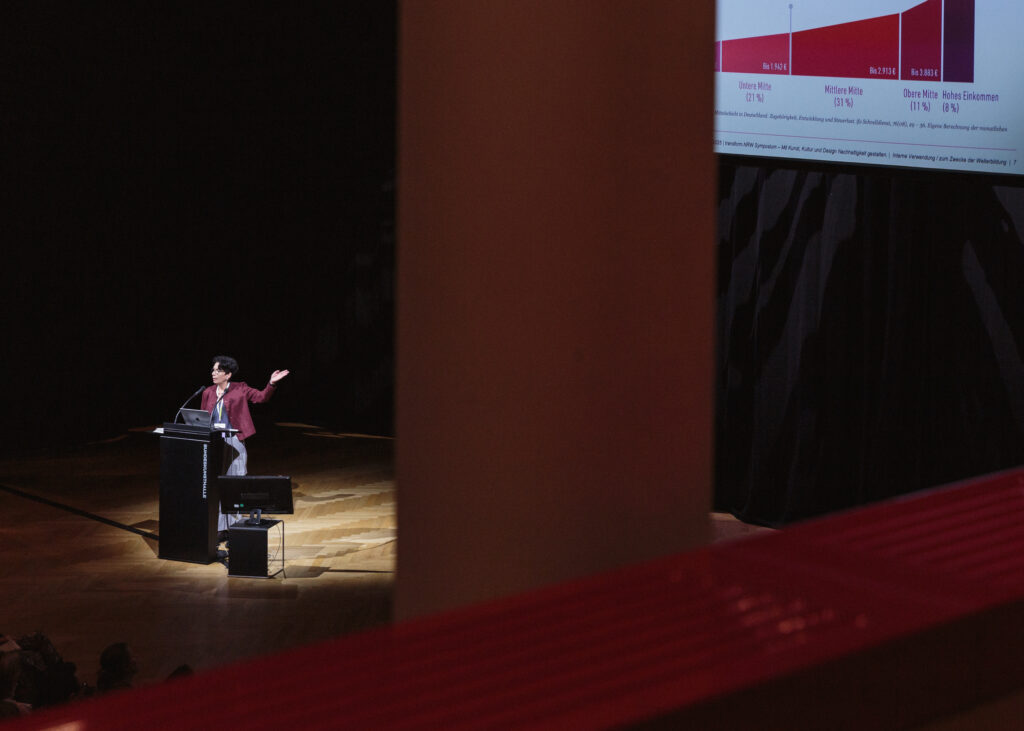
Another particularly significant shift is the transition from ostentatious consumption to what Elisabeth Currid-Halkett calls “discreet status consumption”: Education, health, time prosperity, and investments serve as new status markers that deepen social differences while simultaneously driving up resource consumption.
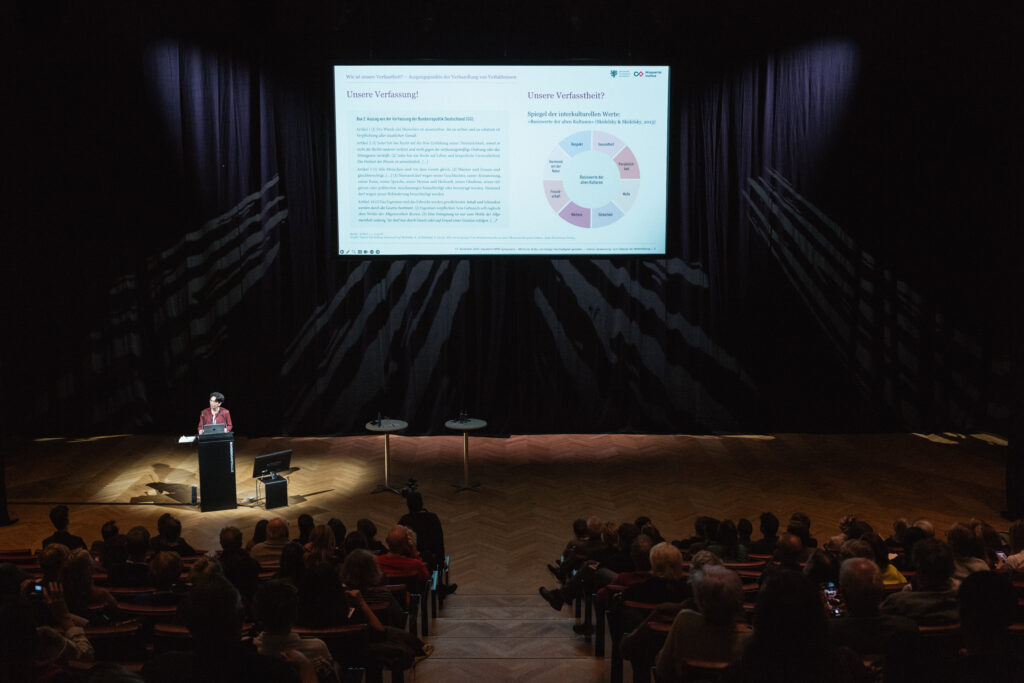
Central to Christa Liedtke’s understanding of transformation is the shift in perspective from the micro to the macro level and back again. The starting point is individual attitudes, actions, and social practices, which are, however, always embedded in social and cultural contexts. Through these, people shape relationships and participate in social processes—what Martina Fineder describes as “interpersonal design.” This makes it clear that these practices give rise not only to products and services, but also to the structures that shape social coexistence. Products, services, and infrastructures are therefore not neutral: they shape the scope for action, open up or limit participation, and contribute to enabling democratic spaces or to systematically favoring or excluding certain groups.
Against this backdrop, transformation means considering design at all levels: from micro-actions to the material and institutional arrangements that stabilize or change the social order.
Against this backdrop, Liedtke advocated for a “care economy” as a sustainable economic model. Design plays a key role in this context: As von Borries notes in *Designing the World*, it can have a subjugating effect and stabilize existing power structures, or it can be empowering and open up new scope for action. Her appeal succinctly summarized the symposium’s mission:
“So everything is open to shaping. It’s up to us. Do we want to submit, or do we want to define ourselves as zoon politicon, as political beings?”
AGORA Part I: Daring to Embrace Transformative Relationships
Daniela Jacob
In the first keynote presentation, Professor Dr. Daniela Jacob, Director of the Climate Service Center Germany (GERICS), Chair of the Climate Advisory Board of the Free and Hanseatic City of Hamburg as well as of the German Committee for Sustainability Research in Future Earth (DKN), and a member of the Earth League, will introduce the topic of climate change and its consequences. Her presentation at the symposium combines scientific fundamentals with a clear call to action for society. The goal is to empower decision-makers to shape the transition in an evidence-based manner through robust data, scenarios, and climate services.
“We’re living beyond our means.”
The starting point is the diagnosis of structural overexploitation. Whether it is CO₂ concentrations, methane, ocean acidification, or resource consumption, key indicators have shown a clear upward trend since the beginning of industrialization. Nearly all of these developments are directly linked to energy production and consumption, which continue to rely predominantly on fossil fuels.
Her lecture, however, focuses on the issue of human vulnerability and humanity’s displacement from its narrow temperature niche. Daniela Jacob also emphasizes, however, that the Earth as a system will endure in the long term, regardless of humanity’s fate. Nevertheless:
“We need to live in harmony—not only within our own species, but also with the Earth.”
This temperature niche defines the range within which human civilization has emerged and can function. Continued warming is fundamentally shifting these conditions. Even today, populations are being displaced from their ancestral habitats by heat, droughts, and extreme weather events. Climate change is therefore not an abstract environmental issue, but an existential condition for human viability.
Using the scenarios agreed upon by the IPCC, Daniela Jacob illustrates the range of possible futures: If current emissions trends continue, global warming will intensify significantly by the end of the century; ambitious climate action will significantly limit this trend. Climate services translate these global projections into regional information: How much will temperatures rise in a specific neighborhood? Which adaptation measures—such as reducing impervious surfaces, increasing green spaces, or water-sensitive urban planning—will reduce risks?
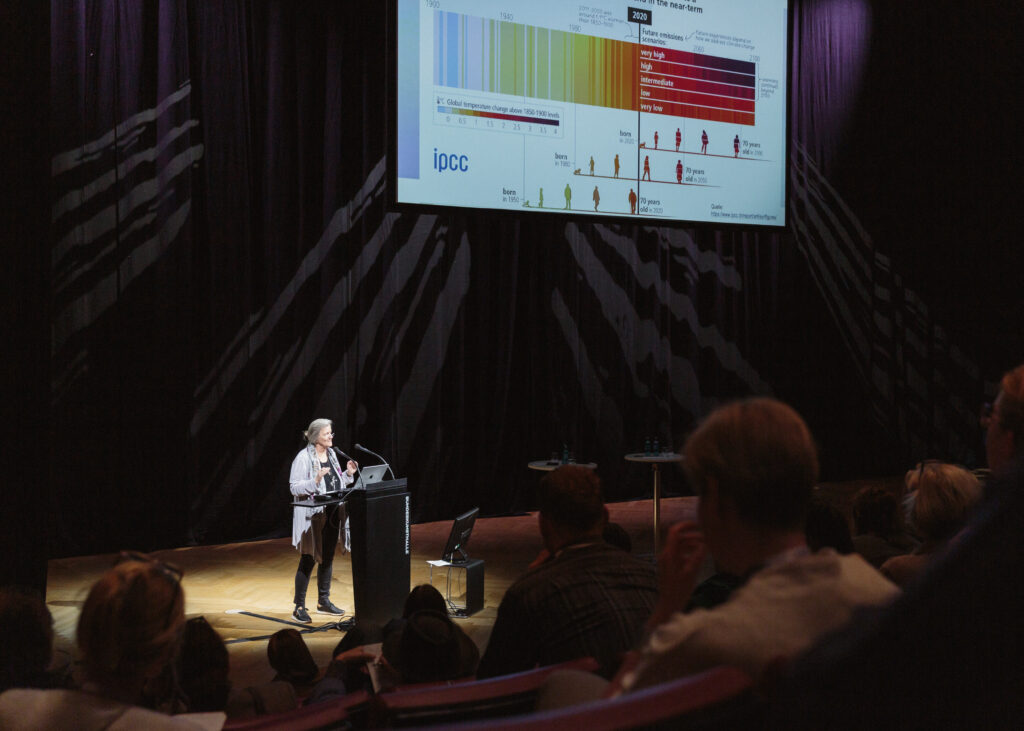
Source: https://www.ipcc.ch/report/ar6/syr/figures/
The IPCC’s illustration vividly shows just how severely future generations—that is, our children and grandchildren—will be affected by climate change and rising temperatures. While we have been fortunate enough to live during a period of relative stability, future generations will have to live in an environment that is changing much more rapidly and, above all, is much hotter.
Her conclusion is clear: Communication alone is not enough. Scientific knowledge must be translated into concrete action. Transformation means redesigning existing structures to adapt to changing climatic conditions—in a responsible, informed, and action-oriented manner.
Zita Sebesvári
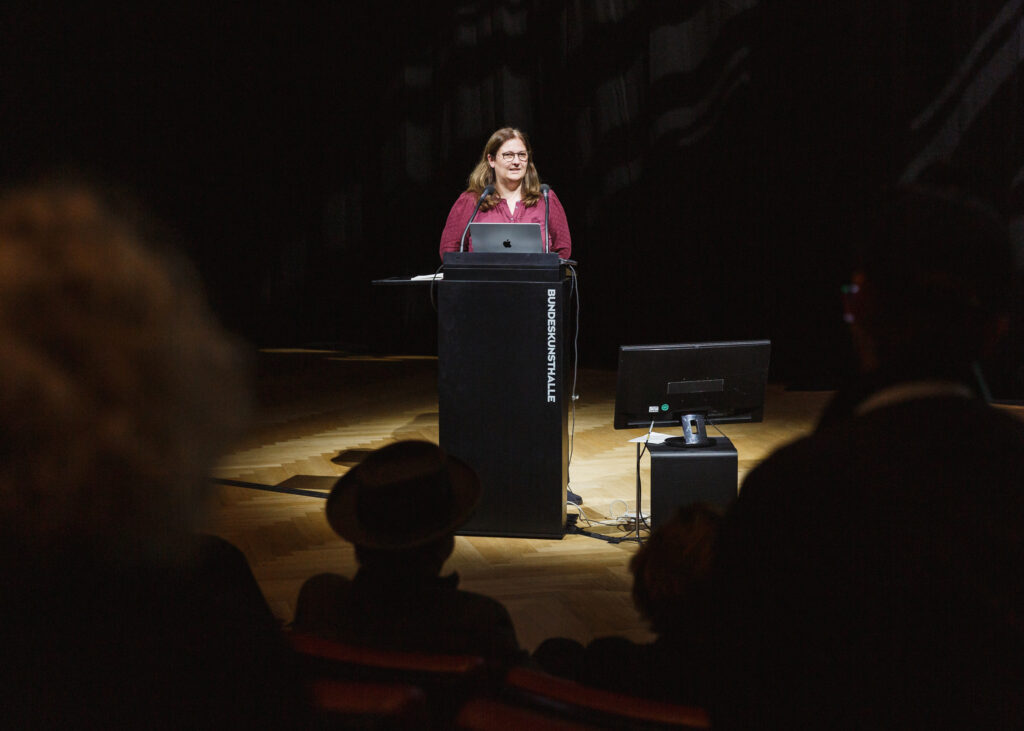
In her keynote address, Prof. Dr. Zita Sebesvári, Deputy Director of the Institute for Environment and Human Security, drew attention to the fundamental patterns of thought that shape our relationship with nature. Her talk focused less on disasters and more on the cultural and normative conditions that contribute to environmental destruction.
The starting point is the widespread perception of humans as occupying the top of a hierarchy of life. This way of thinking legitimizes exploitation, control, and demarcation. National parks thus appear as an ambivalent symbol: they protect nature, yet at the same time reinforce the separation between human space and the protected environment. In a system that views humans as part of ecological interdependencies, such separate protected areas would not be necessary in this form.
Zita Sebesvári vividly illustrates the logic of demarcation using fences, roads, and railroad tracks as examples. While they secure property and infrastructure, they also fragment habitats and restrict animal migration. What society takes for granted comes at an ecological cost.
She contrasts this with a shift in focus: away from control, toward coexistence. Flood protection could mean giving rivers space instead of regulating them exclusively through technical means. This would require a shift in values—more humility, frugality, and a responsible “care” for non-human life.
“To view frugality not as a sacrifice, but as an attitude, as a value.”
Structural changes, such as the recognition of the rights of nature—for example, in Ecuador or New Zealand—highlight possible paths forward. Transformation, they conclude, requires shifts in our inner attitudes as well as institutional reforms and a willingness to redefine what we consider valuable.
Nicole Zabel-Wasmuth and Lars Jessen
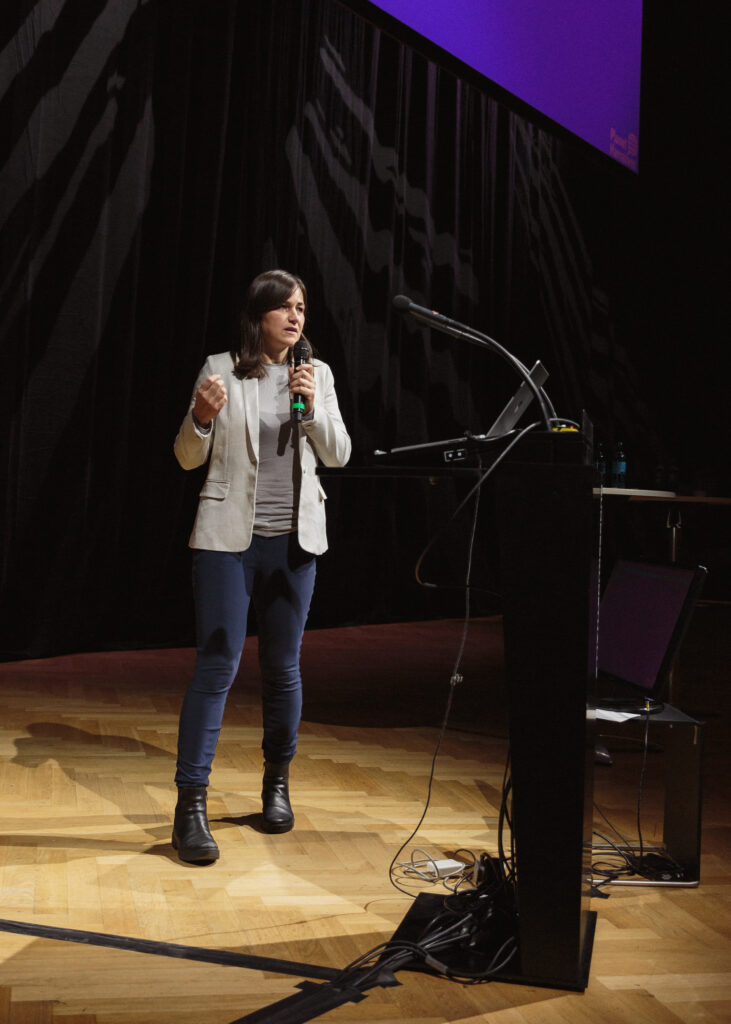
In their keynote presentation, Nicole Zabel-Wasmuth and Lars Jessen, founders of the Planet Narratives initiative, demonstrated how film and culture can become drivers of social transformation. Their starting point is the observation of a key gap between scientific knowledge about the climate crisis and actual action, as this gap involves an emotional deficit. Facts alone are not enough to change behavior.
In collaboration with researchers, including Stefan Rahmstorf, Planet Narratives analyzes psychological barriers such as cognitive dissonance, crisis fatigue, and pluralistic ignorance. Many people would, in principle, be willing to embrace change, but believe that “the others” are unwilling to go along with it. This misperception reinforces societal paralysis. Compounding this is the impact of destructive narratives that exploit uncertainty and suggest that everything can stay the same.
Both counter this with the power of storytelling. Humans are not merely Homo sapiens, but “Homo narrans”—that is, storytelling beings. Stories evoke emotions, foster empathy, and anchor facts more effectively than charts. Transformation therefore requires new narratives that portray the future not as a loss, but as a space that can be shaped.
“We can portray collective self-efficacy in movies. We can show that it’s not just one hero with a machine who saves us all, but that it can also be a collective force.”
Movies and TV shows could highlight collective self-efficacy rather than merely reproducing dystopian doomsday scenarios. Jessen advocates for “informed optimism,” in which realism in the face of hard facts is paired with confidence. Humor plays a central role in this because it reduces reactance and facilitates dialogue.
Her film *Micha Thinks Big* weaves together the climate crisis, social tensions, and provincial life in a comedy—deliberately avoiding moralizing. In this way, cinema becomes a democratic space for experience.
“A healthy society is one in which an 80-year-old still plants an apple tree, even though he will never sit in its shade.”
Stories can help us understand and feel this attitude, thereby laying the groundwork for real action.
Bianca Herlo
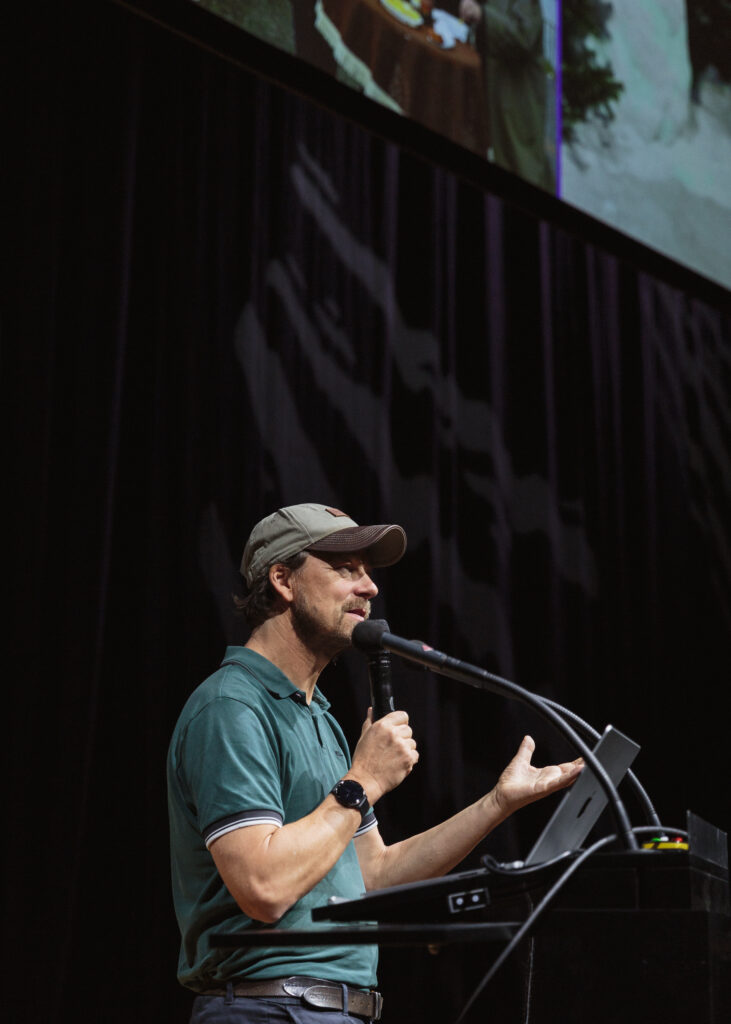
In her keynote address, Bianca Herlo, professor of Eco-Social Design and chair of the German Society for Design Theory and Research, positions design as a politically effective practice in times of multiple crises. Drawing on her personal experience with migration and addressing issues of social justice, she argues that design is never neutral but is always embedded in structures of power and knowledge.
Drawing on her work in the context of digital participation, Herlo explores the role of design in processes of digital transformation. Traditional paradigms based on linear progress and growth are no longer compatible with planetary and social limits. Design must therefore reorient itself: What forms of visibility, meaning-making, and action does design enable or prevent? And what futures does design research actively help to shape?
“What value systems do we rely on?”
Central to Herlo’s approach is an intersectional feminist perspective. This perspective takes into account how different forms of discrimination—such as those based on gender, ethnicity, class, or sexuality—overlap and collectively shape the lived realities of very diverse people. Within this framework, digital infrastructures are not viewed as neutral tools, but rather as part of power structures that privilege certain groups and marginalize others. Through topics such as algorithmic governance, platform capitalism, and digital coloniality, she highlights the political dimensions of technology design. Critical digitalization research has shown that algorithmic systems reproduce social inequalities in a normative way, for example through social status rating systems, predictive policing, or predictive procedures in the justice system and human resources. Recognizing and acknowledging forms of discrimination is therefore becoming increasingly important, as are debates surrounding digital feudalism and the exploitation of resources.
Herlo counters this with transformative, participatory design research. The aim is to address societal, ecological, or social problems by having people with direct experience of these issues actively participate in the design process on an equal footing. Here, transformation is not merely a goal but already a practice, achieved through collaborative “critical making,” collective experimentation, and the forging of new alliances. She views design as a relational practice guided by situated responsibility rather than universal narratives of progress.
“Critical making, critical thinking, or simply making—or just being together—is key. We need to offer formats and opportunities that allow people to come together.”
Intersectional approaches reveal how design has reinforced extractivist economic practices or gender-based exclusions, but at the same time offer tools for “care,” resistance, and reimagination. For Herlo, this is the core of an eco-socially just digital future, underpinned by humility, pluralistic knowledge, and new forms of transdisciplinary collaboration.
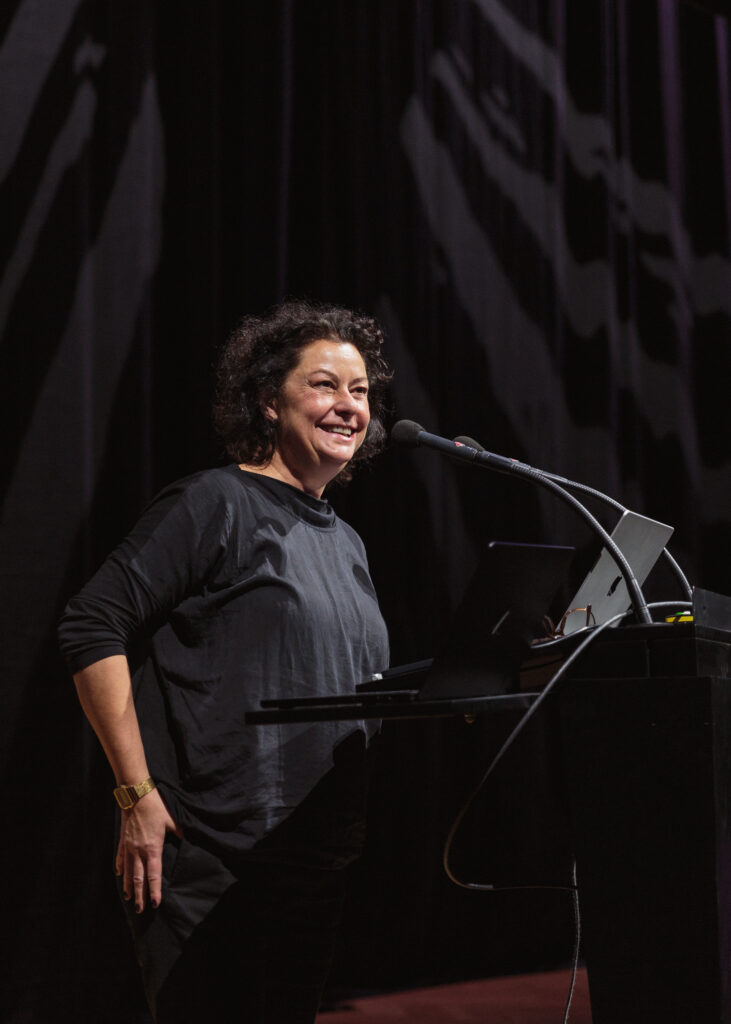
Jacob Sylvester Bilabel
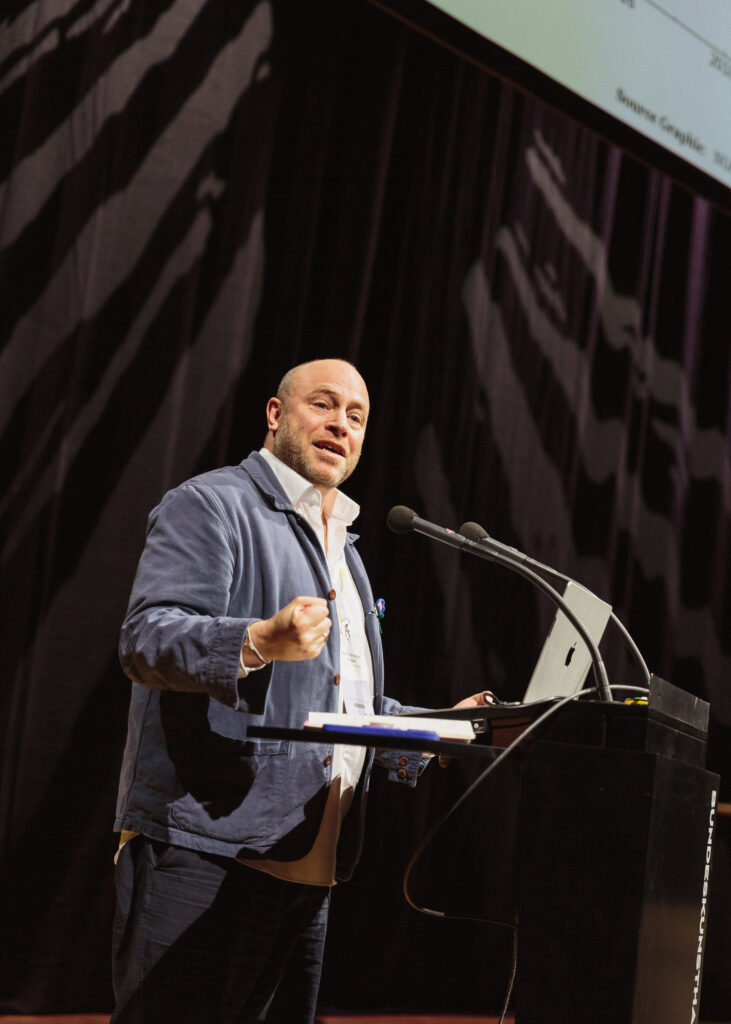
In his keynote address, Jacob Sylvester Bilabel—director of the federal government’s Green Culture central contact point—combines cultural policy practice with a fundamental reflection on transformation. Right at the outset, he poses the key question: Is “transform” an imperative, a subject, or a promise? The term is ubiquitous and, at the same time, vague. That is precisely where the problem lies.
Looking back on the 2009 climate negotiations in Copenhagen, Bilabel highlights the disillusionment surrounding grand plans: plenty of symbolism, little action. However, transformation must not stop at mere announcements. Citing Tanmay Vora, he makes a clear distinction: “Change fixes the past; transformation creates the future.”
So this is not about cosmetic adjustments, but about structural rebuilding. A central point of his presentation is a warning against overusing the term: if everyone talks about transformation but no one takes responsibility for its concrete implementation, it remains empty rhetoric. Plans alone are not enough. Reality confronts strategies with resistance, time pressure, and political shifts.
Bilabel also describes the psychological dimension of the crisis. Fear narrows our perspective, fuels polarization, and creates false dichotomies, such as “artistic freedom or sustainability?” Such dualisms, he argues, are part of an attention economy that rewards conflict. Instead, he advocates for tolerance of ambiguity: a “both-and” approach that can withstand contradictions.
Culture plays a special role in this regard. It creates spaces where different feelings and perspectives can coexist, beyond cynicism or naive hope. His guiding principle:
“How do I understand transformation? By keeping at it with incredibly friendly persistence—that’s how we keep going, because transformation is a team effort.”
Transformation doesn’t come from perfect master plans, but from continuous, collective perseverance—stoic, optimistic, and focused on implementation.
AGORA Part II: Salons
Panel 1: Daring to Explore New Sociocultural Realities
Participants in the discussion included Moritz Ahlert (Kiosk of Solidarity), Thomas Geisler (Dresden State Art Collections), Ruth Gilberger (Montag Foundation for Art and Society), Bianca Herlo (Lucerne University of Applied Sciences and Arts and DGTF), Lars Jessen (Planet Narratives), Bettina Milz (Pina Bausch Center), Ingrid Misterek-Plagge (Kulturraum Niederrhein), Havin al-Sindy (artist and Braunschweig University of Art), and Franziska Stelzer (Wuppertal Institute).
The salon was moderated by Martina Fineder and Christoph Rodatz (both from BUW).
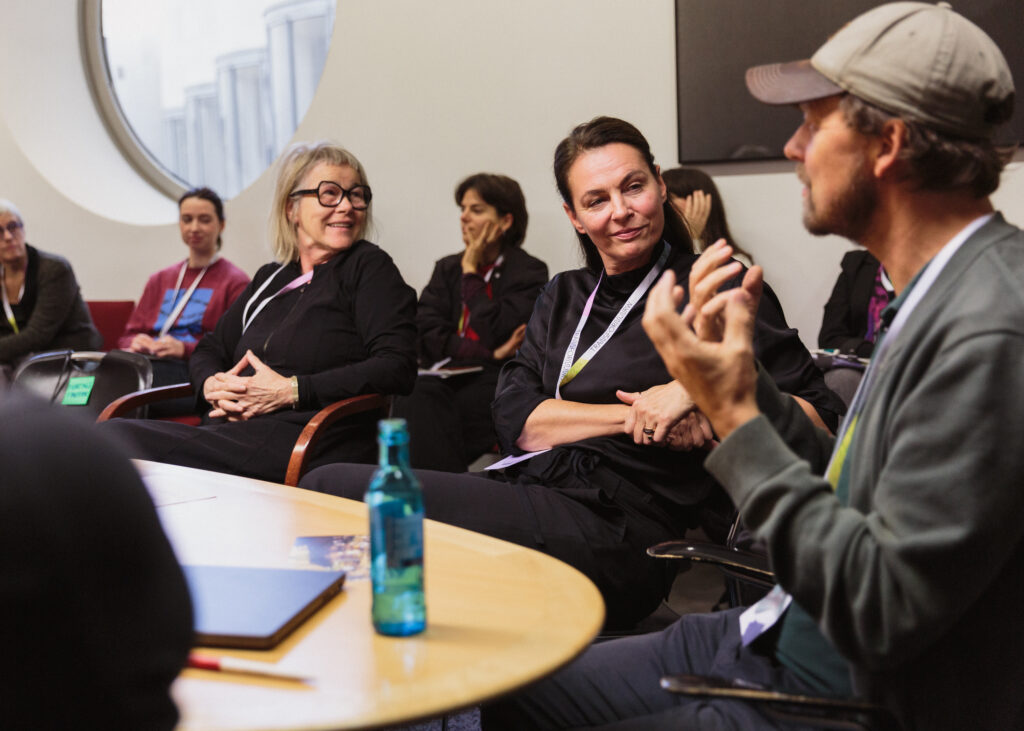
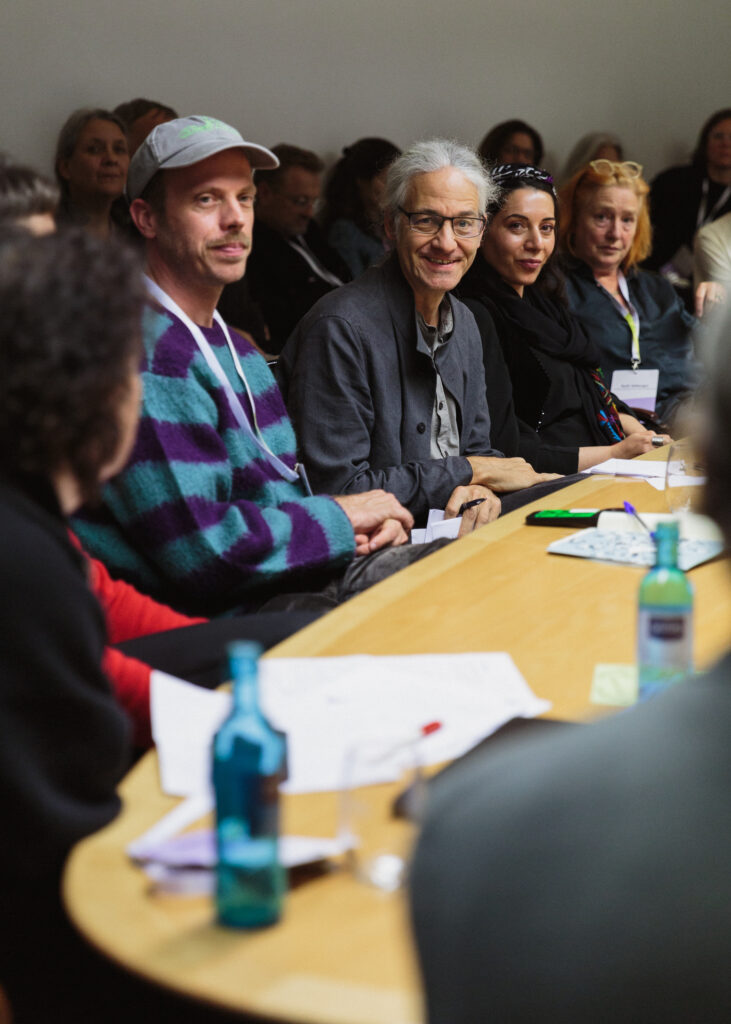
In Salon 1, which focused on sociocultural conditions, questions about how we shape our shared lives took center stage. Using the fishbowl format, the discussion built on the themes introduced in the keynote presentations by Bianca Herlo and Lars Jessen, weaving them together with concrete statements on participation, accessibility, and power dynamics drawn from the practical experiences of other representatives from the fields of art, design, and academia.
The central question was how to develop guiding principles and attitudes for a socio-ecological transformation that are not imposed normatively, but can become socially effective and accepted through processes of negotiation. The discussion was guided by the shared conviction that shaping the future always has a political and social dimension and thus carries with it a shared responsibility for the common good.
It also became clear that the transition toward sustainability is a project involving society as a whole—one that runs deep into cultural practices, narratives, and everyday relationships—and cannot be achieved through structural or technological measures alone. It was repeatedly emphasized that it is not enough to invent new formats for participation and engagement, or to open up spaces “for others.” Creating entry points is not enough; rather, the goal is to give visibility to different perspectives, even if these do not interest the established cultural sector. The goal is to act together and, in the process, to learn together how to take diverse perspectives seriously and to value them for one another. In doing so, institutional routines and structures must also be critically examined in order to open them up to a redesign that meets people’s needs.
In this regard, the participants repeatedly emphasized the enormous importance of collectively shared narratives, images, and objects for exchange and discourse as a prerequisite for change. Through them, we determine whether our visions of the future encompass ideas that are inclusive or exclusionary. They serve as an essential foundation for moving beyond the “participatory discourse” that is so often practiced today and for arriving at a shared way of thinking and acting.
Consequently, the discussion is also about allowing for different positions and enriching the creation of narratives, images, objects, and infrastructures through a diversity of voices: Different perspectives open up new entry points and shift familiar points of view—and, consequently, power relations and structures of dominance. What matters here is not the format, but rather who tells the story underlying the projects. Design was thus understood as a process of negotiation that interconnects material and visual forms of expression, languages, and social and interpersonal relationships.
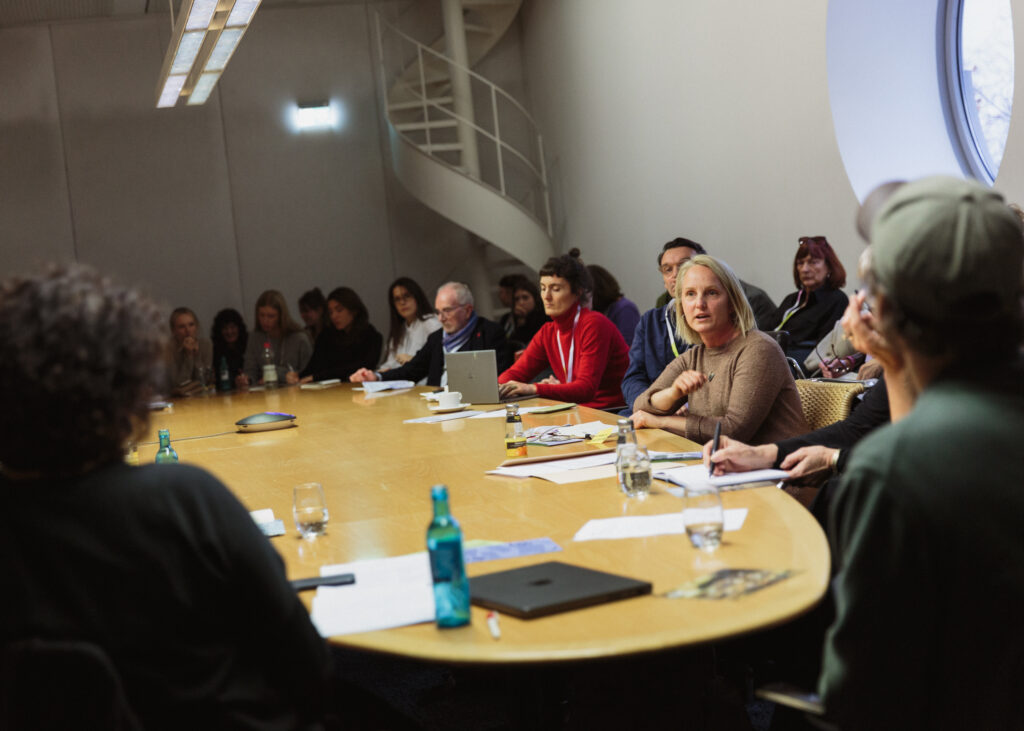
Using concrete examples—ranging from artistic practices to urban interventions to the practices of major cultural institutions—the discussion focused on how new spaces for encounter can emerge. These places are often conceived as process-oriented, temporary, and open-ended. They intervene in everyday routines and, through the convergence and interaction of different life realities and visions of the future, create and enable new forms of solidarity and care. A recurring theme was the courage to experiment and to fail as a prerequisite for learning and change.
At the same time, the language of sustainability was viewed critically. Terms such as “transformation” or “sustainability” are often too abstract or even off-putting. Instead, we need language that is accessible and reaches people beyond academic or institutional contexts. This goes hand in hand with the call for each discipline to step outside its own comfort zone—spatially, linguistically, and conceptually.
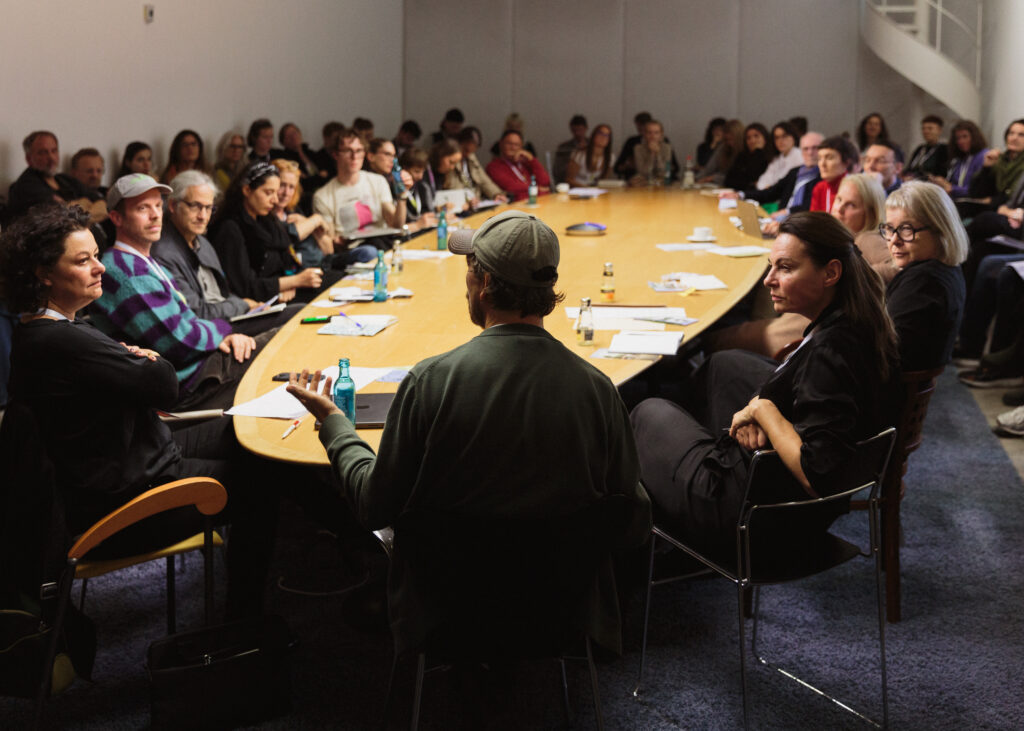
In the final segment of the salon, the discussion centered on the key question, “What are we willing to risk?” From this, the insight emerged that democracy must be understood as an open process of negotiation. Design plays a key role in this: It can foster democratic innovations, strengthen trust, and create spaces where conflicts can be resolved without losing sight of what we have in common. We must dare to be disobedient, step outside disciplinary boundaries, treat one another with care rather than mistrust, and muster the courage to step further outside our own environments and bubbles.
Salon 2: Daring to Explore New Relationships Between People and the Environment
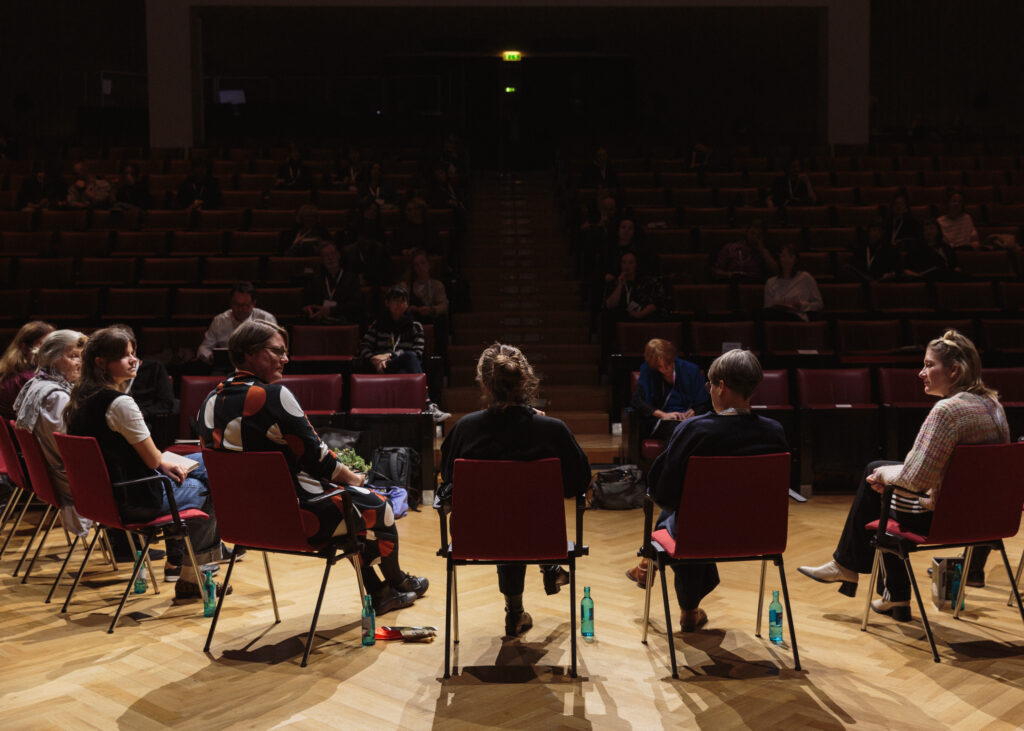
Among those who joined us for the discussion were Manuel Bickel (Wuppertal Institute), Mareike Gast (Burg Giebichenstein University of Art and Design Halle), Daniela Jacob (GERICS), Julia Lohmann (Aalto University), Katharina Maderthaner (artist and BUW), and Emily Volk (Healthy Earth – Healthy People Foundation).
The salon was moderated by Carolin Baedeker (Wuppertal Institute) and Uta Atzpodien (freelance dramaturg, Wuppertal).
In this salon, we reflected on humanity’s place in relation to nature. Using the “fishbowl” format, we built on the keynote presentations by Prof. Dr. Daniela Jacobs and Prof. Dr. Zita Sebesvári—which explored nature as the foundation of human living conditions—and discussed the following guiding questions:
What meanings do we ascribe to nature—and to ourselves? Is nature a form of capital that can be replaced by other forms of capital? Or is it inalienable, beyond economic or cultural calculations? Do we see ourselves as part of nature, as its shapers, or as its conquerors? As those affected by natural events or as their causers? What do we actually mean when we speak of “nature”—a divine order, a mere resource, or an active system that interacts with humans? Between these notions, diverse, hybrid concepts emerge without clear boundaries, in which the realms of life, law, and economics take shape under the influence of power structures and majority dynamics. The central question was therefore: Do changing conceptions of nature—in the interplay of ethics, culture, design, and economics—open up new paths for sustainability transformations that balance planetary boundaries and human well-being?
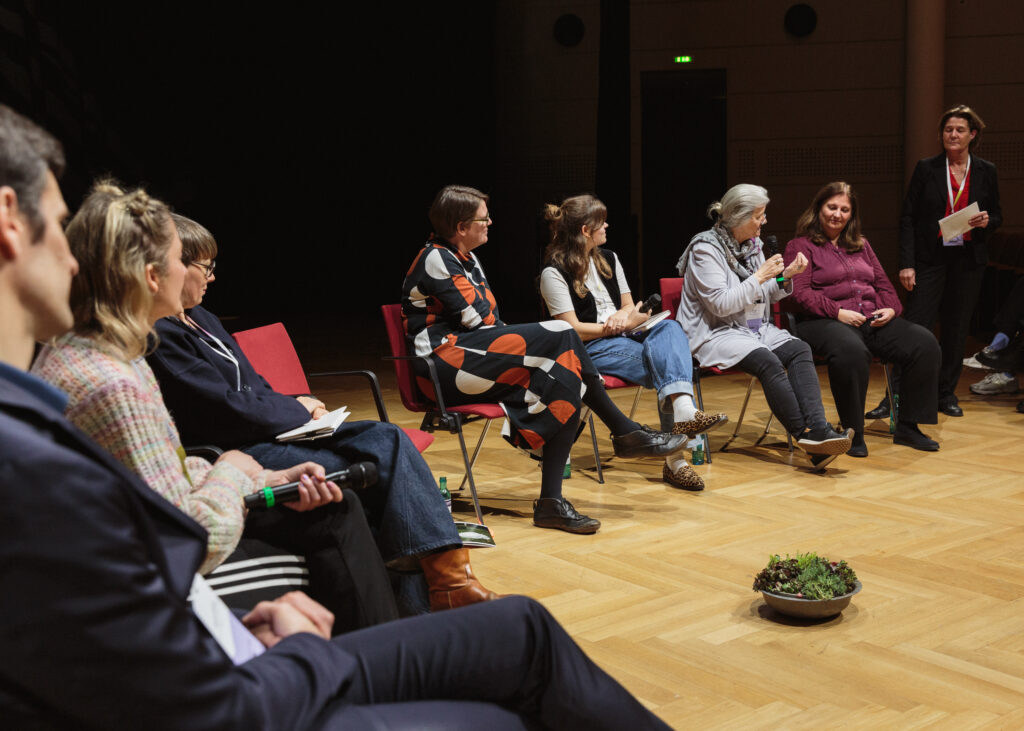
One topic of discussion was the shift from an anthropocentric to a relational understanding of human-environment relationships. Nature was understood not as a passive backdrop to human action, but as an active co-shaper that both sets and limits the scope for action. Nature, in fact, defines the framework within which we can act—physically, biologically, and climatically.
In this context, the concept of planetary health was discussed as a unifying narrative that integrates ecological balance, human well-being, and social justice. After all, healthy people can only exist on a healthy Earth: climate and environmental protection must be considered alongside health protection.
Particular attention was paid to physical, sensory, and experiential entry points into nature. Through artistic and creative practices, it became clear that empathy and a sense of responsibility often arise less from abstract data than from direct experience. It was noted that our actions change when we do not merely view nature as an element, but rather make it tangible or experience it firsthand.
At the same time, conflicting goals and limitations were clearly identified: between resource conservation and consumption patterns, between technological progress and dependence on raw materials, and between efficiency, consistency, and sufficiency. The call for interdisciplinary collaboration was a recurring theme throughout all the presentations. Design and art were discussed both as independent, critically reflective practices and as sensorial and aesthetic mediating forces that make complex interrelationships tangible and can open up new visions of the future through the representation of diverse human-nature relationships. In addition, the desire was expressed to move beyond mere analysis and take action, even at the cost of uncertainty and conflict. This involved the courage to question existing narratives, acknowledge privileges, and experiment with new forms of cooperation with both human and non-human actors. It also means not viewing freedom and climate protection as a contradiction, because Climate change leads to a loss of freedom for everyone.
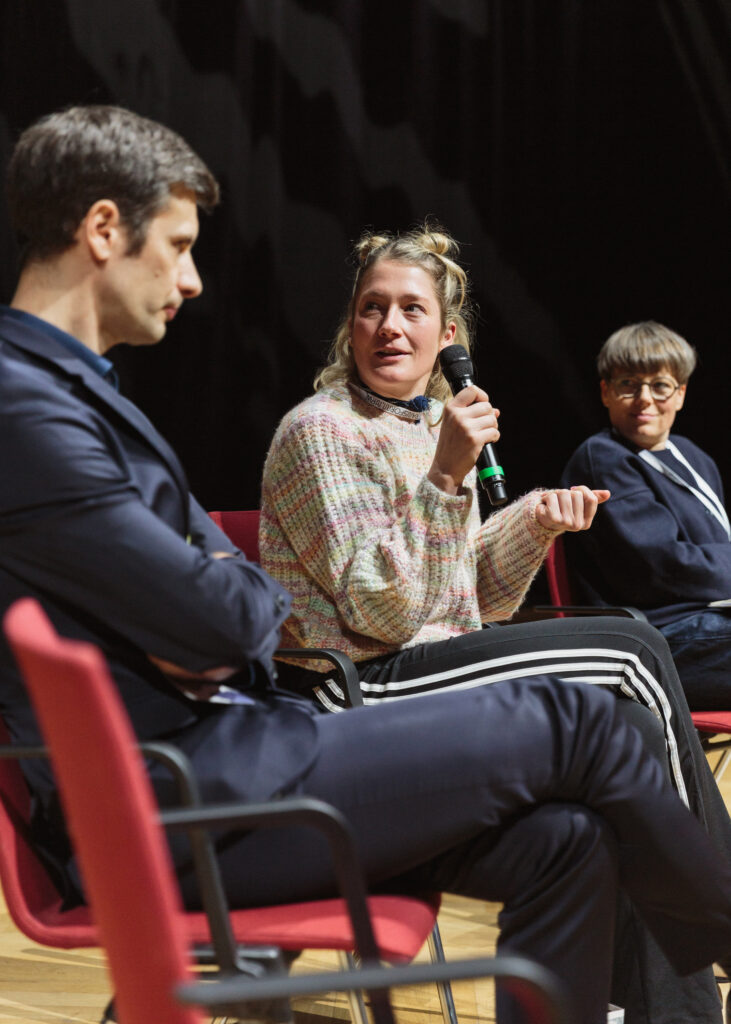
Panel 3: Economic and Institutional Conditions
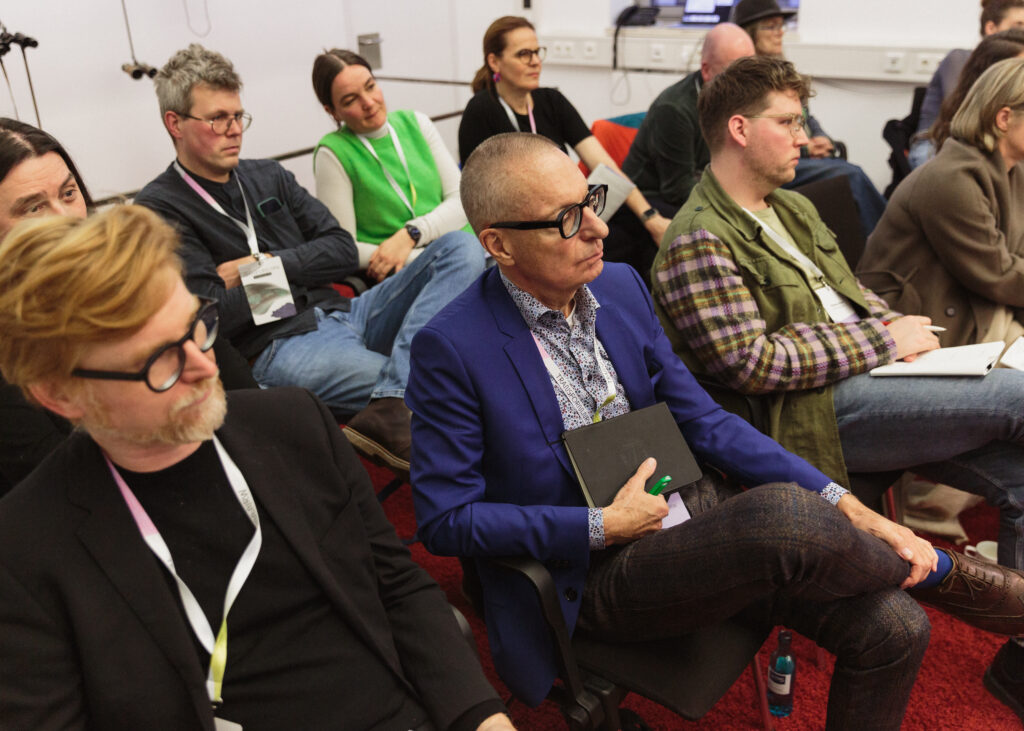
Among those who joined us for the discussion were Anke Bernotat (FUdK), Jacob Bilabel (Green Culture Contact Point), Christiane Bucher (Raesfeld Castle Academy of Crafts), Barbara Hemkes (BiBB), Ines Rainer (creative.nrw), Jola Welfens (economist and transformation researcher), and Nicole Zabel-Wasmuth (Planet Narratives). The salon was moderated by Christa Liedtke (Wuppertal Institute) and Sven Sappelt (Bundeskunsthalle).
This salon focused on the shaping of economic and institutional conditions. Building on the keynote presentations by Jacob Bilabel and Nicole Zabel-Wasmuth, a discussion unfolded in a fishbowl format on the question of how deeply economic logics—ranging from growth and efficiency to competition and global capital flows—are embedded in our society.
The concept of the “Capitalocene” captures what often remains invisible: that these logics not only shape markets, but also everyday practices, consumption patterns, and cultural models of success—and thus play a key role in determining how we understand prosperity, progress, and quality of life.
Precisely because they are so deeply embedded in social and material structures, the central question of the salon was: Can these conditions be changed—and if so, how? How can economic relationships be structured so that they are no longer based on wear and tear and exploitation, but rather on care, cooperation, and the long-term preservation of value? And what institutional innovations are needed to rethink the economy as a malleable, culturally embedded system—one that recognizes ecological limits and strengthens social justice?
The discussion made it clear that key obstacles to a socio-ecological transformation remain in place. The strong fixation on Economic Growth was viewed as particularly problematic: We live in a society in which Economic Growth—measured by gross domestic product (GDP)—is regarded as a central prerequisite for prosperity and competitiveness. Economic Growth implies a perpetual increase in goods and services—and, as a consequence, rising resource consumption, which is a contributing factor to the fact that we have already exceeded the planet’s ecological limits in several areas (such as climate change and biodiversity loss).
This dynamic is further intensified by consumerism and digital acceleration, which continue to fuel consumer identities and status-driven logic. What is often forgotten, however, is that economic systems are not a law of nature. They have been created by people, which means that change is also in the hands of those in positions of responsibility who (can) influence this system. This requires the ability to look beyond existing norms, structures, and ways of thinking in order to design alternative orders and visions of the future.
A second major obstacle is social inequality. Extreme disparities in wealth and income weaken social cohesion and undermine the willingness to change. Inequality acts as a structural brake by concentrating flows of power and capital and directing investment toward business models that are profitable in the short term rather than those oriented toward the common good. A socio-ecological transformation can therefore only succeed if issues of distribution, the democratic governance of capital, and equitable participation are proactively addressed. This is precisely why reducing inequality plays a key role: Where social cohesion erodes, the collective capacity and willingness for change and innovation also decline—yet both form the foundation for a resilient economy and society.
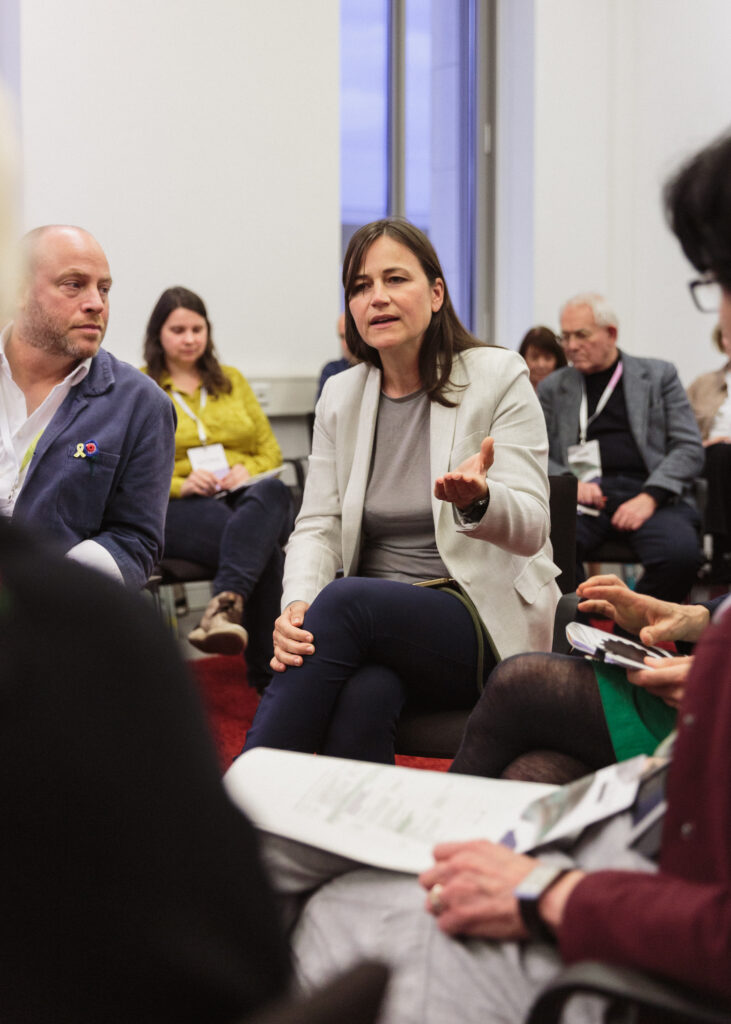
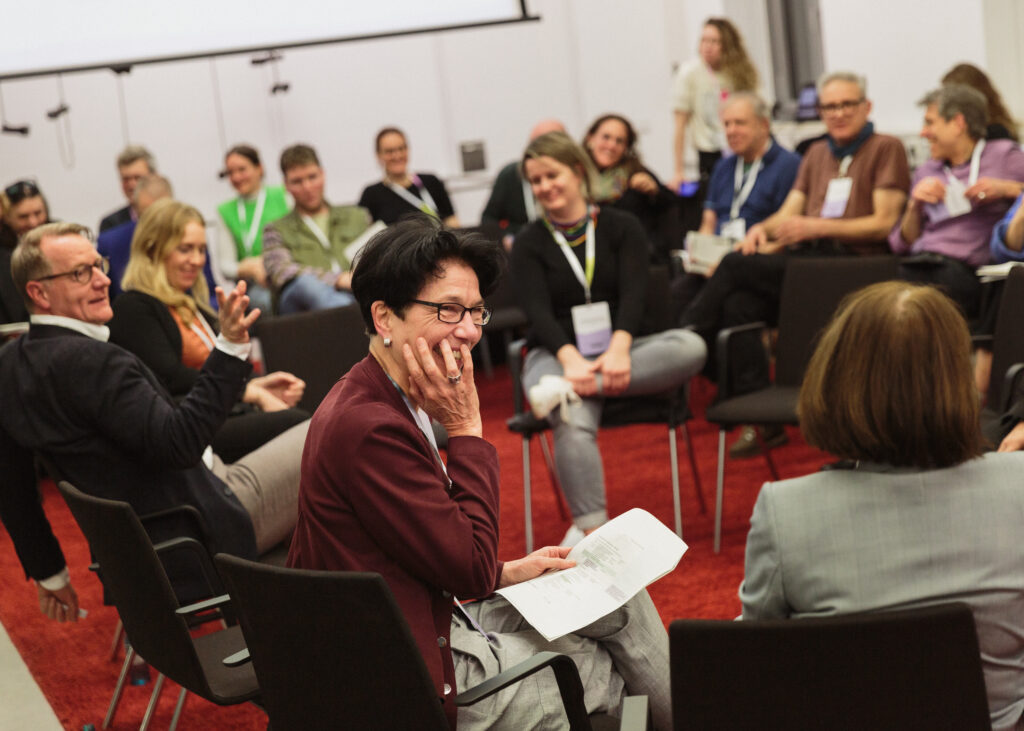
At the same time, an optimistic counterpoint was offered. Economic systems can be shaped; new indicators of prosperity, models of the common good, repair- and circular-economy approaches, and cross-sector collaborations point to concrete alternatives. The key, it was noted, is to bring these approaches out of the niche and embed them in the institutional framework.
In this context, the importance of education was also emphasized. It is central to transformation processes; however, in the context of education for sustainable development, it has so far been implemented mostly as a supplementary measure rather than as a structural one. What is needed is a shift from the mere transfer of knowledge toward future-oriented skills that empower people to actively shape change. This requires new spaces for social dialogue—such as an “agora” for uncomfortable questions—so that solutions can be collaboratively devised and actively implemented. The future cannot simply be bought; we must shape it ourselves.
AGORA Part III: Results and Outlook
In the third part of the Agora, the discussions from the salons coalesced not into individual thematic clusters but into a shared stance. Janine Steeger and Bernd Draser presented the findings. The focus was less on specific individual measures and more on the cultural and institutional prerequisites for transformation. The historical reference to the Agora in ancient Athens served as a guiding model: a space dedicated to economic activity, yet one that simultaneously facilitates communication, debate, and democratic self-affirmation. Sustainability was thus understood not as a technical optimization project, but as a profoundly democratic practice.
In all three discussions, it became clear that it is important to understand that differing opinions and open disagreement can be seen as valuable. At a time when polarization is often perceived as a threat, differences of opinion are interpreted as a productive force.
Transformation requires the ability to handle conflict, tolerance for ambiguity, and a willingness to step outside one’s comfort zone. This involves a shift in perspective—away from moralizing communication and toward dialogue, humor, and narrative connection.
“Disobedience—that is, breaking free from rigid structures. This also applies to the bubble we all live in. Not just in one direction, but in the other as well: letting others in, listening to others, and perhaps being less paternalistic.”
It became clear that sustainability is, above all, a matter of understanding nature. The discussions revealed how strongly current discourse is still shaped by anthropocentric categories. The symbolic inclusion of nonhuman actors highlighted the need to understand the environment as a shared world. Scientific reflection and artistic practice were understood not as opposites, but as complementary forms of knowledge. Art can reveal, challenge, and broaden horizons; it can lay the emotional and imaginative groundwork for transformation.
Growth was described not as an immutable constant, but as a structure that has evolved historically and is capable of change. The discussion on sufficiency, regeneration, and planetary boundaries led to the realization that structural changes can only succeed if they are accompanied by a shift in attitude. Honesty regarding conflicting goals, rebound effects, and one’s own privileges was identified as a prerequisite.
Ultimately, the question of sustainability took center stage. The answer was that transformation requires the belief that the future can be shaped. Education, collaboration, and new narratives are strategic levers in this process.
“What we want to dare to do: be honest. That means facing things head-on, acknowledging mistakes and setbacks, and simply looking at the world realistically. That we create moments of joy, that we cooperate, co-create, and also dare to let go of control in the process. That we set priorities and truly say: ‘We’re going to do this now.’”
FILM LECTURE WITH METAHAVEN: Designing with the Earth
The Amsterdam-based design collective Metahaven explored the intersections between people, design, and our planet through a combination of film, design, and artistic research. In a film lecture developed specifically for the symposium, they reflected on questions of geo-design.
The starting point for these reflections was the observation that art has always depicted and interpreted natural phenomena. Works that depict sunrises, for example, reflect energetic and perceptual principles and condense complex atmospheric impressions into aesthetic forms.
“Art is full of images of sunrises, but it has a much harder time depicting a climate crisis.”
Using Claude Monet as an example, the presentation demonstrated how painting can make light, atmosphere, and movement tangible. At the same time, however, it became clear that artistic representations reach their limits when it comes to depicting climate change. This process defies simple symbolization, as it has little narrative structure and is only partially visible, even though it brings about profound changes. In this context, reference was made to the writer Amitav Ghosh, who has described this problem as “The Great Disjunction”: Climate change is fundamentally altering the world, yet it is difficult to integrate into traditional forms of narrative and representation.
Another section of the article focused on the role of perception in the context of climate change. It explained that the Earth system—comprising the atmosphere, oceans, and cryosphere—regulates solar radiation and, consequently, the planet’s temperature. Carbon dioxide (CO₂) plays a central role in this process by amplifying the greenhouse effect. Historically, as early as the Industrial Revolution, it was recognized that the burning of coal and other fossil fuels leads to an increase in atmospheric CO₂ concentrations. The lecture described current climate changes as the result of a globally interconnected system in which individual CO₂ molecules are inextricably linked to their history of formation. At the same time, it was emphasized that this molecular level is difficult to translate into a classical narrative structure. Since individual molecules do not represent clear actions or actors, this makes it difficult to narrate climate change in a dramatic way. Art and literature therefore often draw on visible consequences such as melting glaciers or extreme weather events, while the causes remain abstract.
The discussion then turned to forms of artistic-political protest. Actions by climate activists—in which famous paintings, such as those by Van Gogh or Monet, were doused with soup—were cited as examples. These interventions were aimed less at destroying the artworks than at disrupting established value structures. By disturbing the tranquility and sanctity of the artworks, they generated media attention intended to highlight the urgency of the climate crisis. The article interpreted such actions as strategic interventions in the economy of social attention. In this sense, they can also be understood as a form of design, since they are specifically intended to shift perceptions and influence public discourse.
In conclusion, the presentation introduced the concept of geo-design. In light of the complex and global challenges posed by climate change, it was argued that no single solution is sufficient. Instead, diverse, experimental, and often bottom-up strategies were described as necessary. Geo-design refers to organized design approaches that take planetary systems into account and rethink physical, cognitive, and imaginative relationships with the planet. The presentation emphasized an open and curious approach that also incorporates marginalized perspectives and challenges linear models of solutions. The goal of these approaches is to develop, over the long term, a sustainable and resilient relationship between human societies and the planet through various models, experiments, and creative practices.
“From now on, a case for Geo–Design would involve a renewal of material, cognitive, and imaginative relationships with the planet, driven by curiosity, DIY (do-it-yourself), and bottom-up experimentation.”